55 Flowers That Start With B: Real Names, Pictures & Facts
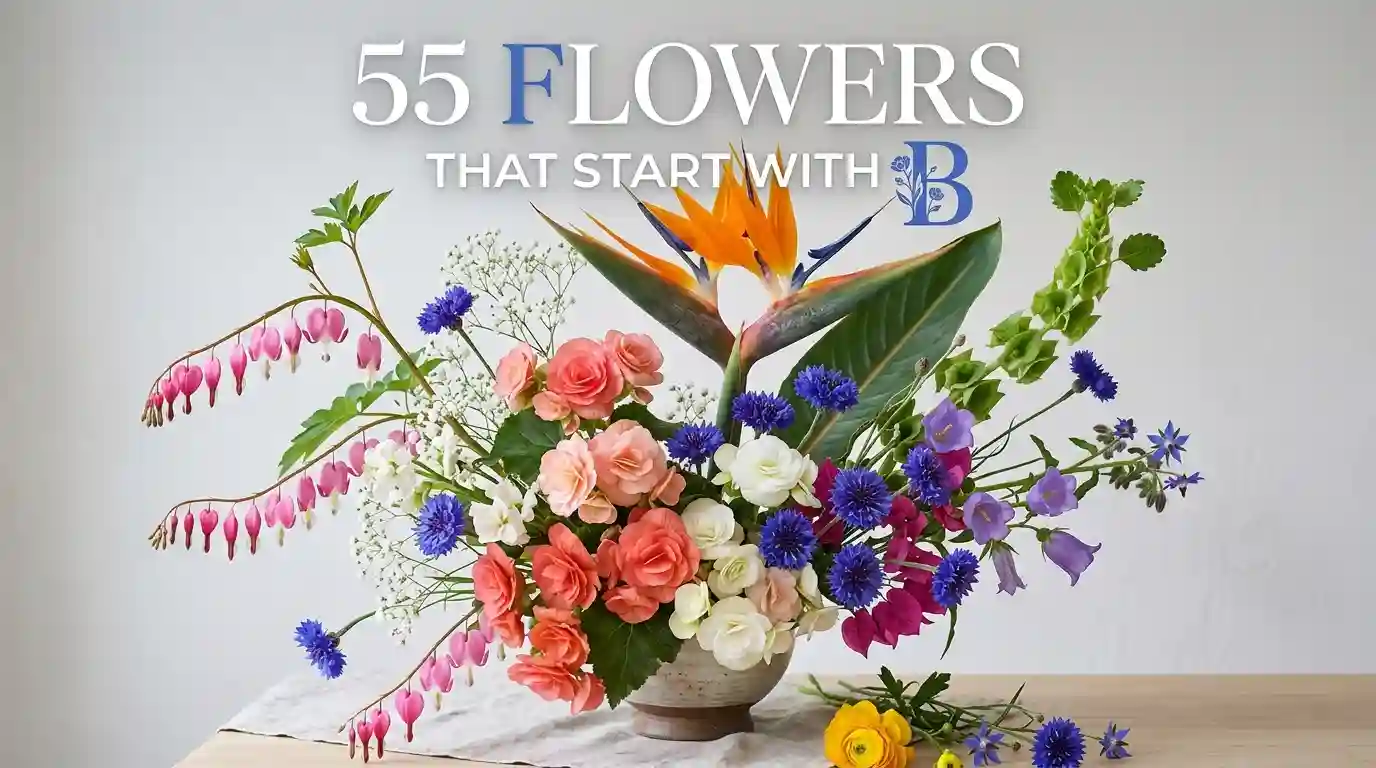
Flowers that start with B cover an unusually wide range of shapes, from the papery bracts of Bougainvillea to the tiny, cloud-like blooms of Baby’s Breath. Some grow as sturdy garden perennials. Others show up only in specialist collections most people never encounter.
This guide only includes real flowering plants. Each entry had to pass one test. The flower must be the actual reason people grow it. That rule leaves out plants like Basil, Barberry, or Boxwood, where leaves, berries, or hedging shape matter more than bloom. It also leaves out folk names with no fixed botanical identity.
Every entry here was cross-checked against at least two sources for native range, bloom season, and toxicity. Many “flowers that start with B” lists online claim 100 or more names. When we checked those claims closely, most padded the count with herbs, weeds, and non-flowering shrubs. Fifty-five is the number that actually held up to verification.
The list below groups flowers by color, by growing style, and by real-world use. Gardeners will find reliable perennials and shrubs here. Florists will find cut-flower staples. Pet owners can check toxicity before planting anything new. Whatever brought you here, every name in this guide is checkable and real.
Quick Answer: Standout “B” Flowers
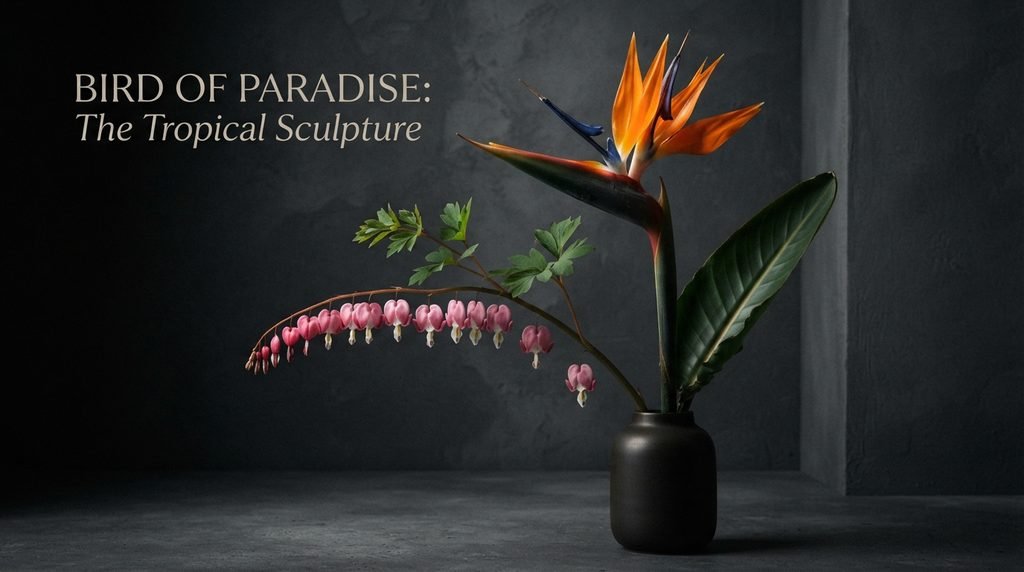
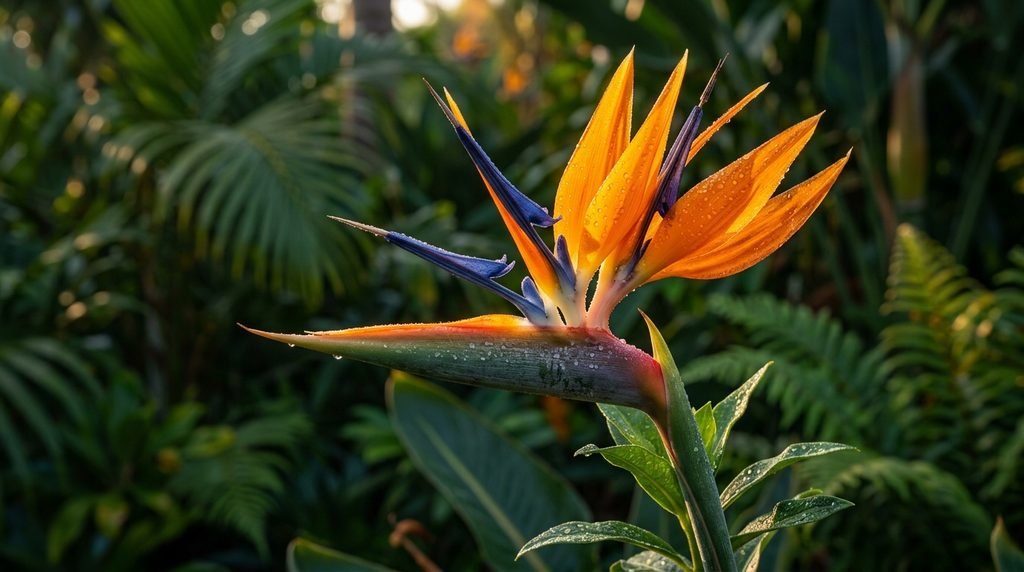
Short on time? Here are ten “B” flowers worth knowing first. Begonia (Begonia spp.) offers glossy, colorful blooms that thrive in both garden beds and pots. Bird of Paradise (Strelitzia reginae) produces a striking, crane-shaped bloom that reads as almost tropical sculpture. Bleeding Heart (Lamprocapnos spectabilis) hangs rows of heart-shaped pink flowers along arching stems.
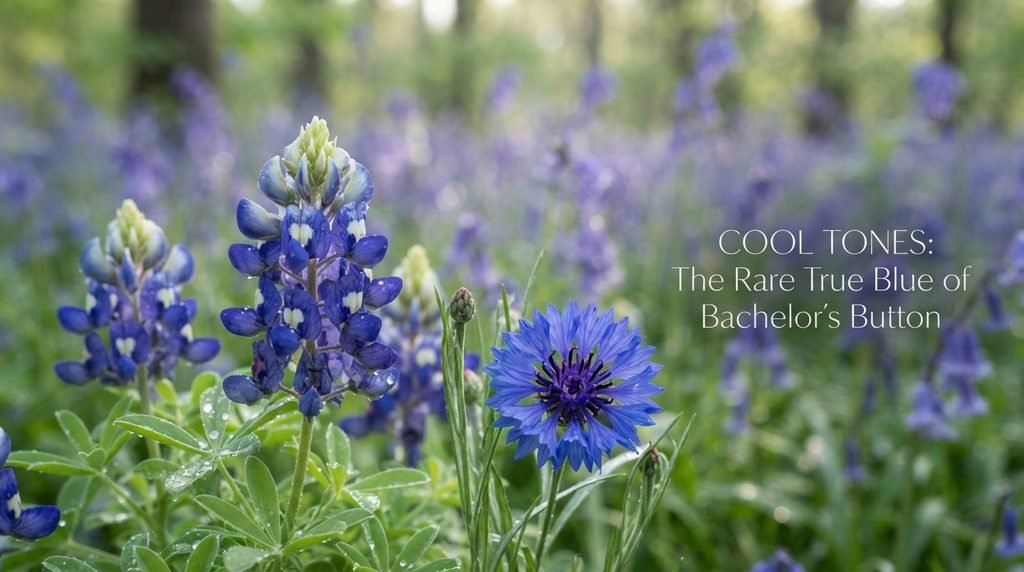
Black-Eyed Susan (Rudbeckia hirta) brings cheerful yellow petals around a dark center, blooming through most of summer. Bougainvillea (Bougainvillea spp.) covers walls and trellises in vivid papery bracts. Balloon Flower (Platycodon grandiflorus) opens from puffed buds into star-shaped blooms. Bachelor’s Button (Centaurea cyanus) adds true blue color, a shade rare in the flower world. Bee Balm (Monarda didyma) draws hummingbirds with its shaggy, tubular red blooms. Bluebell (Hyacinthoides non-scripta) carpets woodland floors each spring. Baby’s Breath (Gypsophila paniculata) fills bouquets with airy white clusters. Each of these earns its spot through documented, widespread use, not just alphabetical convenience.
What “B” Flowers Symbolize
Flower meanings shift by culture, but a few “B” flowers carry especially strong symbolism. Bleeding Heart earned its name and meaning from the same source: its drooping, heart-shaped blooms became linked to romantic longing and emotional vulnerability in Victorian flower language. Black-Eyed Susan took on a gentler meaning tied to encouragement and justice, likely because it grows wild and resilient in disturbed soil where little else survives.
Bachelor’s Button picked up a meaning of hope and single-minded devotion, partly from old folklore where unmarried men wore the flower to signal their intentions. Bluebell carries a more melancholy note in British tradition, often tied to humility and gratitude because of how quietly it blooms in shaded woodland.
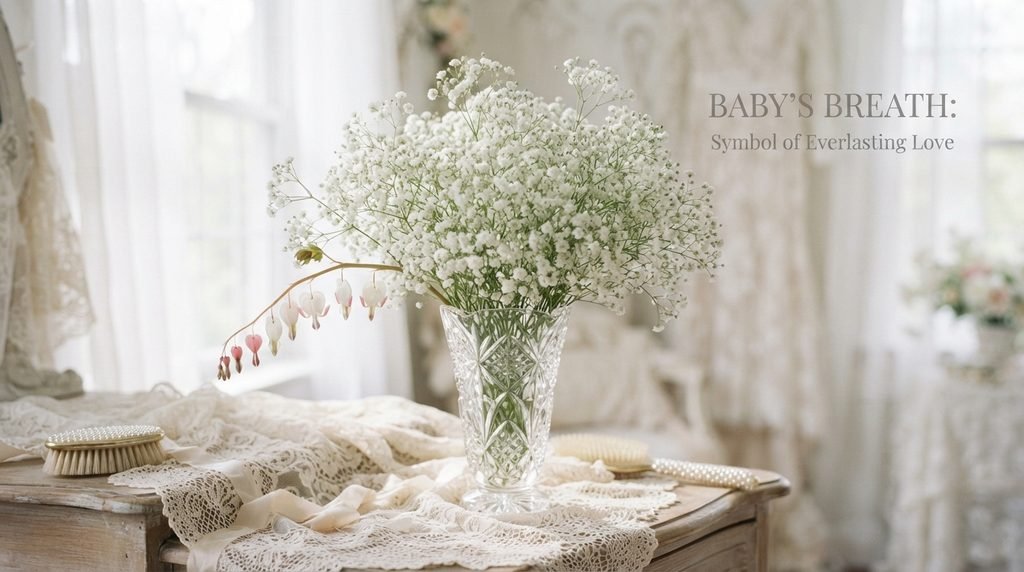
Bird of Paradise leans toward meanings of freedom and joyful anticipation, a fitting match for its bold, almost theatrical shape. Baby’s Breath, by contrast, symbolizes everlasting love and purity, which explains why it appears so often in wedding bouquets as a soft counterpoint to bolder blooms.
Color-Based Groupings
White and Cream B Flowers
Baby’s Breath, Bells of Ireland, and Bletilla varieties dominate this group. Baby’s Breath fills space with tiny clustered blooms, reading as texture rather than a single bold flower. Bells of Ireland actually blooms green rather than white, but its pale, papery calyx creates a similar airy effect, while white Bletilla varieties bring smoother, more orchid-like structure to the mix.
Blue and Purple B Flowers
Bachelor’s Button, Bluebell, Bluebonnet, and Blue Poppy anchor this cool-toned group. Bachelor’s Button offers one of the truest blues in the entire plant kingdom, a rare quality that keeps it popular in cutting gardens. Bluebell stays softer and more violet-leaning, while Bluebonnet, Texas’s state flower, shows a deeper, richer blue-purple. Blue Poppy, native to the Himalayas, is prized specifically because true blue poppies are so uncommon.
Red, Pink, and Orange B Flowers
Begonia, Bee Balm, Bougainvillea, and Blood Lily carry most of the warm tones here. Begonia spans a wide range from soft pink to deep red, depending on variety. Bee Balm leans toward a shaggy, saturated red that hummingbirds find hard to resist. Bougainvillea’s bracts run from hot pink to orange, while Blood Lily produces a spherical burst of red that looks almost like a firework frozen mid-explosion.
Yellow and Gold B Flowers
Black-Eyed Susan, Basket of Gold, and Banksia hold down this bright, sunny group. Black-Eyed Susan stays classic and daisy-shaped, while Basket of Gold spreads low and mounding, covering itself in tiny golden blooms each spring. Banksia looks entirely different from either, forming dense, bottlebrush-like flower spikes native to the Australian bush.
Garden Favorites
Several “B” flowers earn a permanent spot in home gardens. Black-Eyed Susan returns each summer reliably, tolerating poor soil and drought better than most showy perennials. Bee Balm spreads readily and pulls in hummingbirds and bees all season, making it a favorite for pollinator-focused beds. Balloon Flower rewards patience, since its puffed buds take their time opening but hold their star shape for weeks once they do.
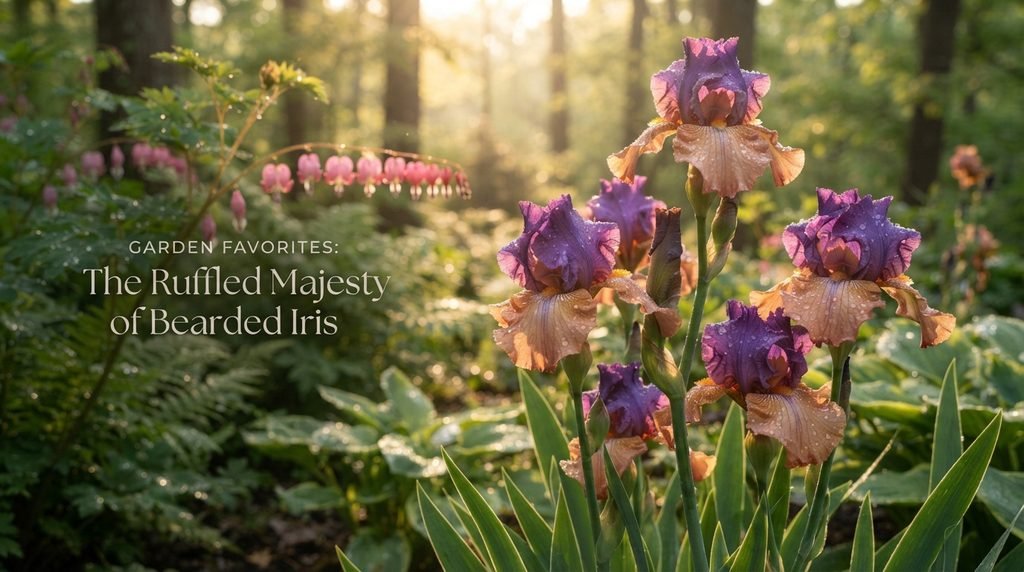
Bleeding Heart thrives in shaded, woodland-style gardens where fewer flowering plants perform well. Bearded Iris, meanwhile, brings dramatic, ruffled blooms each spring and comes in nearly every color except true red, giving gardeners far more variety than the name might suggest.
Indoor & Houseplant Favorites
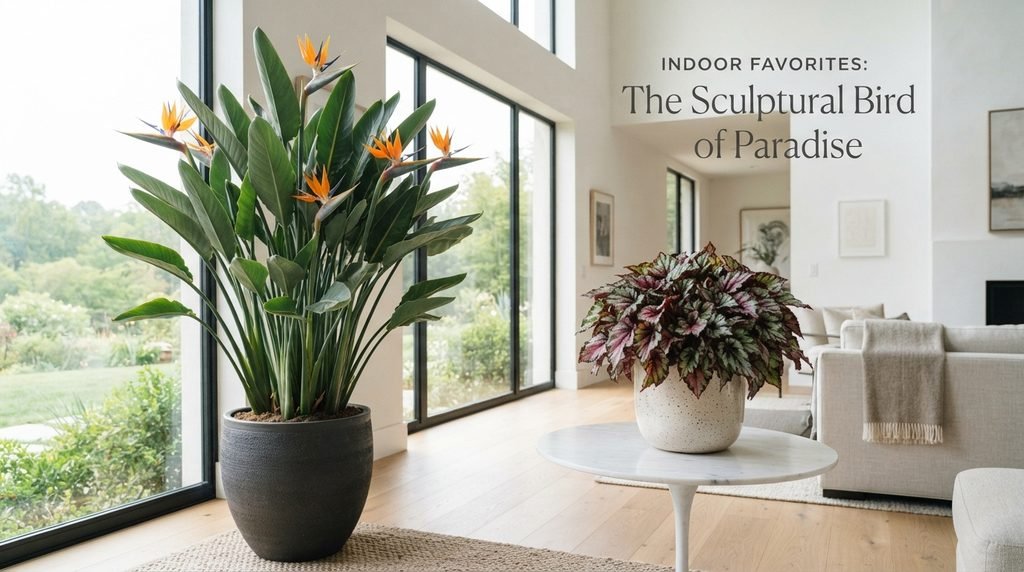
A smaller group of “B” flowers thrives indoors rather than outside. Begonia remains one of the most popular flowering houseplants, tolerating lower light than most bloomers while still producing color for months at a time. Bird of Paradise grows well as a large indoor statement plant in bright rooms, though it may take several years to flower indoors.
Bulbophyllum, a massive genus of orchids, appeals to specialist indoor growers who want something beyond the typical houseplant lineup. Each of these three tolerates the lower humidity and inconsistent light of indoor growing far better than most outdoor “B” flowers, which is exactly why they’ve earned houseplant status.
Florist Favorites
Certain “B” flowers show up constantly in bouquets and floral arrangements. Baby’s Breath is the clearest example, used almost universally as a filler that softens bolder blooms without competing with them. Bells of Ireland add height and an unusual green color that designers use to break up arrangements dominated by warmer tones. Bouvardia, less familiar to home gardeners, is a florist-trade favorite thanks to its clustered, star-shaped blooms and pleasant fragrance.
Bougainvillea occasionally crosses over into tropical-themed arrangements too, prized for its long-lasting, papery bracts that hold color well after cutting. That range, from quiet filler to bold tropical statement, is part of why “B” flowers stay in steady rotation at flower shops.
Rare or Unusual “B” Flowers
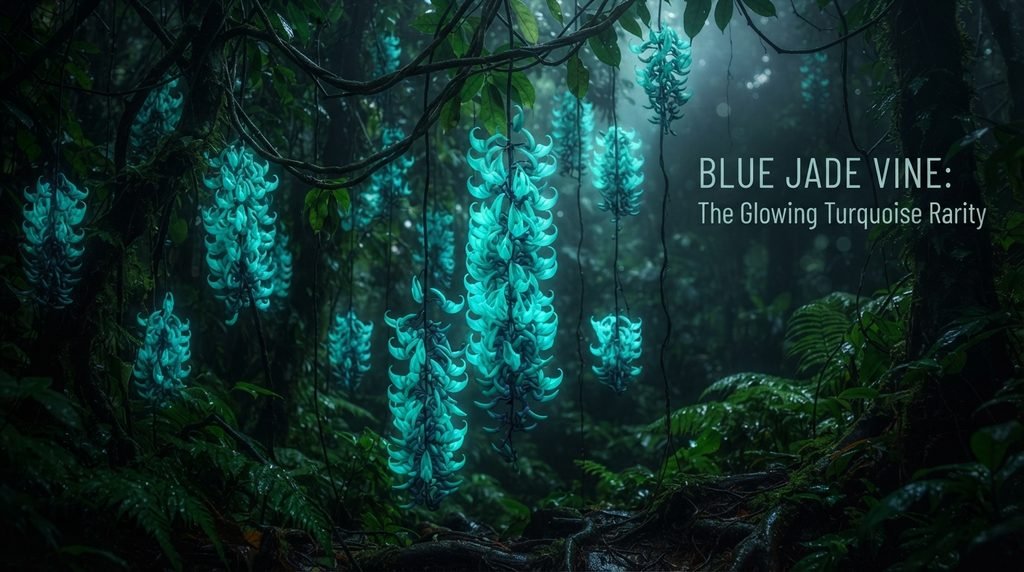
A few “B” flowers rarely show up outside specialist collections, but each has a real story behind it. Black Bat Flower earns its name honestly, producing a dark, almost black bloom with long, whisker-like bracts that genuinely resemble a bat in flight. Blue Jade Vine, native to the Philippines, produces claw-shaped, glowing turquoise flower clusters so unusual that early botanists struggled to describe the color accurately.
Boquila, a woody vine from Chile and Argentina, is remarkable less for its flowers and more for its leaves, which can mimic the shape of whatever plant it’s climbing on, a trait scientists still don’t fully understand. Bird’s Nest Orchid, found across Europe, produces no chlorophyll at all and survives by drawing nutrients from fungi in the soil rather than through photosynthesis.
- Black Bat Flower — dark, whisker-like bracts resembling a bat in flight
- Blue Jade Vine — glowing turquoise claw-shaped clusters, native to the Philippines
- Boquila — shape-shifting climbing vine from Chile and Argentina
- Bird’s Nest Orchid — chlorophyll-free orchid that feeds through fungi
These four rarely appear in general garden centers, but each one has a documented native range and a stable botanical name. That’s what separates a genuinely rare flower from a vague name with no real backing.
Caution: Toxic “B” Flowers
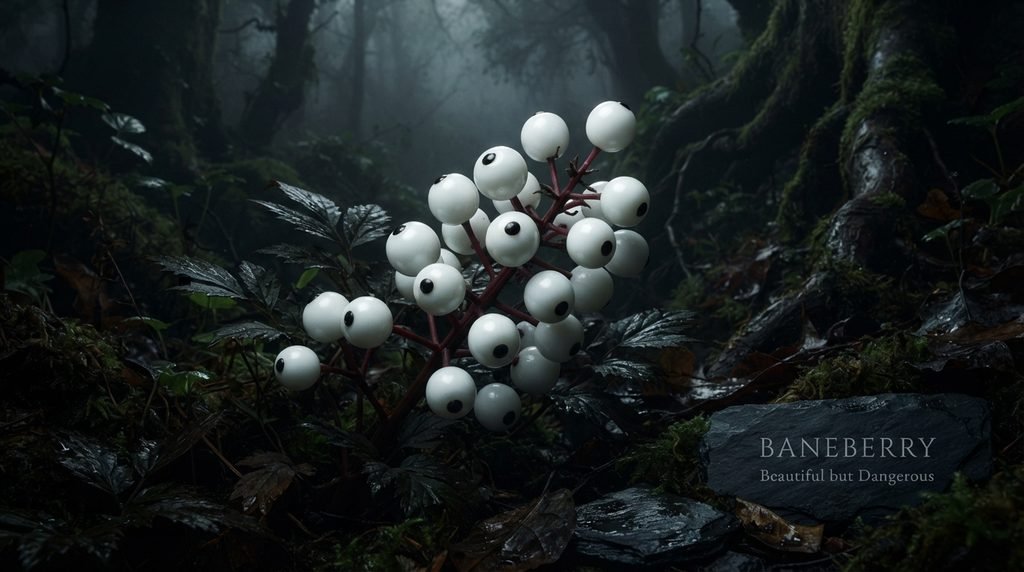
Not every “B” flower is safe around pets or children, and a few deserve real caution. Baneberry sits at the top of this list. Its berries and flowers both contain compounds that can cause serious cardiac symptoms if ingested, making it one of the more dangerous wildflowers still found in home gardens. Bluebell and Bluebonnet both carry real but milder toxicity, generally causing digestive upset rather than the severe reactions linked to Baneberry.
Bloodroot, named for the red sap that runs through its rhizome, is toxic if ingested and can also cause skin irritation on contact. Broom, particularly Scotch Broom, contains alkaloids that affect the heart and nervous system, and it’s specifically dangerous to livestock that graze on it accidentally.
| Flower | Toxicity Level | Main Risk |
| Baneberry | Severe | Cardiac symptoms from berries and flowers |
| Bloodroot | Moderate to Severe | Toxic sap, skin, and internal irritation |
| Broom | Moderate | Alkaloids affecting the heart and nervous system |
| Bluebell | Mild to Moderate | Digestive upset if ingested |
| Bluebonnet | Mild to Moderate | Toxic to livestock and pets |
| Bearded Iris | Mild | Rhizome causes stomach upset |
Baneberry stands out as the single most dangerous entry on this table, capable of causing real cardiac distress from a small amount of plant material. If you have curious pets, young children, or grazing livestock nearby, it’s worth removing Baneberry and Broom entirely rather than simply supervising around them.
Life-Cycle Groupings: Annuals, Perennials & Bulbs
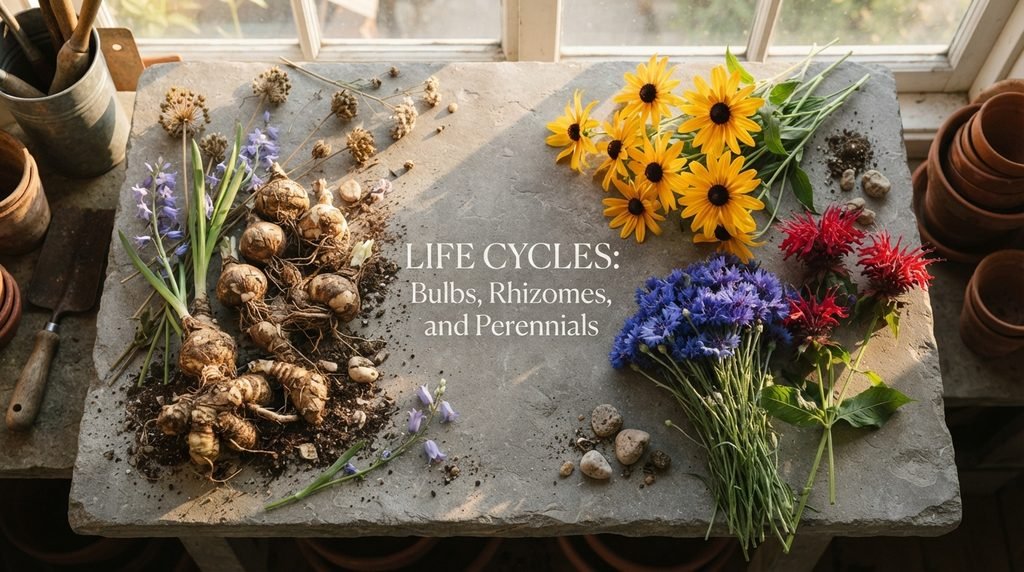
Knowing whether a flower is an annual, perennial, or bulb changes how you plan a garden bed. Annuals like Balsam need replanting each year but often bloom for a longer stretch of the season. Perennials like Black-Eyed Susan and Bee Balm return on their own, rewarding patience with less yearly effort. Bulbs like Bluebell store their energy underground, producing reliable spring color from a single planting.
The table below sorts several key “B” flowers by life cycle, so you can plan a bed that blooms in stages instead of all at once. Pairing a spring bulb with a summer annual and a fall-blooming perennial keeps color moving through the garden across the full growing season.
| Flower | Life Cycle | Typical Bloom Time |
| Bluebell | Bulb | Early to mid spring |
| Bearded Iris | Rhizome | Late spring |
| Black-Eyed Susan | Perennial | Summer to fall |
| Bee Balm | Perennial | Summer |
| Balsam | Annual | Summer to first frost |
| Bachelor’s Button | Annual (reseeding) | Late spring to summer |
Bluebell and Bearded Iris both grow from underground storage structures, but Bluebell finishes blooming well before Bearded Iris even starts, which makes the pairing useful for extending spring color. Bachelor’s Button, like Alyssum in the “A” flower group, often reseeds itself readily, behaving almost like a perennial in the right climate.
Master Alphabetical List of “B” Flowers
This list mixes common names with their botanical names, since gardeners often search by one or the other. Where a flower is better known by its botanical name, like Baptisia, that name leads the entry. Where the common name is more familiar, like Bird of Paradise, that name leads instead, with the botanical name following in parentheses.
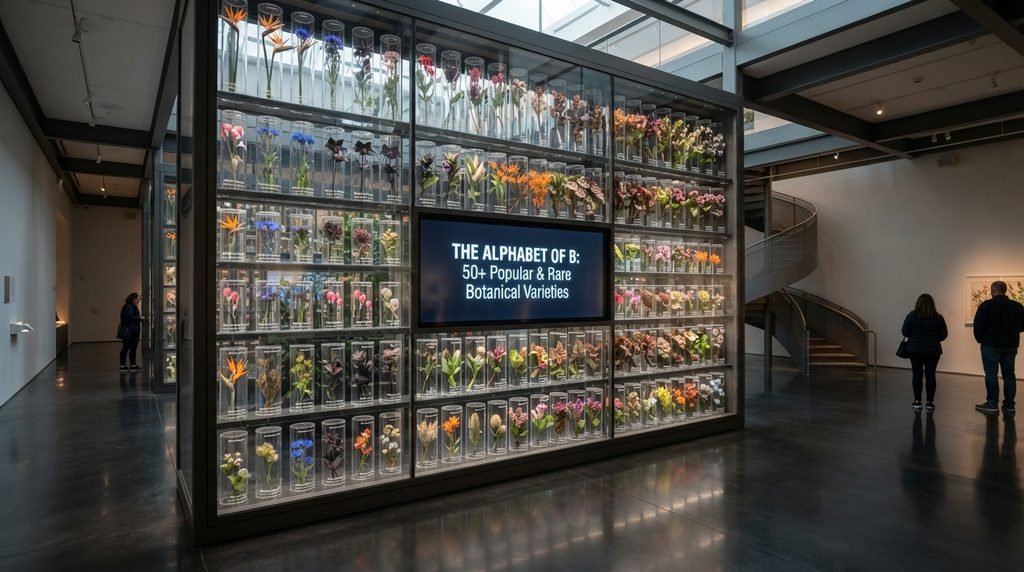
- Baby Blue Eyes (Nemophila menziesii)
- Baby’s Breath (Gypsophila paniculata)
- Bachelor’s Button (Centaurea cyanus)
- Balloon Flower (Platycodon grandiflorus)
- Balsam (Impatiens balsamina)
- Baneberry (Actaea spp.)
- Banksia (Banksia spp.)
- Baptisia / False Indigo (Baptisia australis)
- Barberton Daisy (Gerbera jamesonii)
- Basket of Gold (Aurinia saxatilis)
- Beach Rose (Rosa rugosa)
- Bearded Iris (Iris germanica)
- Beardtongue (Penstemon spp.)
- Bee Balm / Bergamot (Monarda didyma)
- Begonia (Begonia spp.)
- Bellflower (Campanula spp.)
- Bells of Ireland (Moluccella laevis)
- Bergenia / Elephant Ears (Bergenia crassifolia)
- Bird of Paradise (Strelitzia reginae)
- Bird’s Foot Trefoil (Lotus corniculatus)
- Bird’s Nest Orchid (Neottia nidus-avis)
- Black-Eyed Susan (Rudbeckia hirta)
- Black Bat Flower (Tacca chantrieri)
- Blanket Flower (Gaillardia spp.)
- Blazing Star (Liatris spicata)
- Bleeding Heart (Lamprocapnos spectabilis)
- Bletilla / Chinese Ground Orchid (Bletilla striata)
- Blood Lily (Scadoxus multiflorus)
- Bloodroot (Sanguinaria canadensis)
- Blue Daisy (Felicia amelloides)
- Blue-Eyed Grass (Sisyrinchium spp.)
- Blue Flax (Linum perenne)
- Blue Jade Vine (Strongylodon macrobotrys)
- Blue Poppy (Meconopsis betonicifolia)
- Blue Star (Amsonia tabernaemontana)
- Bluebell (Hyacinthoides non-scripta)
- Bluebonnet (Lupinus texensis)
- Boquila (Boquila trifoliolata)
- Borage (Borago officinalis)
- Boronia (Boronia megastigma)
- Bottlebrush (Callistemon spp.)
- Bougainvillea (Bougainvillea spp.)
- Bouvardia (Bouvardia spp.)
- Brazos Penstemon (Penstemon tenuis)
- Broom / Scotch Broom (Cytisus scoparius)
- Browallia / Bush Violet (Browallia americana)
- Brunnera / Siberian Bugloss (Brunnera macrophylla)
- Bugleweed (Ajuga reptans)
- Bugloss (Anchusa azurea)
- Bulbophyllum (Bulbophyllum spp.)
- Busy Lizzie (Impatiens walleriana)
- Buttercup (Ranunculus spp.)
- Butterfly Bush (Buddleja davidii)
- Butterfly Pea (Clitoria ternatea)
- Butterfly Weed (Asclepias tuberosa)
Notice how many entries pair a familiar common name with a less familiar botanical one, and how often the letter B repeats inside the botanical name itself, as in Bougainvillea or Boronia. That overlap matters most when buying online, since nurseries don’t always list both names, and searching only one can mean missing the plant you actually wanted.
Botanical Name Crosswalk: Why It Matters for Buying
Common names shift by region, but botanical names stay fixed worldwide. “Bluebell” refers to a specific woodland flower in Britain, but the same word gets used loosely for unrelated blue flowers elsewhere. The botanical name removes that guesswork, which matters most when ordering bulbs, seeds, or nursery stock online.

Search engines and plant databases also index botanical names far more consistently than folk names. A grower searching “Hyacinthoides non-scripta” will get reliable, consistent results, while “Bluebell” alone might return several unrelated plants that share the name loosely. The table below pairs five widely searched “B” flowers with their exact botanical name, so you can search with confidence.
| Common Name | Botanical Name |
| Bird of Paradise | Strelitzia reginae |
| Bleeding Heart | Lamprocapnos spectabilis |
| Black-Eyed Susan | Rudbeckia hirta |
| Bachelor’s Button | Centaurea cyanus |
| Bluebell | Hyacinthoides non-scripta |
Bleeding Heart stands out here because it was reclassified from the genus Dicentra to Lamprocapnos relatively recently, which means older nursery catalogs and newer ones may list it under two different botanical names for the same plant. Bird of Paradise carries a similar quirk, since the name is sometimes loosely applied to unrelated tropical plants that share a vaguely similar bloom shape but belong to entirely different genera.
Full Comparison Table: All 55 “B” Flowers
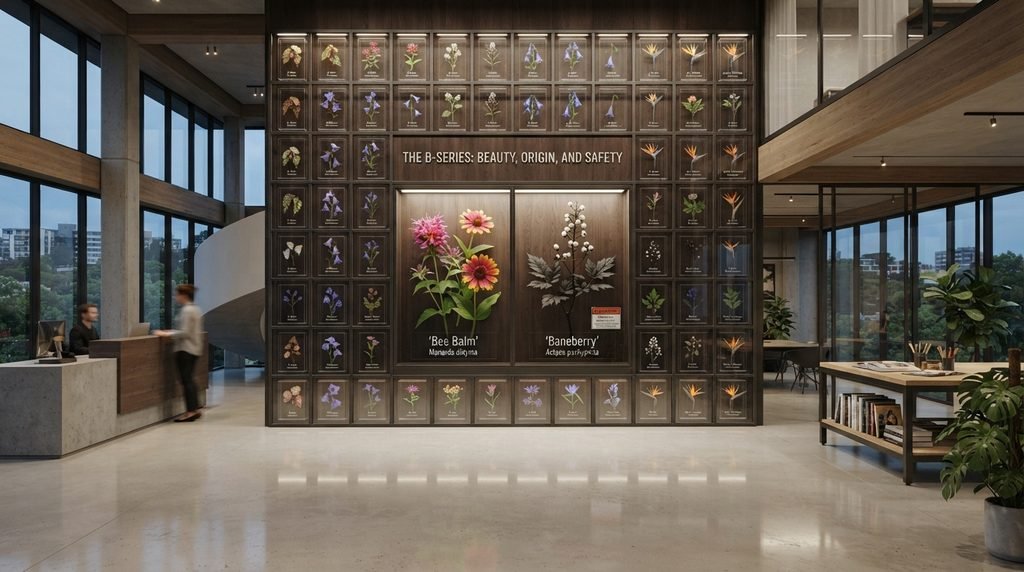
This table brings every flower from the alphabetical list together with its botanical name, native range, and toxicity status. Use the native range column to judge which flowers suit your local climate, and use the toxicity column before planting anything near pets or small children.
| Flower | Botanical Name | Native Range | Toxicity |
| Baby Blue Eyes | Nemophila menziesii | California, USA | Non-toxic |
| Baby’s Breath | Gypsophila paniculata | Eastern Europe, Central Asia | Non-toxic |
| Bachelor’s Button | Centaurea cyanus | Europe | Non-toxic |
| Balloon Flower | Platycodon grandiflorus | East Asia | Non-toxic |
| Balsam | Impatiens balsamina | South Asia | Non-toxic |
| Baneberry | Actaea spp. | North America, Europe | Severely toxic |
| Banksia | Banksia spp. | Australia | Non-toxic |
| Baptisia (False Indigo) | Baptisia australis | North America | Mildly toxic |
| Barberton Daisy | Gerbera jamesonii | South Africa | Non-toxic |
| Basket of Gold | Aurinia saxatilis | Europe | Non-toxic |
| Beach Rose | Rosa rugosa | East Asia | Non-toxic |
| Bearded Iris | Iris germanica | Mediterranean | Mildly toxic |
| Beardtongue | Penstemon spp. | North America | Non-toxic |
| Bee Balm (Bergamot) | Monarda didyma | North America | Non-toxic |
| Begonia | Begonia spp. | Tropical/subtropical worldwide | Mildly toxic |
| Bellflower | Campanula spp. | Europe, Asia | Non-toxic |
| Bells of Ireland | Moluccella laevis | Western Asia | Non-toxic |
| Bergenia (Elephant Ears) | Bergenia crassifolia | Asia | Non-toxic |
| Bird of Paradise | Strelitzia reginae | South Africa | Mildly toxic |
| Bird’s Foot Trefoil | Lotus corniculatus | Europe, Asia | Non-toxic |
| Bird’s Nest Orchid | Neottia nidus-avis | Europe | Non-toxic |
| Black-Eyed Susan | Rudbeckia hirta | North America | Non-toxic |
| Black Bat Flower | Tacca chantrieri | Southeast Asia | Non-toxic |
| Blanket Flower | Gaillardia spp. | North and South America | Non-toxic |
| Blazing Star | Liatris spicata | North America | Non-toxic |
| Bleeding Heart | Lamprocapnos spectabilis | Asia | Toxic |
| Bletilla (Chinese Ground Orchid) | Bletilla striata | China, Japan | Non-toxic |
| Blood Lily | Scadoxus multiflorus | Africa | Toxic |
| Bloodroot | Sanguinaria canadensis | North America | Moderate to severe toxicity |
| Blue Daisy | Felicia amelloides | South Africa | Non-toxic |
| Blue-Eyed Grass | Sisyrinchium spp. | North America | Non-toxic |
| Blue Flax | Linum perenne | Europe | Non-toxic |
| Blue Jade Vine | Strongylodon macrobotrys | Philippines | Non-toxic |
| Blue Poppy | Meconopsis betonicifolia | Himalayas | Non-toxic |
| Blue Star | Amsonia tabernaemontana | North America | Mildly toxic |
| Bluebell | Hyacinthoides non-scripta | Western Europe | Mildly toxic |
| Bluebonnet | Lupinus texensis | Texas, USA | Toxic |
| Boquila | Boquila trifoliolata | Chile, Argentina | Non-toxic |
| Borage | Borago officinalis | Mediterranean | Non-toxic (edible) |
| Boronia | Boronia megastigma | Australia | Non-toxic |
| Bottlebrush | Callistemon spp. | Australia | Non-toxic |
| Bougainvillea | Bougainvillea spp. | South America | Mildly toxic |
| Bouvardia | Bouvardia spp. | Mexico, Central America | Non-toxic |
| Brazos Penstemon | Penstemon tenuis | Texas, USA | Non-toxic |
| Broom (Scotch Broom) | Cytisus scoparius | Europe | Toxic |
| Browallia (Bush Violet) | Browallia americana | South America | Non-toxic |
| Brunnera (Siberian Bugloss) | Brunnera macrophylla | Caucasus, Siberia | Non-toxic |
| Bugleweed | Ajuga reptans | Europe | Non-toxic |
| Bugloss | Anchusa azurea | Europe | Non-toxic |
| Bulbophyllum | Bulbophyllum spp. | Pantropical | Non-toxic |
| Busy Lizzie | Impatiens walleriana | East Africa | Non-toxic |
| Buttercup | Ranunculus spp. | Temperate Northern Hemisphere | Toxic |
| Butterfly Bush | Buddleja davidii | China | Mildly toxic |
| Butterfly Pea | Clitoria ternatea | Southeast Asia | Non-toxic (edible) |
| Butterfly Weed | Asclepias tuberosa | North America | Mildly toxic |
A few rows deserve a second look. Baneberry stands out as the most dangerous entry on the entire table, well beyond the mild toxicity seen in most other “B” flowers. Blue Jade Vine and Black Bat Flower both stand out for rarity rather than risk, since neither is toxic but both remain genuinely hard to find outside specialist growers. Non-toxic entries like Bee Balm, Blanket Flower, and Blue Poppy make especially safe choices for gardens shared with pets or curious children.
Decision-Flow Table: Picking the Right “B” Flower
Choosing between fifty-five similar-sounding names gets easier with a clear goal in mind. The table below matches common growing situations to a recommended “B” flower, so you can skip the research and go straight to a plant that fits your space.
| If you need… | Pick this flower | Why |
| A pet-safe flowering houseplant | Begonia | Widely available, tolerates lower light |
| A shade-tolerant garden perennial | Bleeding Heart | Thrives where most flowers struggle |
| A long-lasting cut flower filler | Baby’s Breath | Classic bouquet staple, airy texture |
| A dramatic tropical statement plant | Bird of Paradise | Bold, sculptural bloom shape |
| A pollinator-friendly perennial | Bee Balm | Draws hummingbirds and bees reliably |
| A true-blue flower for cutting gardens | Bachelor’s Button | One of the few genuinely blue blooms |
| A drought-tolerant summer bloomer | Black-Eyed Susan | Handles poor soil and dry spells well |
Use this table as a starting point rather than a final answer. A bed planned entirely around Bee Balm, for instance, often benefits from a lower-growing companion like Basket of Gold to fill the space beneath its taller stems. Pair a recommended flower with a shorter, spreading option from the alphabetical list above for a fuller, more balanced planting.
Conclusion
Flowers that start with B range from towering Bird of Paradise blooms to ground-hugging Basket of Gold, and everything in between. This list sticks to 55 verified names with real botanical backing, so nothing here is guesswork or padding. Whether you’re planning a garden, choosing a houseplant, or checking pet safety, these flowers that start with B give you a solid, checkable starting point.
Frequently Asked Questions
How many flowers actually start with the letter B?
This guide covers 55 verified flowers with confirmed botanical names, native ranges, and toxicity data. Claims of “100+” flowers that start with B usually include herbs, weeds, or non-flowering shrubs padded in to hit a bigger number.
What are some common flowers that start with B?
Begonia, Black-Eyed Susan, Bluebell, Bleeding Heart, and Bougainvillea are among the most recognized. Each has a documented botanical name and shows up regularly in gardens, florist shops, and houseplant collections.
Is Bluebell the same everywhere in the world?
No. The common name “Bluebell” gets applied loosely to several unrelated blue flowers depending on region. The true English Bluebell is specifically Hyacinthoides non-scripta.
Is Bleeding Heart toxic to pets?
Yes. Bleeding Heart contains compounds that can cause vomiting, drooling, or more serious symptoms in pets if enough of the plant is ingested. It’s best planted where curious dogs can’t easily reach it.
What’s the difference between Bee Balm and Bergamot?
They’re the same plant. Bee Balm is the common garden name, while Bergamot refers to the same species, Monarda didyma, particularly in its use for tea and fragrance.
Which “B” flower is considered the most dangerous?
Baneberry carries the most serious risk on this list, since its berries and flowers both contain compounds that can affect the heart if ingested. It should be kept well away from pets and children.
What flower is often confused with Black-Eyed Susan?
Black-Eyed Susan is sometimes confused with Coneflower, since both have a dark central cone surrounded by petals. They belong to different genera, Rudbeckia and Echinacea, despite the similar look.