Flowers That Start With Z: Names, Meanings & Beautiful Photos
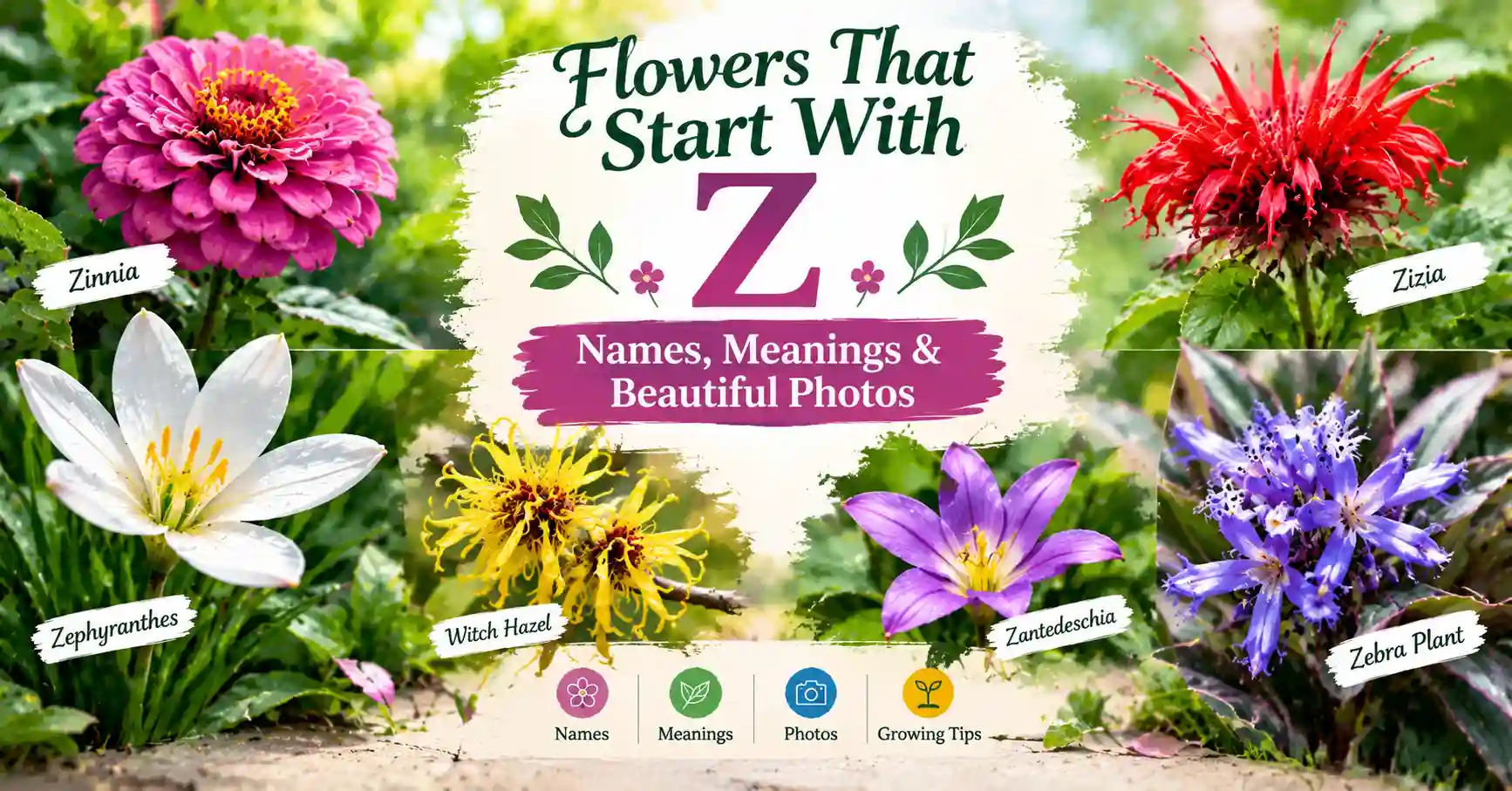
Z sits at the far end of the alphabet, and flowers that start with Z reflect that position. This is one of the rarest letters in the entire alphabet for plant names, which means a genuinely verified list looks very different from the padded counts some competing pages promise. Rather than stretching this letter past what it honestly offers, this guide focuses on real, documented plants, each one grown specifically for its bloom rather than its foliage or form.
This guide brings together more than twenty of these blooms, checked individually for botanical name, native range, and toxicity. Nothing here was pulled from a single source and lightly reworded, and nothing was invented to pad the count. A few of these entries will be unfamiliar even to experienced gardeners, since several Z-named plants are regional wildflowers, Australian natives, or specialty orchids rather than typical nursery staples.
Rather than opening with a flat alphabetical dump, this guide sorts its recommendations by how gardeners actually use these plants. Garden staples come first, followed by indoor options, florist favorites, genuinely rare specialty blooms, and a dedicated section flagging which entries need careful placement around pets and children. Color groupings and life-cycle categories follow next. The full alphabetical index and botanical name reference sit near the end, working as a quick lookup once the groundwork has already been covered.
Quick Answer: The Standout Z Flowers
Given how short this letter genuinely is, most verified entries earn a place in this shortlist for a specific reason. Zinnia leads the group as the only true all-purpose garden annual carrying the letter, blooming reliably from seed and tolerating heat far better than most competing bedding plants.
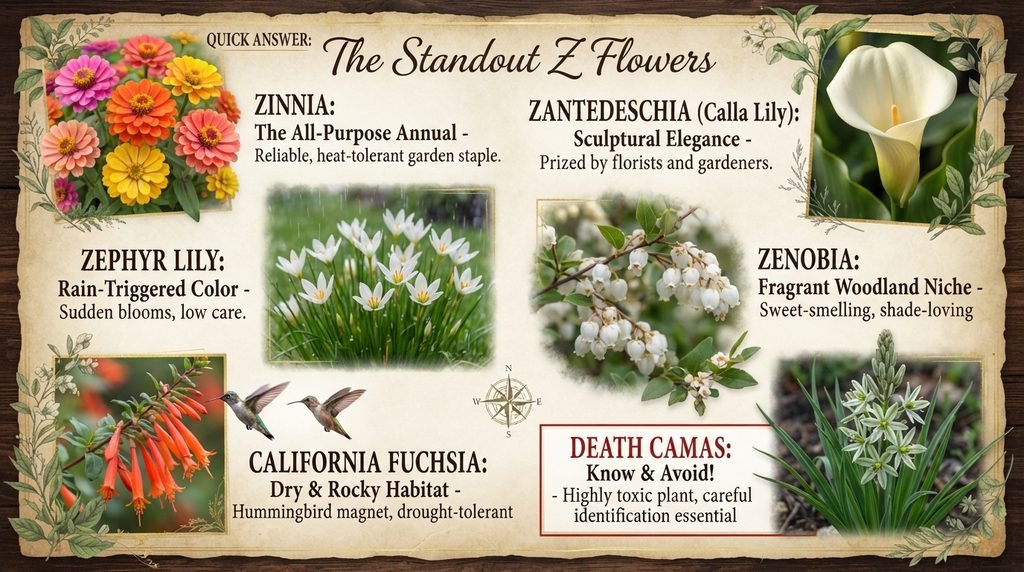
Zephyr lily brings sudden, rain-triggered color to a border with almost no ongoing care, while Zantedeschia, better known as calla lily, offers a sculptural bloom prized by florists and gardeners alike. Zenobia and California fuchsia both reward specific niches, the former for fragrant woodland-edge planting and the latter for dry, rocky soil where hummingbirds gather. Death camas deserves a place on this list for an entirely different reason: not as a recommendation, but as a plant worth knowing how to identify and avoid.
What These Flowers Are Said to Represent
Symbolism for this letter is thinner than for more common letters, since several of its plants are regional wildflowers or specialty orchids that never accumulated the kind of Victorian-era flower-language tradition attached to roses or lilies. Zinnia is the clear exception, carrying a well-documented symbolic association with lasting friendship and remembrance, which has made it a popular gift for marking long-term relationships rather than romantic gestures specifically.
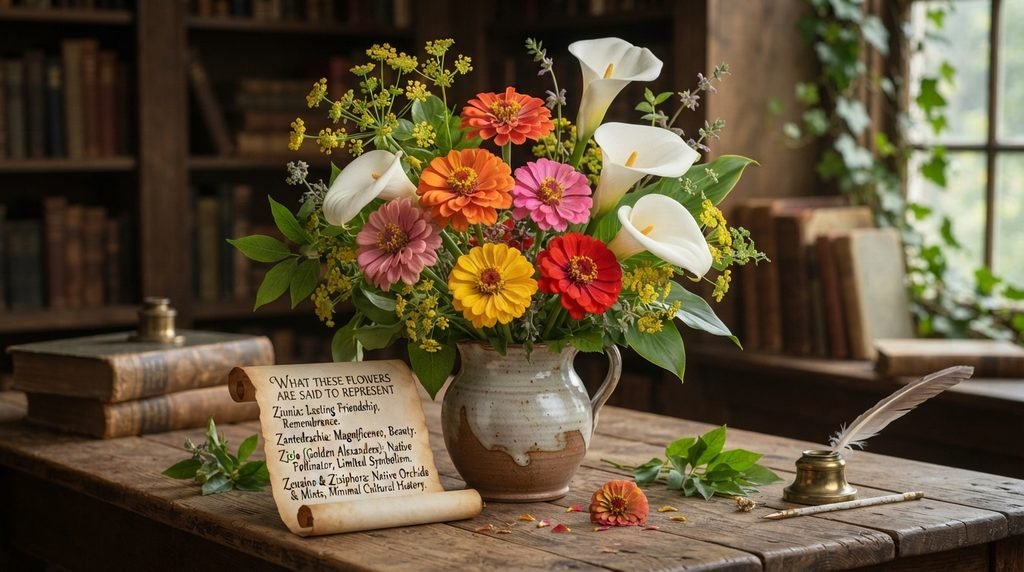
Zantedeschia carries its own modest symbolic history, generally associated with magnificence and beauty, and its elegant, sculptural form has made it a recurring choice in wedding florals across multiple cultures. Golden Alexanders, more commonly known by their botanical genus Zizia in horticultural circles, have not built up a widely recognized symbolic tradition of their own, since it’s valued mainly as a native pollinator plant rather than a flower with cultural history attached to it.
Most of the remaining Z flowers on this list, including Zeuxine and Ziziphora, simply haven’t accumulated enough shared cultural history to carry consistent symbolic meaning, and it’s worth stating that plainly rather than inventing significance that doesn’t genuinely exist in the historical record.
Sorting These Flowers by Color
White is one of the more prominent colors on this list, appearing in Zenobia’s small bell-shaped clusters, Zeuxine’s delicate terrestrial orchid spikes, and several Zantedeschia cultivars, though calla lilies also come in deep purples, yellows, and pinks depending on the variety. Yellow shows up in Golden Alexanders’ flat-topped flower clusters and in Zingiber, the ornamental ginger genus, whose cone-shaped bracts often carry a warm golden tone.
Purple and pink tones cluster around Zieria’s small star-shaped blooms, Ziziphora’s tiny mint-family flowers, and the striped, unusual markings of zebra orchid, a color combination not really echoed anywhere else on this list. Red and orange tones are rarer but distinctive, found most clearly in California fuchsia’s tubular, hummingbird-attracting blooms and in certain Zinnia cultivars bred specifically for bold, saturated color.
Garden Favorites Among Flowers That Start With Z
The outdoor garden side of this letter is genuinely small, but a handful of entries perform reliably enough to earn a permanent spot in a border. Zinnia anchors this group by a wide margin, tolerating heat, humidity, and inconsistent watering while still producing continuous color from seed through the first frost. Zephyr lily performs a different role, largely taking care of itself once planted and rewarding a good summer rainstorm with a sudden flush of crocus-like blooms.
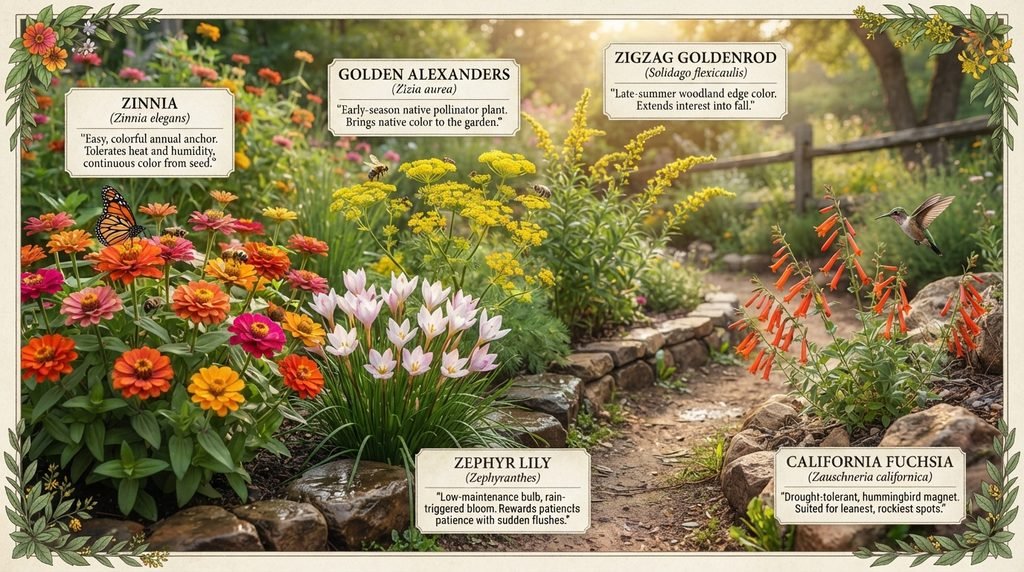
Golden Alexanders brings early-season native color to a pollinator garden, while zigzag goldenrod extends interest into late summer and fall with its distinctively kinked flowering stems. California fuchsia rounds out this group as a genuinely drought-hardy perennial suited to the leanest, rockiest part of a yard.
| Flower | Botanical Name | Best Border Role |
| Zinnia | Zinnia elegans | Easy, colorful annual anchor |
| Zephyr Lily | Zephyranthes | Low-maintenance bulb, rain-triggered bloom |
| Golden Alexanders | Zizia aurea | Early-season native pollinator plant |
| Zigzag Goldenrod | Solidago flexicaulis | Late-summer woodland edge color |
| California Fuchsia | Zauschneria californica | Drought-tolerant, hummingbird magnet |
Zinnia and zephyr lily sit at opposite ends of this table in terms of timing. Zinnia delivers fast, continuous color from seed within weeks, while zephyr lily rewards patience with a more unpredictable, rain-dependent bloom schedule.
Indoor Plants: Flowers That Start With Z for Pots and Windowsills
A meaningful share of this letter’s remaining entries belong indoors rather than in a standard outdoor bed. Christmas cactus leads this group, tolerating lower light than most flowering houseplants and specifically needing a period of shorter days and cooler nights each fall to trigger its winter bloom. Zebra plant, grown for its dramatically veined foliage as much as its yellow flower spikes, needs bright indirect light and consistent humidity to perform well indoors.
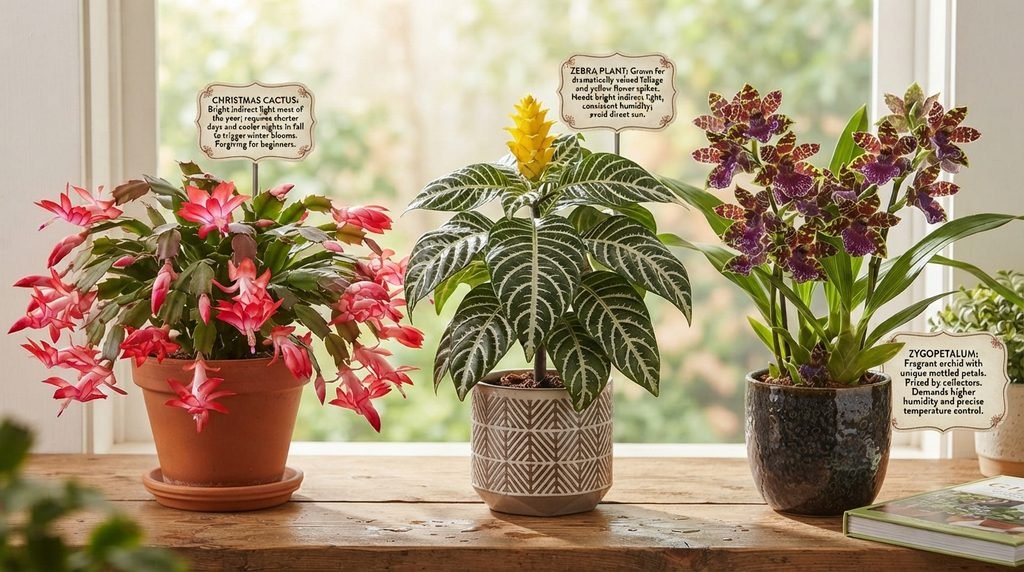
Zygopetalum, a fragrant orchid genus prized by collectors, rounds out this group with mottled, jewel-toned petals that stand out from more common orchid varieties, though it demands more specific humidity and temperature control than beginner-friendly orchids.
- Christmas Cactus — bright indirect light most of the year, shorter days and cooler nights in fall to trigger bloom
- Zebra Plant — bright indirect light, consistent humidity, avoid direct sun through glass
- Zygopetalum — bright indirect light, higher humidity than typical houseplants require
Christmas cactus remains the most forgiving of this trio for a beginner, while Zygopetalum asks for the most precise care, particularly around humidity and temperature swings.
Florist Favorites: Z Flowers Built for Cutting and Arranging
Cut-flower and specialty use is limited for this letter, but a few entries genuinely earn a place in floral design work. Zinnia remains a dependable cutting-garden staple, holding its color and form well after cutting and available in an unusually wide range of shapes and sizes for a single-species flower. Zantedeschia brings dramatic, sculptural texture to bridal and formal arrangements, valued specifically for its curled, elegant spathe and long vase life.
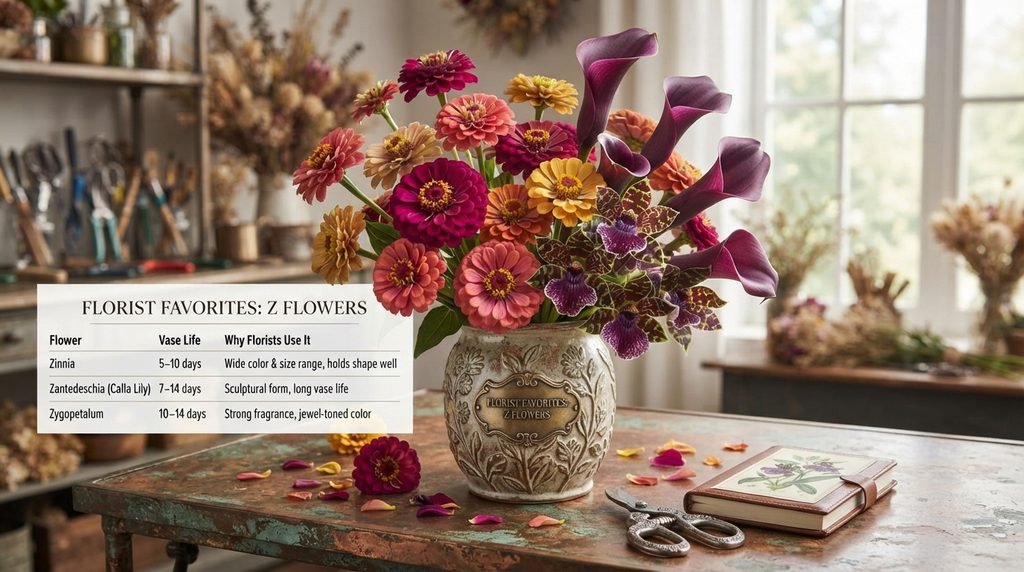
Zygopetalum rounds out this group as a specialty choice for collectors and high-end floral work, prized for combining an unusually strong, sweet fragrance with its distinctive mottled coloring.
| Flower | Vase Life | Why Florists Use It |
| Zinnia | 5–10 days | Wide color and size range, holds shape well |
| Zantedeschia (Calla Lily) | 7–14 days | Sculptural form, long vase life |
| Zygopetalum | 10–14 days | Strong fragrance, jewel-toned color |
Zygopetalum stands out from the rest of this table for combining fragrance with an unusually long vase life, a combination that makes it a favorite among collectors willing to pay a premium for a less common orchid.
Rare Flowers: The Harder-to-Find Entries on This List
Given how short this letter already is, several of its entries qualify as genuinely rare. Zebra orchid, an Australian terrestrial orchid with distinctive striped markings, remains almost entirely unknown outside specialist native-orchid circles in its home range, since terrestrial orchids resist the kind of mass propagation used for more common garden flowers. Zeuxine, a small terrestrial orchid genus with delicate white-green spikes, follows a similar pattern, rarely offered through general nurseries and mostly encountered through orchid specialists.
Zieria, an Australian native shrub with small star-shaped flowers, remains a niche choice even within Australia, grown mostly by native-plant enthusiasts rather than mainstream gardeners. Ziziphora, a Central Asian and Middle Eastern relative of mint, is more often grown for its aromatic foliage in specialty herb collections than sought out purely for its tiny purple flowers, which keeps it firmly in collector territory outside its native range.
Caution: Z Flowers That Need Careful Placement
Toxicity risk on this list ranges from a serious, well-documented hazard to essentially no risk at all, and the difference matters depending on which plant is involved. Death camas is the standout concern on this entire list, containing toxic alkaloids throughout the plant that have a long, documented history of poisoning livestock that graze on it accidentally, along with rare but serious cases of human poisoning when its bulb is mistaken for wild onion or confused with edible camas before either plant flowers.
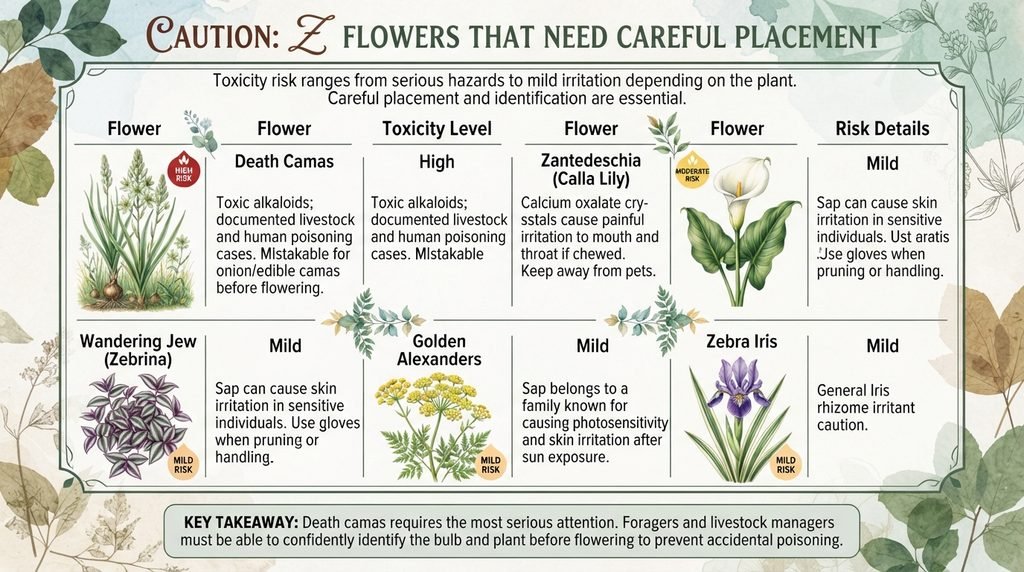
Zantedeschia, better known as calla lily, carries a milder but still notable risk, since its tissue contains calcium oxalate crystals that cause painful irritation to the mouth and throat if chewed, particularly in curious pets. Wandering Jew, more formally called Zebrina, can cause mild skin irritation in sensitive individuals if handled without gloves during pruning or propagation. Golden Alexanders carries a similar mild caution, since its sap belongs to a plant family known for causing photosensitivity and skin irritation in some people after sun exposure.
| Flower | Toxicity Level | Risk Details |
| Death Camas | High | Toxic alkaloids; documented livestock and human poisoning cases |
| Zantedeschia (Calla Lily) | Moderate | Calcium oxalate crystals cause oral and throat irritation |
| Wandering Jew (Zebrina) | Mild | Sap can cause skin irritation in sensitive individuals |
| Golden Alexanders | Mild | Sap can cause photosensitivity after sun exposure |
| Zebra Iris | Mild | General Iris rhizome irritant caution |
Death camas deserves the most serious attention on this list, and anyone who forages wild alliums or manages land where livestock graze near native meadows should be able to identify it confidently before the plant flowers, since the bulb alone is easy to mistake for something edible.
Choosing by Life Cycle: Annuals, Perennials, Bulbs, and Beyond
Life cycle matters for planning purposes even on a shorter list like this one. Perennials and bulbs together make up the largest share of verified flowers that start with Z, offering repeat performance rather than a need for constant replanting. Shrubs and orchids form a smaller but still meaningful group, mostly drawn from Australian natives and specialty collector plants.
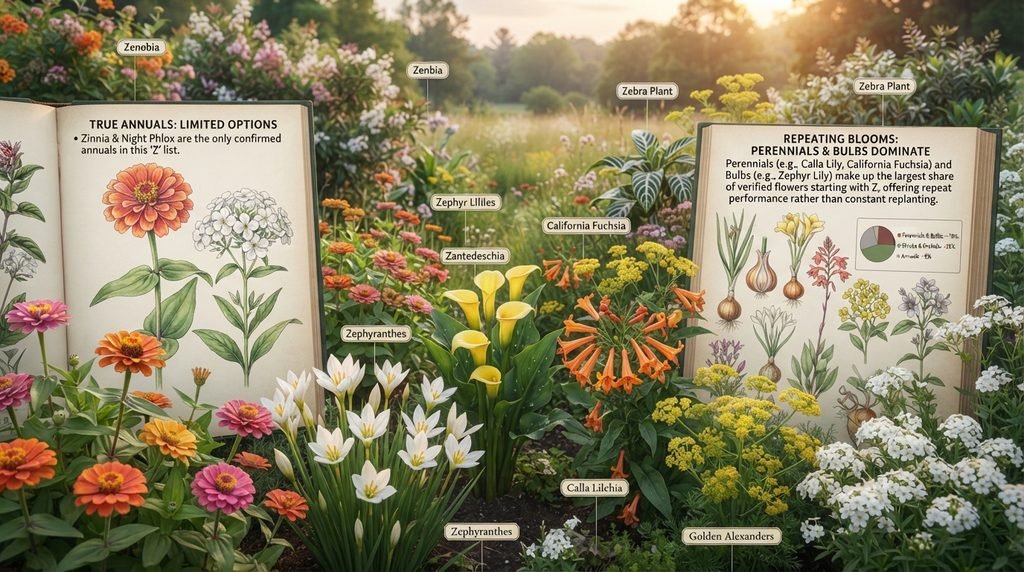
True annuals are limited to zinnia among the entries covered here, which sets this letter apart from most others in this series, where annual options tend to be more plentiful.
| Flower | Life Cycle |
| Zinnia | Annual |
| Zephyr Lily | Bulb |
| Zantedeschia (Calla Lily) | Perennial (rhizome) |
| Zenobia | Deciduous shrub |
| Zexmenia | Perennial |
| Death Camas | Bulb |
| Zebra Plant | Perennial shrub |
| Night Phlox (Zaluzianskya) | Annual |
| Zygopetalum | Perennial (epiphytic orchid) |
| California Fuchsia | Perennial |
| Golden Alexanders | Perennial |
| Zigzag Goldenrod | Perennial |
| Wandering Jew (Zebrina) | Perennial (trailing) |
| Christmas Cactus | Perennial (succulent) |
| Zebra Iris | Perennial (rhizome) |
| Zeltnera (Centaury) | Annual or biennial |
| Zeuxine | Perennial (terrestrial orchid) |
| Zieria | Evergreen shrub |
| Zingiber (Ornamental Ginger) | Perennial (rhizome) |
| Ziziphora | Perennial herb |
| Zebra Orchid | Perennial (terrestrial orchid) |
This table confirms what the rest of the guide already suggests. Flowers that start with Z lean heavily toward perennials and bulbs, with genuine annual color essentially limited to zinnia and night phlox among the verified entries covered here.
The Master List: Every Flower on This Guide, A to Z
Several entries below are best known by their botanical genus name directly, since no separate common English name ever became standard for many of these plants. A few carry more familiar English names, particularly the orchids and the better-known garden staples. This list reflects that natural, honest split.
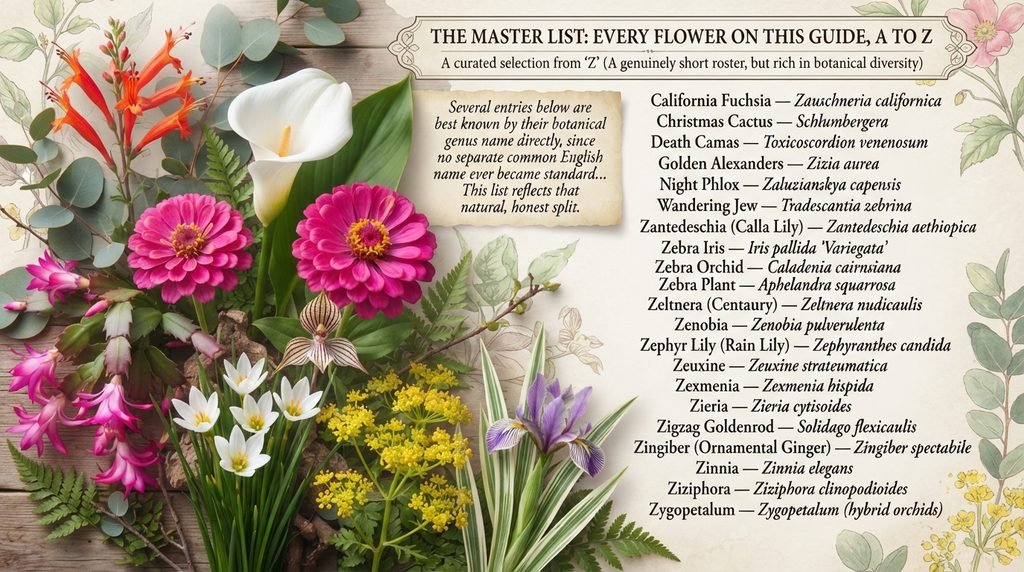
- California Fuchsia — Zauschneria californica
- Christmas Cactus — Schlumbergera (formerly Zygocactus)
- Death Camas — Toxicoscordion venenosum (syn. Zigadenus)
- Golden Alexanders — Zizia aurea
- Night Phlox — Zaluzianskya capensis
- Wandering Jew — Tradescantia zebrina
- Zantedeschia (Calla Lily) — Zantedeschia aethiopica
- Zebra Iris — Iris pallida ‘Variegata’
- Zebra Orchid — Caladenia cairnsiana
- Zebra Plant — Aphelandra squarrosa
- Zeltnera (Centaury) — Zeltnera nudicaulis
- Zenobia — Zenobia pulverulenta
- Zephyr Lily (Rain Lily) — Zephyranthes candida
- Zeuxine — Zeuxine strateumatica
- Zexmenia — Zexmenia hispida
- Zieria — Zieria cytisoides
- Zigzag Goldenrod — Solidago flexicaulis
- Zingiber (Ornamental Ginger) — Zingiber spectabile
- Zinnia — Zinnia elegans
- Ziziphora — Ziziphora clinopodioides
- Zygopetalum — Zygopetalum (hybrid orchids)
This list holds twenty-one entries in total, a genuinely short roster compared to almost any other letter, but one where nearly every plant serves a distinct purpose rather than repeating what an earlier entry already covers.
Why Botanical Names Matter for This Letter
Botanical names matter more than usual for this letter, since a number of these plants carry no widely used English common name at all, and a few older names have shifted through taxonomic reclassification. Christmas cactus is still sold under its older genus name, Zygocactus, almost as often as its currently accepted name, Schlumbergera. Death camas presents a similar issue, since older references use the genus Zigadenus while updated taxonomy places most species in Toxicoscordion.
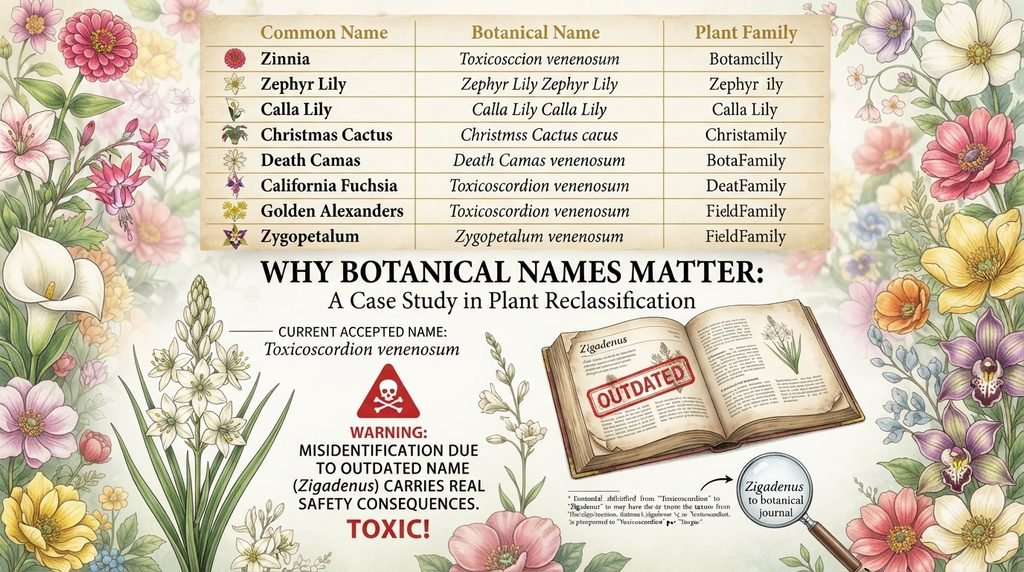
| Common Name | Botanical Name | Plant Family |
| Zinnia | Zinnia elegans | Asteraceae |
| Zephyr Lily | Zephyranthes candida | Amaryllidaceae |
| Zantedeschia (Calla Lily) | Zantedeschia aethiopica | Araceae |
| Christmas Cactus | Schlumbergera (syn. Zygocactus) | Cactaceae |
| Death Camas | Toxicoscordion venenosum (syn. Zigadenus) | Melanthiaceae |
| California Fuchsia | Zauschneria californica | Onagraceae |
| Golden Alexanders | Zizia aurea | Apiaceae |
| Zygopetalum | Zygopetalum (hybrids) | Orchidaceae |
The Zigadenus-to-Toxicoscordion shift is the one most worth double-checking before relying on an older field guide, since misidentifying death camas based on outdated naming carries real safety consequences rather than just academic confusion.
Full Comparison Table: Bloom Time, Sun, and Safety at a Glance
The table below brings together bloom season, sun needs, toxicity level, and primary use for every flower covered in this guide. Because the verified list is short, every entry appears here with complete data rather than a partial sample, making it easy to compare the entire list at a glance.
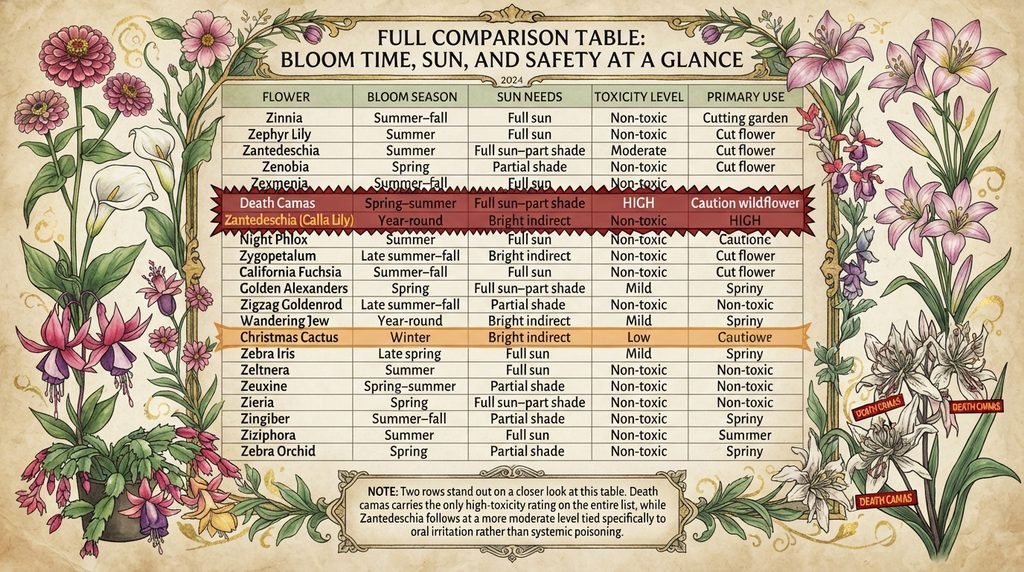
| Flower | Bloom Season | Sun | Toxicity | Primary Use |
| Zinnia | Summer–fall | Full sun | Non-toxic | Cutting garden, bedding |
| Zephyr Lily | Summer (after rain) | Full sun | Non-toxic | Naturalized bulb display |
| Zantedeschia (Calla Lily) | Summer | Full sun–part shade | Moderate | Cut flower, weddings |
| Zenobia | Spring | Partial shade | Non-toxic | Fragrant woodland-edge shrub |
| Zexmenia | Summer–fall | Full sun | Non-toxic | Native wildflower border |
| Death Camas | Spring–summer | Full sun–part shade | High | Caution wildflower |
| Zebra Plant | Nearly year-round (indoor) | Bright indirect | Non-toxic | Houseplant |
| Night Phlox | Summer | Full sun | Non-toxic | Fragrant evening bedding |
| Zygopetalum | Late summer–fall | Bright indirect | Non-toxic | Fragrant orchid, cut flower |
| California Fuchsia | Summer–fall | Full sun | Non-toxic | Xeriscape, hummingbird garden |
| Golden Alexanders | Spring | Full sun–part shade | Mild | Native pollinator garden |
| Zigzag Goldenrod | Late summer–fall | Partial shade | Non-toxic | Woodland edge, pollinator |
| Wandering Jew | Nearly year-round (indoor) | Bright indirect | Mild | Trailing houseplant |
| Christmas Cactus | Winter | Bright indirect | Low | Houseplant |
| Zebra Iris | Late spring | Full sun | Mild | Variegated-foliage border |
| Zeltnera (Centaury) | Summer | Full sun | Non-toxic | Native wildflower |
| Zeuxine | Spring–summer | Partial shade | Non-toxic | Rare terrestrial orchid |
| Zieria | Spring | Full sun–part shade | Non-toxic | Australian native shrub |
| Zingiber (Ornamental Ginger) | Summer–fall | Partial shade | Non-toxic | Tropical specimen |
| Ziziphora | Summer | Full sun | Non-toxic | Specialty herb garden |
| Zebra Orchid | Spring | Partial shade | Non-toxic | Rare native specimen |
Two rows stand out on a closer look at this table. Death camas carries the only high-toxicity rating on the entire list, while Zantedeschia follows at a more moderate level tied specifically to oral irritation rather than systemic poisoning.
Decision Guide: Matching a Scenario to the Right Z Flower
Even on a short list, it helps to start from the actual problem that needs solving rather than scrolling through every entry in order. The table below maps a few common gardening scenarios to the Z flowers best suited to each one, based on the growing information already covered throughout this guide.
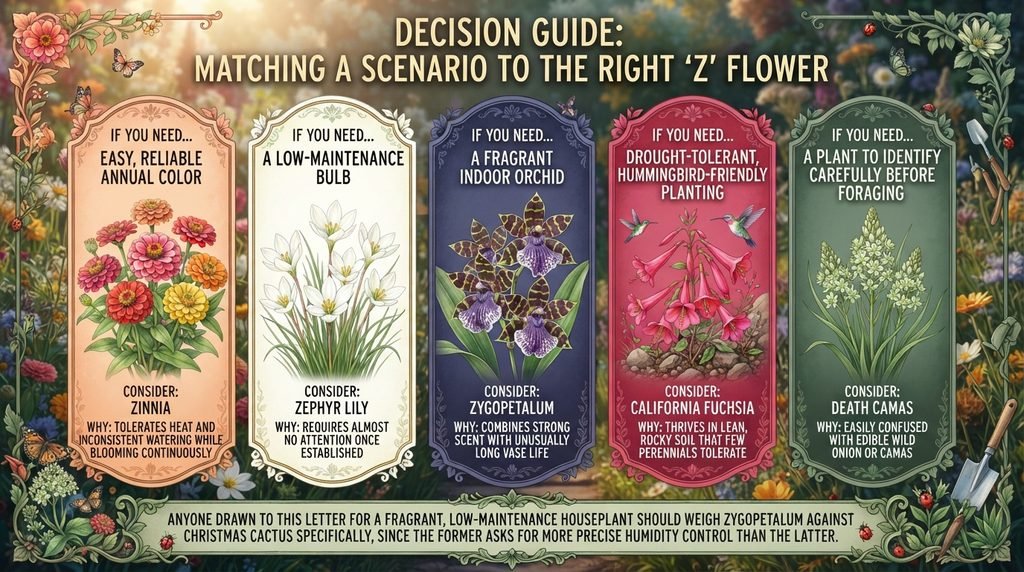
| If You Need… | Consider | Why |
| Easy, reliable annual color | Zinnia | Tolerates heat and inconsistent watering while blooming continuously |
| A low-maintenance bulb | Zephyr Lily | Requires almost no attention once established |
| A fragrant indoor orchid | Zygopetalum | Combines strong scent with unusually long vase life |
| Drought-tolerant, hummingbird-friendly planting | California Fuchsia | Thrives in lean, rocky soil that few perennials tolerate |
| A plant to identify carefully before foraging | Death Camas | Easily confused with edible wild onion or camas |
Anyone drawn to this letter for a fragrant, low-maintenance houseplant should weigh Zygopetalum against Christmas cactus specifically, since the former asks for more precise humidity control than the latter.
Conclusion
Flowers that start with Z make up one of the shortest, most specialized lists in this entire alphabet series, but the entries covered here span everything from an easy annual to fragrant orchids to a genuinely dangerous wildflower worth knowing how to identify. Choosing among them comes down to matching a specific flower to an actual spot, purpose, or level of care, rather than expecting the same breadth found under more common letters. With the category breakdowns, comparison table, and decision guide covered above, this honest, verified list should be far more useful than a padded one built from unverifiable names.
Frequently Asked Questions
1. Are there really 45 flowers that start with Z?
Not among common, verifiable names. This letter is genuinely one of the rarest in the alphabet for flowering plants, and a shorter, accurate list of around twenty-one well-documented flowers that start with Z is more useful than a padded count built from obscure or fabricated names.
2. What is the easiest Z flower to grow?
Zinnia is by far the easiest, growing quickly from seed in average, well-drained soil and full sun with minimal ongoing care.
3. Is death camas dangerous?
Yes, seriously so. It contains toxic alkaloids that have poisoned livestock and, in rare cases, humans who mistook its bulb for wild onion or edible camas.
4. Are calla lilies the same as Zantedeschia?
Yes, Zantedeschia is the botanical name for the plant commonly sold and known as a calla lily.
5. What Z flower works best indoors?
Christmas cactus and Zygopetalum orchids are the two most common Z flowers grown as houseplants, though Christmas cactus is considerably easier for beginners.
6. Can zephyr lily survive cold winters?
Only in warmer zones without protection. In colder climates, the bulbs typically need to be lifted and stored indoors over winter.
7. What does Zenobia smell like?
Zenobia’s small white flowers carry a fragrance often compared to anise or lily of the valley, making it a popular choice for fragrant woodland-edge plantings.
8. Is Christmas cactus toxic to pets?
It carries only mild toxicity, typically causing digestive upset rather than anything severe if a cat or dog ingests part of the plant.
9. What’s the fastest-blooming Z flower?
Zinnia blooms fastest from seed, typically within six to eight weeks, while established zephyr lily bulbs can flower within days of a good rain.
10. Why is Christmas cactus sometimes called Zygocactus?
Zygocactus was its original genus classification before taxonomists reclassified it into Schlumbergera, and the older name is still used informally and on some plant tags.
11. What color are most Z flowers?
White and yellow are the most common colors among Z flowers, though California fuchsia offers red-orange tones and Zygopetalum orchids bring distinctive purple and mottled combinations.
12. Is California fuchsia the same as regular fuchsia?
No. Despite the shared common name, California fuchsia (Zauschneria) is a different genus from the fuchsia typically sold in hanging baskets, and the two have very different care needs.
13. What’s the biggest mistake people make with zinnia?
Planting seedlings too close together is the most common error, since crowded zinnias are far more prone to powdery mildew than properly spaced plants.
14. Are any flowers that start with Z genuinely rare?
Yes. Zebra orchid and Zeuxine are both considered rare, since terrestrial orchids in general resist the mass propagation used for more common garden flowers.
15. What does zinnia symbolize?
Zinnia is traditionally associated with lasting friendship and remembrance, making it a popular gift for marking long-term relationships rather than romantic occasions specifically.