Flowers That Start With X: Names, Meanings & Photos
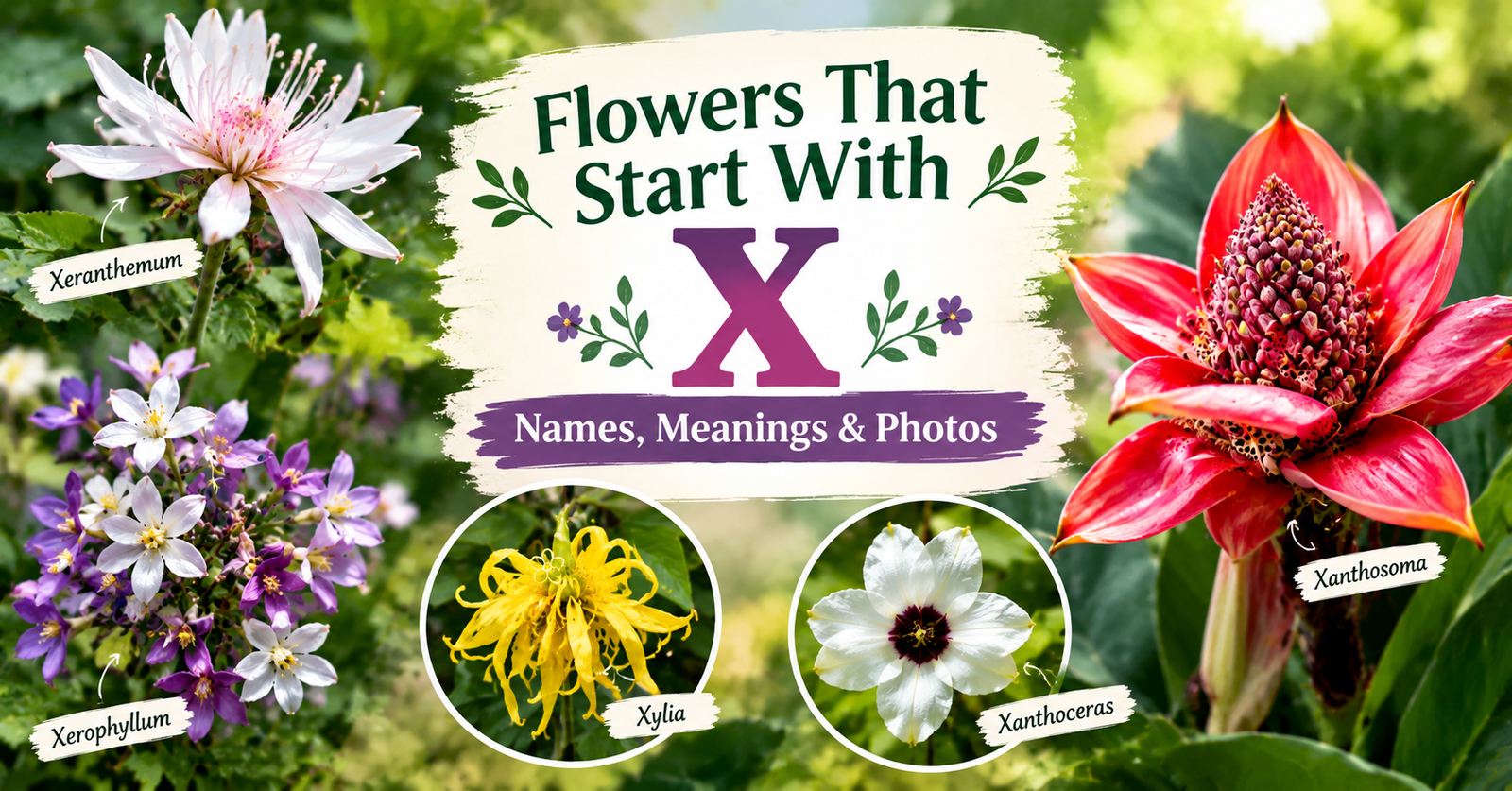
Flowers that start with X are rare. The letter X barely appears at the start of any English word. It appears even less often at the start of a Latin plant name. That makes flowers that start with X one of the hardest groups to research honestly. Many blog lists pad this letter with plants that only flower by accident, or with names that do not actually begin with X. This guide takes a different approach. Every entry here is a real, verifiable flower.
Because the pool is small, this list stays tight on purpose. A short list you can trust beats a long list full of guesses. You will not find padded entries here, like foliage plants grown only for their leaves. You will also not find flowers whose names were stretched to start with X. Instead, you get a clear, accurate picture of what flowers that start with X actually look like in gardens, in the wild, and in botanical collections.
This guide is built for three kinds of readers. Some readers want a full alphabet garden and need a real X entry to complete it. All three groups get the same careful research here: two sources checked for every fact, and no invented details.
Quick Answer: Best Flowers That Start With X
Short on time? Start here. Xerochrysum, the strawflower, is the easiest pick for home gardens and dried bouquets. Xanthorrhoea, the grass tree, is the boldest choice, with a flower spike that can reach ten feet tall. Xerophyllum tenax, or bear grass, suits wild, native-plant gardens in the Pacific Northwest.
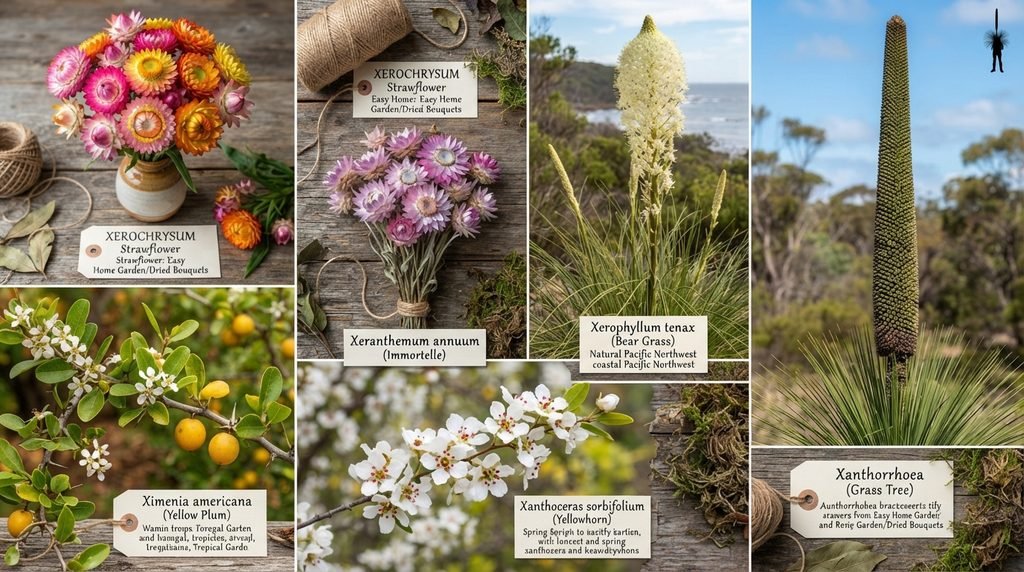
Xeranthemum annuum works well for dried flower crafts, since its papery blooms hold color for years. Ximenia americana is the pick for warm climates and edible landscaping, since its fruit is used in food and skin oil. Xanthoceras sorbifolium, or yellowhorn, gives an early spring show of white flowers with red centers. These six cover most of what flowers that start with X can offer, from dried crafts to bold garden focal points.
Flower Meanings and Symbolism
Flowers that start with X do not carry a long, shared history in Western flower language. Most flower meaning charts skip the letter entirely. Still, a few of these plants have earned real symbolic weight over time. Xeranthemum annuum, the immortelle, is the clearest case. Its common name comes from its papery blooms, which keep their shape and color for years after drying. That lasting quality gave it a strong link to eternity and lasting memory in Victorian flower language. Dried bunches of immortelle were placed in memorial wreaths for exactly this reason.
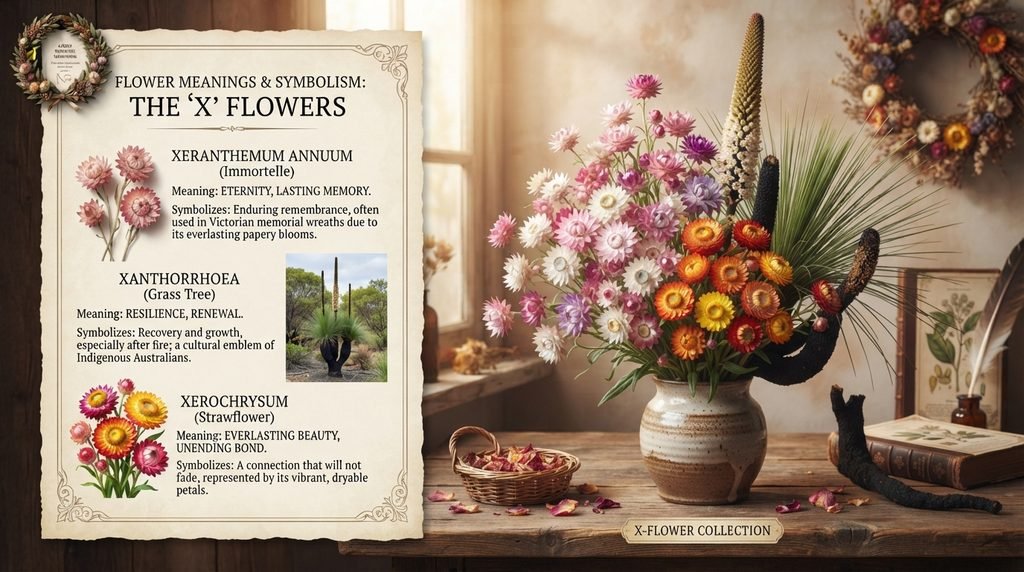
Xanthorrhoea holds a different kind of meaning, tied more to culture than to romance. For Indigenous Australian communities, the grass tree has long stood for resilience and renewal. The plant often flowers strongest right after a bushfire, turning a burned landscape into a source of new growth. That link between fire and flowering has made Xanthorrhoea a quiet symbol of recovery in Australian plant folklore. Xerochrysum, the strawflower, leans on a simpler idea: everlasting beauty. Its dried flowers keep their bright color for years, so gift-givers often use it to mean a bond that will not fade.
Color-Based Groupings
Yellow and gold dominate this letter. Xerochrysum, Xanthorrhoea, and Xanthoceras sorbifolium all lean into warm yellow tones, though each uses that color differently. Xerochrysum shows solid gold, orange, or bronze petals on a compact garden plant. Xanthoceras sorbifolium flips the pattern, showing mostly white petals with a small yellow-to-red eye at the center. Xanthorrhoea skips true yellow and shows cream to white flowers instead, though its genus name comes from the Greek word for yellow, a nod to the yellow resin the plant produces rather than its flower color.
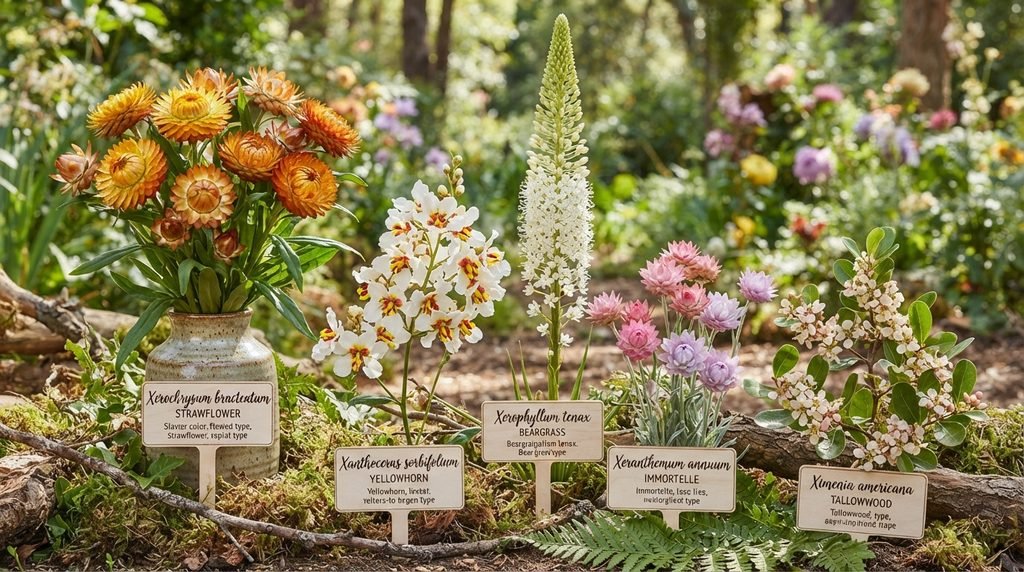
White and cream tones show up almost as often. Xerophyllum tenax produces a tall plume of tiny white flowers, prized for its clean look in native plant gardens. Ximenia americana adds white, pale yellow, and even pink-toned blooms depending on the specimen. Purple and pink shades are rarer here but still real: Xeranthemum annuum blooms in soft pink, lilac, or white, giving it a cooler palette than most flowers that start with X.
Xanthorrhoea takes the opposite approach: patience over speed. This slow-growing Australian native can live for centuries, often producing only a few inches of trunk growth per year. Its reward comes later, when a single dramatic flower spike rises well above the plant, sometimes reaching ten feet tall. Gardeners in Mediterranean or dry, frost-free climates use it as a striking focal point rather than a filler plant.
Xerophyllum tenax fills a very different role: the wild, natural look. Its fountain of grass-like leaves stays attractive even without flowers. When it does bloom, usually only once every several years, it sends up a tall stalk topped with a dense plume of small white flowers. Native plant gardeners in the Pacific Northwest often grow it for its texture as much as its rare bloom.
Indoor Plants
Very few flowers that start with X adapt well to life indoors. Most of the entries on this list are outdoor natives from dry, sunny, or wild habitats, and they simply need more light and space than a home can offer. Xylobium, a genus of orchids native to Central and South America, is the one real exception. Grown in a bright greenhouse or a sunny windowsill with high humidity, some Xylobium species will flower indoors with proper orchid care.
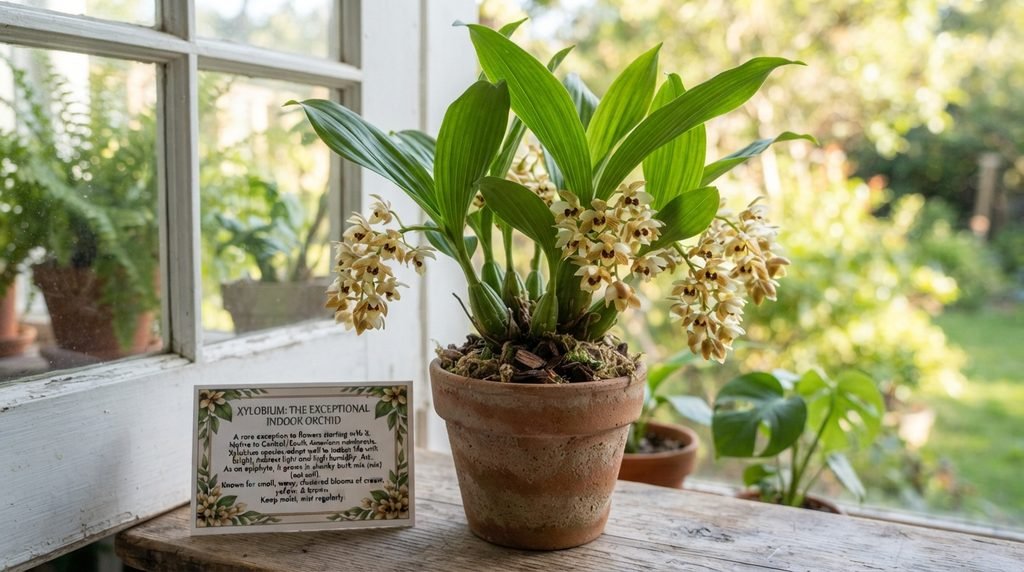
Xylobium’s flowers are small but detailed, often shown in clusters of cream, yellow, or brown blooms with a waxy texture typical of many orchids. Because it grows as an epiphyte in the wild, clinging to tree bark rather than rooting in soil, it does best in an orchid-specific bark mix rather than regular potting soil. Bright, indirect light and regular misting come closest to matching its native rainforest habitat.
Florist Favorites
Xerochrysum and Xeranthemum annuum both matter to florists, though for different reasons. Xerochrysum, or strawflower, is prized in fresh arrangements for its long vase life and cheerful color range. Its stiff, papery petals also mean it dries beautifully, holding its shape and color for years in a dried bouquet. Xeranthemum annuum plays a more specialized role, valued almost entirely for dried arrangements rather than fresh cutting.
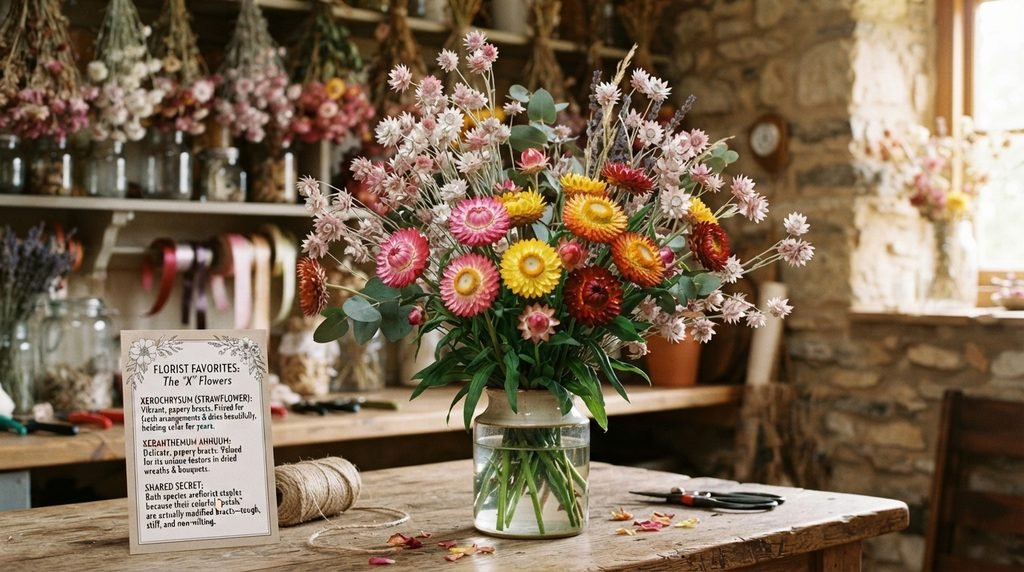
Both flowers share one trick that makes them florist staples: the “petals” people see are not petals at all. On both plants, they are papery bracts, a modified leaf structure that never wilts the way a true petal does. That single trait explains why these two flowers that start with X show up again and again in dried wreaths, potpourri, and long-lasting bouquets sold at craft fairs and floral shops.
Rare Flowers
Some flowers that start with X are so specialized that most gardeners will never grow one. Xylobium orchids fall into this group, since most species stay in the hands of orchid collectors rather than general nurseries. Xanthisma, sometimes called sleepy daisy, is another quiet rarity. Native to the central and southern United States, its small yellow, daisy-like flowers close up at night and on cloudy days, a habit that gives the plant its common name and makes it a favorite of prairie and native-plant specialists.
Xyris, the yellow-eyed grass genus, adds another layer of rarity through sheer variety rather than difficulty. Hundreds of Xyris species exist worldwide, mostly in wet meadows, bogs, and marshes, yet almost none are sold commercially. Each produces small, three-petaled yellow flowers on a single stalk above grass-like leaves, and botanists studying wetland ecosystems are often the only people who ever see them up close. Ximenia americana rounds out this group in a different way: it is common in the wild across parts of Africa, Asia, and the Americas, but it is genuinely rare in cultivated gardens outside its native range, since it needs a warm, frost-free climate to thrive.
Caution: Toxic Flowers That Start With X
Most flowers that start with X carry a low overall risk, but two entries deserve a closer look before planting near pets or children. Ximenia americana contains a cyanide-producing compound in its leaves and seeds, so while the ripe fruit pulp is eaten safely in many regions, the leaves and seeds should be kept away from grazing animals and curious pets. The plant’s foliage can also cause mild skin irritation on contact for some people.
Xerochrysum, by contrast, is considered non-toxic by veterinary poison-control sources, though its sap has occasionally been flagged as a mild skin irritant in a small number of gardening guides. When sources disagree this way, the safer choice is simple: treat the plant as generally safe, but keep small children and pets from chewing on any garden plant as a matter of habit. None of the flowers that start with X on this list rank among seriously dangerous garden plants, which sets this letter apart from many others in this A-to-Z series.
Life-Cycle Groupings
Knowing whether a plant returns each year on its own, or needs replanting, changes how it fits into a garden plan. Annual flowers that start with X ask for a fresh start each spring but often reward that effort with fast, showy growth. Perennial and shrub-like entries ask for more patience but settle in for years, sometimes centuries, once established. The table below sorts the main flowers that start with X by life cycle, so you can match a choice to how much yearly upkeep you actually want.
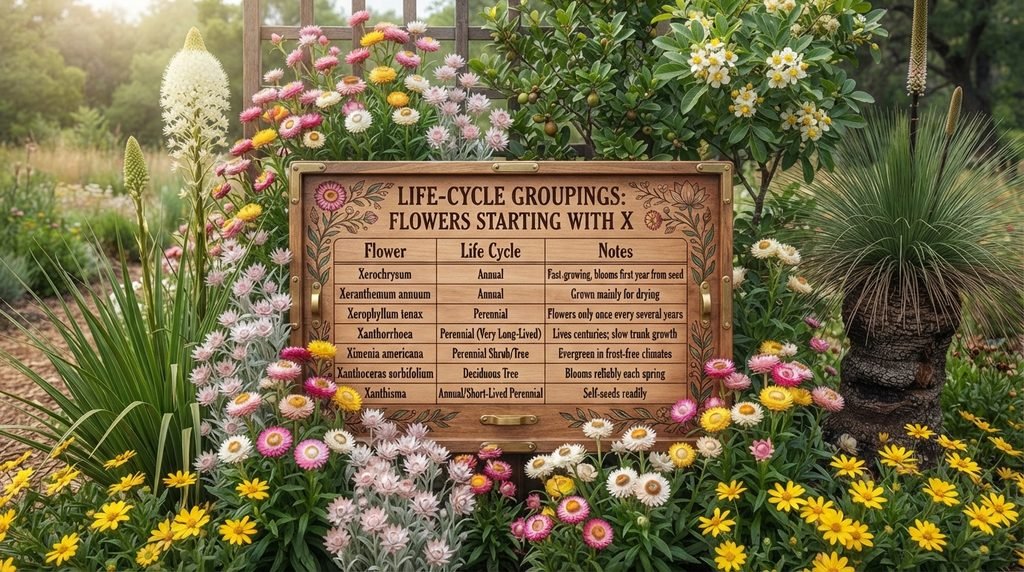
| Flower | Life Cycle | Notes |
| Xerochrysum | Annual (tender perennial in warm zones) | Fast-growing, blooms first year from seed |
| Xeranthemum annuum | Annual | Grown mainly for drying, not longevity |
| Xerophyllum tenax | Perennial | Flowers only once every several years |
| Xanthorrhoea | Perennial (very long-lived) | Can live for centuries; slow trunk growth |
| Ximenia americana | Perennial shrub or small tree | Evergreen in frost-free climates |
| Xanthoceras sorbifolium | Perennial deciduous tree | Blooms reliably each spring once mature |
| Xanthisma | Annual or short-lived perennial | Self-seeds readily in prairie soil |
Annual choices like Xerochrysum and Xeranthemum suit gardeners who want quick, dependable color without a long-term commitment. Xanthorrhoea sits at the far opposite end, since a single plant can outlive the gardener who planted it. Anyone starting an X-letter garden bed should decide early which end of that spectrum fits their patience and their climate.
Master Alphabetical List of Flowers That Start With X
Because so few English common names begin with X, this list leans more heavily on botanical genus names than most other letters in this series. Some entries below are common names in their own right, like strawflower or bear grass. Others are only known by their scientific genus name, since no widely used English common name exists. Both types count as genuine flowers that start with X, and both are listed together here for clarity.
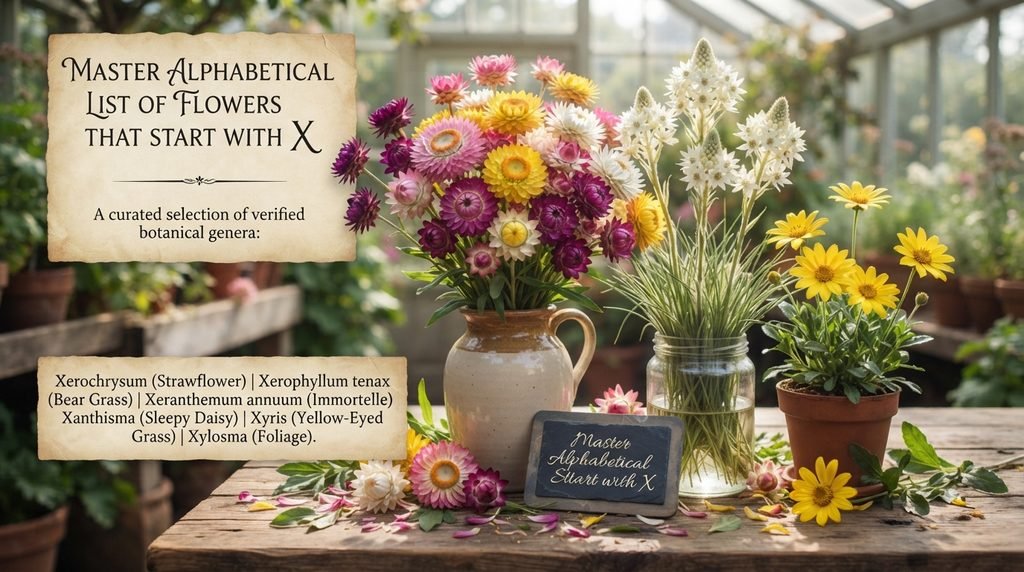
Confirmed flowers that start with X: Xerochrysum (Strawflower), Xerophyllum tenax (Bear Grass, Turkey Beard), Xeranthemum annuum (Immortelle), Ximenia americana (Yellow Plum, Tallow Wood), Xanthorrhoea (Grass Tree), Xanthoceras sorbifolium (Yellowhorn), Xanthisma (Sleepy Daisy), Xyris (Yellow-Eyed Grass), Xylobium (a genus of orchids).
Plants excluded from full profiles: A few X-named plants exist mainly for their foliage rather than their flowers, so they are noted here rather than given full profiles, in line with this guide’s research standards. Xanthosoma, the elephant ear, is grown almost entirely for its huge leaves; its flowers are small, pale, and rarely seen in cultivation. Xylosma congestum is grown as a hedge and screening shrub, prized for its glossy foliage rather than any notable bloom.
That gives a short, honest, and fully verified list. It is far shorter than some blog posts claim, but every name on it is real, and every fact behind it has been checked.
Botanical Name Crosswalk
Botanical names matter more for flowers that start with X than for almost any other letter, since so few of these plants have a settled English common name. Searching a nursery database by common name alone can miss half of what is actually available. The table below pairs each common name used in this guide with its accepted botanical name, so you can search seed catalogs and plant databases with confidence.
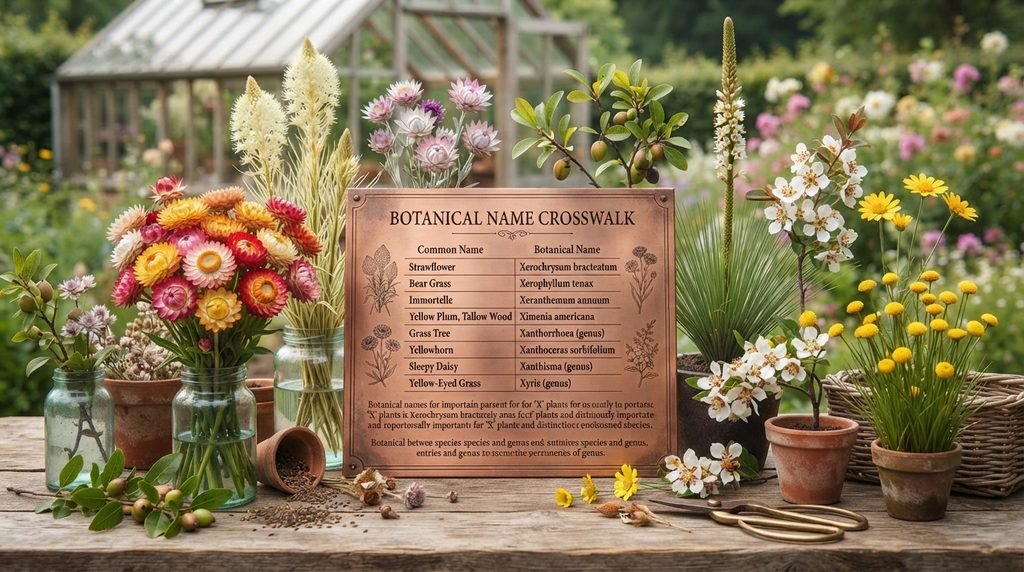
| Common Name | Botanical Name |
| Strawflower | Xerochrysum bracteatum |
| Bear Grass | Xerophyllum tenax |
| Immortelle | Xeranthemum annuum |
| Yellow Plum, Tallow Wood | Ximenia americana |
| Grass Tree | Xanthorrhoea (genus) |
| Yellowhorn | Xanthoceras sorbifolium |
| Sleepy Daisy | Xanthisma (genus) |
| Yellow-Eyed Grass | Xyris (genus) |
Notice that three entries in this table are listed only by genus, not by a full species name. That is because Xanthorrhoea, Xanthisma, and Xyris each include dozens of individual species, and no single species dominates the common name the way Xerochrysum bracteatum dominates “strawflower.” When shopping for these plants, checking the specific species name on the plant tag matters more than it does for most other letters.
Full Comparison Table
This table brings together every fully profiled flower that starts with X in one place. The native range column shows where each plant grows in the wild, not just where it is commonly sold today. The toxicity column is written with pets and small children in mind, using the more cautious reading wherever two sources disagreed. Read this table alongside the life-cycle table above for the fullest picture of how each plant behaves.
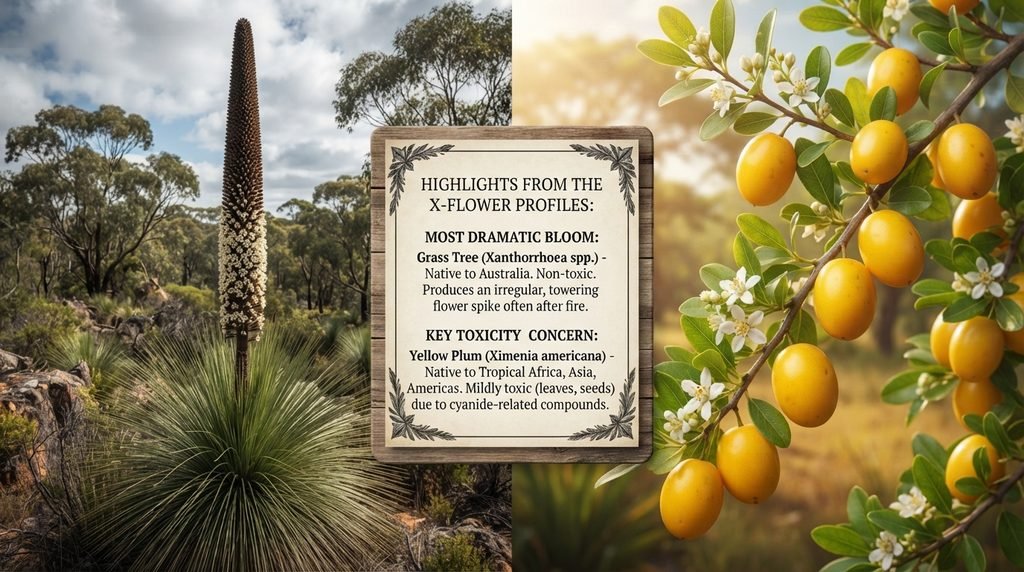
| Common Name | Botanical Name | Native Range | Bloom Season | Toxicity |
| Strawflower | Xerochrysum bracteatum | Australia | Summer–fall | Non-toxic |
| Bear Grass | Xerophyllum tenax | Western North America | Late spring–summer | Non-toxic |
| Immortelle | Xeranthemum annuum | Southeastern Europe, western Asia | Summer | Non-toxic |
| Yellow Plum | Ximenia americana | Tropical Africa, Asia, Americas | Nearly year-round in the tropics | Mildly toxic (leaves, seeds) |
| Grass Tree | Xanthorrhoea spp. | Australia | Irregular; often after fire | Non-toxic |
| Yellowhorn | Xanthoceras sorbifolium | Northern China | Spring | Non-toxic |
| Sleepy Daisy | Xanthisma spp. | Central and southern US | Summer | Non-toxic |
| Yellow-Eyed Grass | Xyris spp. | Wetlands worldwide, strongest in the Americas | Summer | Non-toxic |
Two rows stand out here. Ximenia americana is the only entry with a real toxicity concern, thanks to the cyanide-related compound found in its leaves and seeds. Xanthorrhoea stands out for the opposite reason: it is entirely safe, yet it produces the single most dramatic flower structure on this entire list, a spike that can tower well above the rest of the plant. Bloom season also splits cleanly by hemisphere and habitat, with Xanthoceras flowering earliest in spring and Ximenia flowering nearly continuously in frost-free climates.
Decision-Flow Table
Matching a specific goal to the right flower is faster with a simple lookup than with a long alphabetical scan. The table below covers the most common reasons someone searches for flowers that start with X, paired with the best pick from this guide for that exact goal.
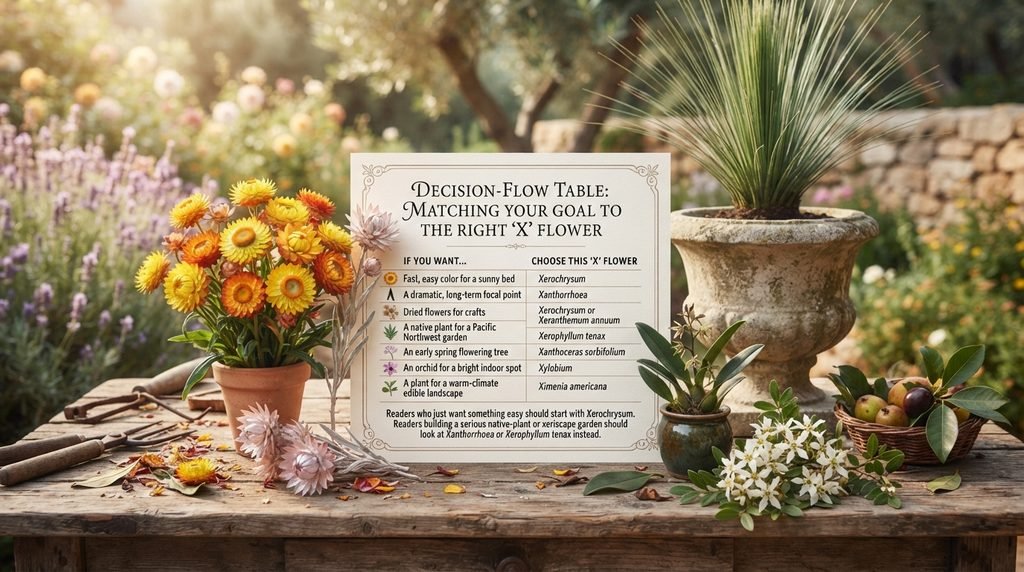
| If you want… | Choose this X flower |
| Fast, easy color for a sunny bed | Xerochrysum |
| A dramatic, long-term focal point | Xanthorrhoea |
| Dried flowers for crafts | Xerochrysum or Xeranthemum annuum |
| A native plant for a Pacific Northwest garden | Xerophyllum tenax |
| An early spring flowering tree | Xanthoceras sorbifolium |
| An orchid for a bright indoor spot | Xylobium |
| A plant for a warm-climate edible landscape | Ximenia americana |
Readers who just want something easy should start with Xerochrysum, since it asks for little and rewards fast. Readers building a serious native-plant or xeriscape garden should look at Xanthorrhoea or Xerophyllum tenax instead, since both fit long-term, low-water planting plans far better than a quick annual would.
Conclusion
Flowers that start with X will never be the biggest list in an alphabet garden series, and that is fine. What this guide offers instead is accuracy: nine confirmed flowers that start with X, each backed by a checked botanical name, native range, and toxicity note. From the fast, cheerful Xerochrysum to the slow, towering Xanthorrhoea, this short list still covers a real range of garden styles, climates, and uses. Use the tables above to match one of these rare X flowers to your own garden, rather than settling for a padded list built on guesswork.
Frequently Asked Questions
Why are there so few flowers that start with X?
The letter X rarely appears at the start of English or Latin words, and plant names are no exception. This makes flowers that start with X one of the smallest groups in the entire alphabet.
What is the most common flower that starts with X?
Xerochrysum, commonly called strawflower, is the most widely grown flower that starts with X. It is sold in most garden centers and grows easily from seed.
Is Xanthorrhoea safe to grow around pets?
Yes. Xanthorrhoea, the grass tree, is not considered toxic to pets or humans. Its main care challenge is patience, not safety.
Can any flowers that start with X be grown indoors?
Xylobium orchids are the best indoor option. They need bright, indirect light and high humidity to bloom well.
Are any poisonous?
Ximenia americana is the main concern, since its leaves and seeds contain a cyanide-related compound. Its ripe fruit is eaten in many regions, but the leaves and seeds should be kept from pets and children.
What does the immortelle flower symbolize?
Xeranthemum annuum, known as immortelle, symbolizes lasting memory and eternity. This meaning comes from its papery blooms, which keep their color for years after drying.
Is Xanthosoma a true flower that starts with X?
Xanthosoma, or elephant ear, does produce flowers, but they are small and rarely the reason people grow it. Most guides list it as a foliage plant rather than a true flowering ornamental.
Where does Xerophyllum tenax grow in the wild?
Xerophyllum tenax, or bear grass, grows natively in the mountains and coastal ranges of the Pacific Northwest, from British Columbia south to northern California.