60 Beautiful Flowers That Start With F: Names, Photos & Growing Tips
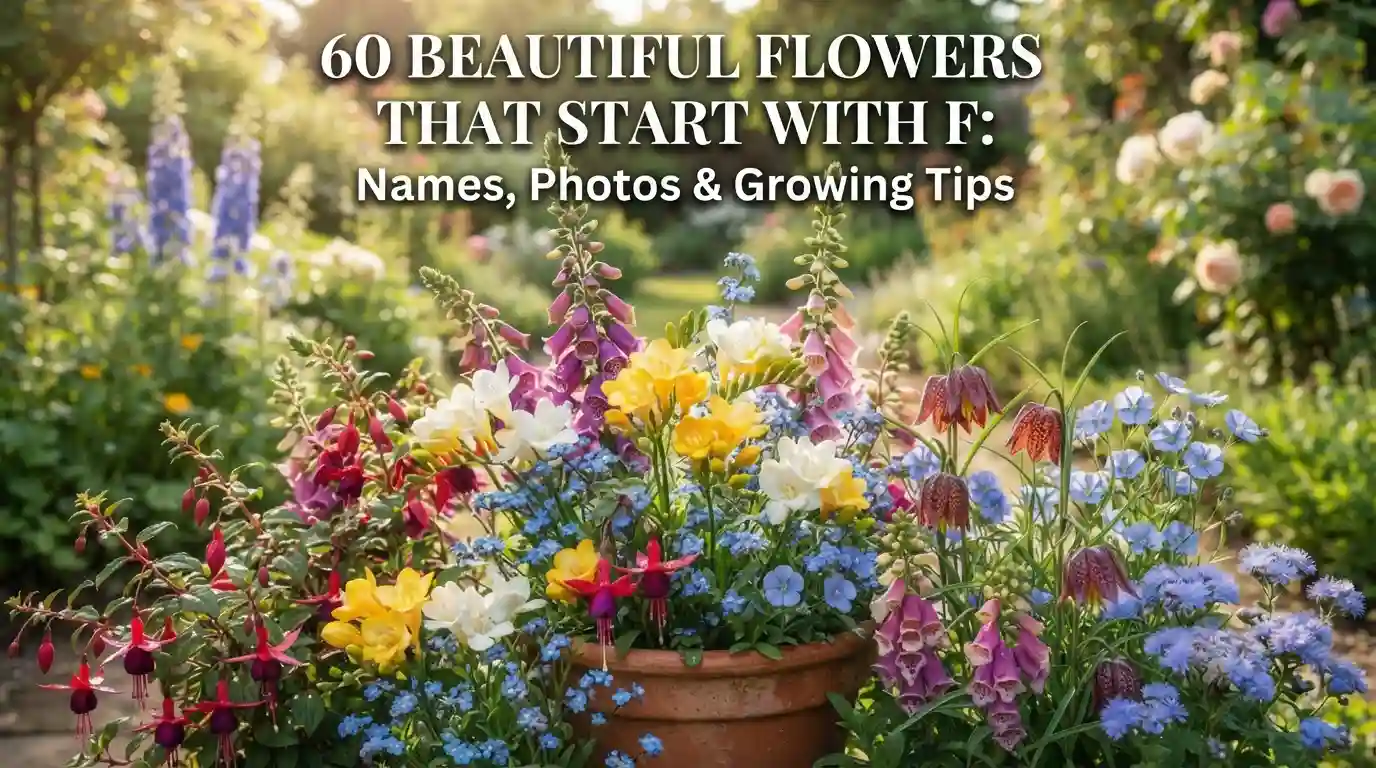
Flowers that start with F cover an unusually wide stretch of the plant world, from the foxglove spikes lining a shaded cottage border to the frangipani blossoms scenting a tropical evening, all the way to the fringed gentian that alpine gardeners spend years trying to coax into bloom. Few letters in the alphabet stretch across so many climates, growth habits, and skill levels at once, which is part of why a scattered, purely alphabetical list rarely does this letter justice.
This guide brings together sixty flowers that start with F, each one verified individually for its botanical name, native range, and toxicity rather than pulled from a single source and lightly rewritten. Every entry earns its place because the flower itself is the reason people grow the plant, which is why a few popular F-named foliage plants were deliberately left off this list despite their popularity in other contexts.
Quick Answer: The Standout F Flowers
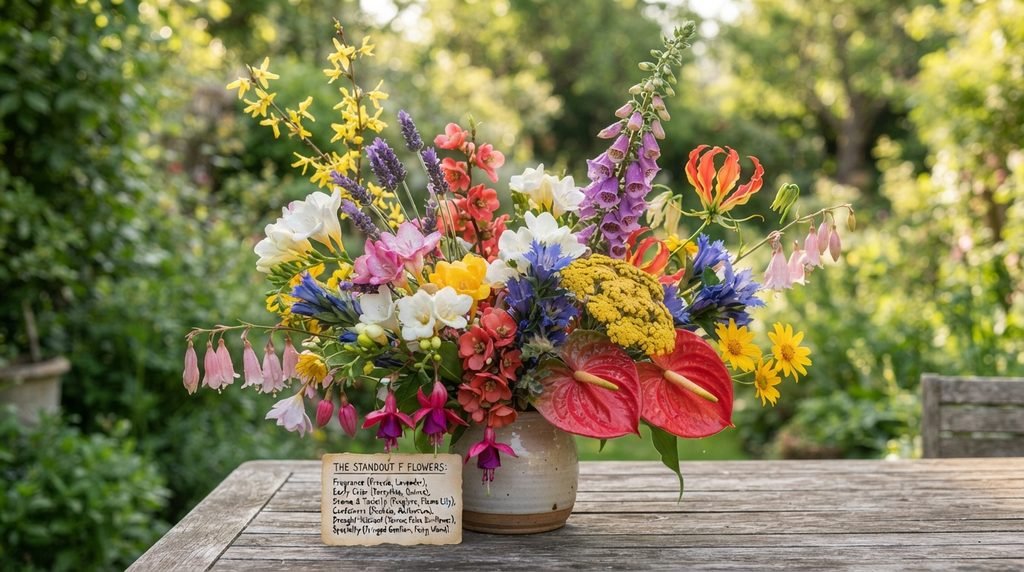
Readers looking for a fast recommendation will find a few names on this list doing most of the heavy lifting. Freesia and French lavender cover fragrance better than almost anything else here, while forsythia and flowering quince bring reliable, low-maintenance color to the earliest weeks of spring. Foxglove and flame lily deliver genuine drama, though both demand real caution around children and pets given their toxicity. Fuchsia and flamingo flower (Anthurium) dominate the container and houseplant side of this list, and fernleaf yarrow and false sunflower stand out as some of the most drought-tolerant, pollinator-friendly perennials available under any letter. Fringed gentian and fairy wand round out the group as two of the most distinctive, harder-to-find specialty blooms a dedicated gardener might chase down.
What These Flowers Are Said to Represent
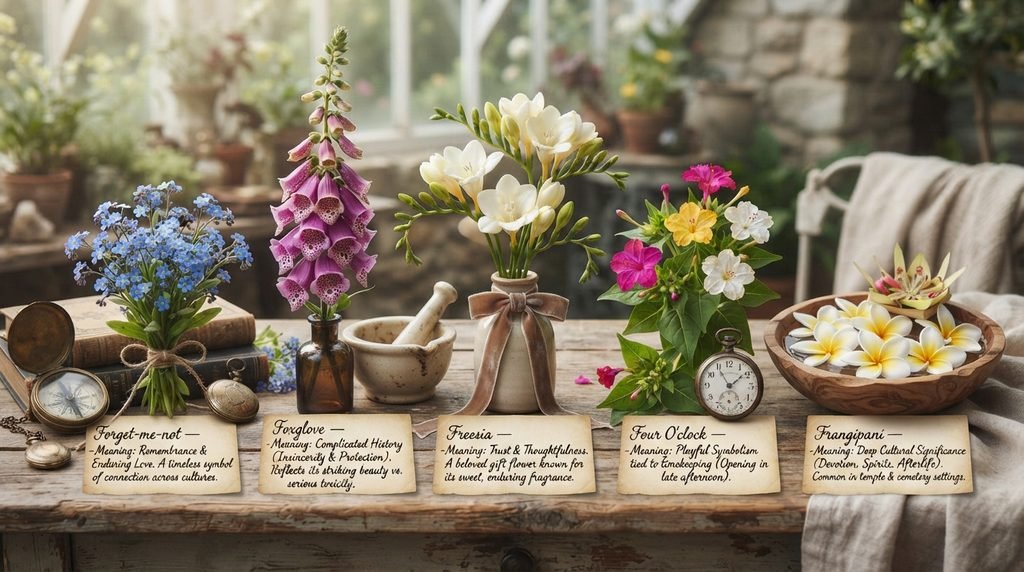
Symbolism across this letter ranges from centuries-old tradition to more modern, informal associations tied to how a plant actually behaves in the garden. Forget-me-not carries perhaps the most universally recognized meaning on this list, tied to remembrance and enduring love in cultures across Europe and beyond, a symbolism so consistent that the flower’s very name doubles as its meaning. Foxglove, by contrast, carries a more complicated symbolic history — associated with both insincerity and protection depending on the tradition, likely a reflection of the plant’s genuine duality as both a striking garden flower and a serious toxicity risk.
Freesia’s symbolism leans toward trust and thoughtfulness, a meaning that grew alongside its popularity as a gift flower once its fragrance made it a florist favorite in the twentieth century. The four o’clock flower carries a more literal, almost playful symbolism tied directly to its habit of opening in late afternoon, historically associated in some traditions with timekeeping and the transition from day to evening. Frangipani holds deep cultural significance across parts of Asia and the Pacific, associated with both devotion and, in some regions, with spirits and the afterlife, which explains why it appears so often in temple grounds and cemetery plantings rather than purely ornamental settings.
Sorting These Flowers by Color
White-flowering entries on this list tend toward understated elegance, led by flannel flower’s papery white daisy blooms, flowering dogwood’s four-petaled spring display, and the fried egg flower’s crepe-paper white petals wrapped around a golden center. Fothergilla contributes a different kind of white through its bottlebrush-shaped flower spikes, and several freesia cultivars round out this group with a fragrance that outperforms their relatively simple white form.
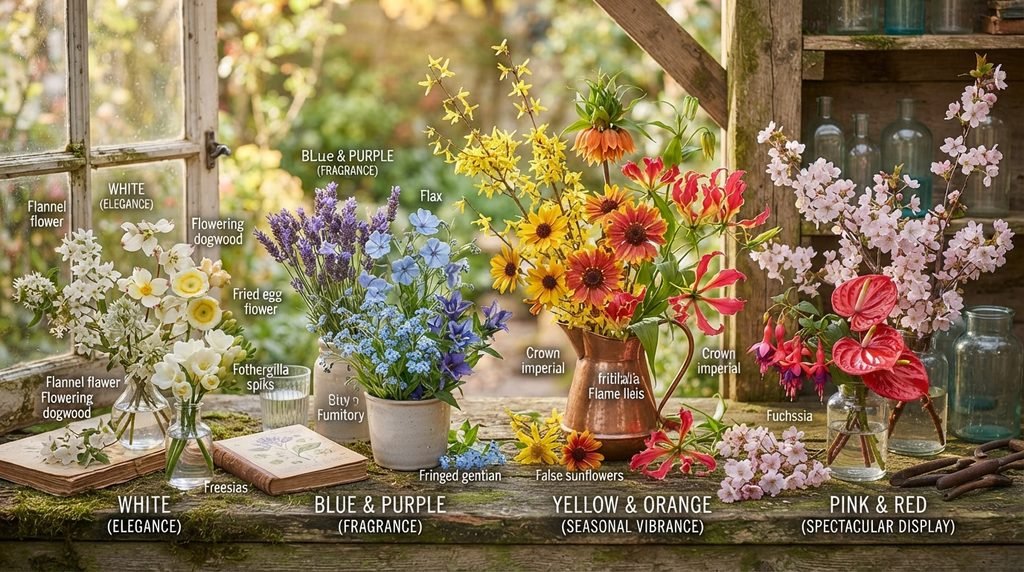
Blue and purple tones cluster heavily around fragrance-forward plants, including French lavender, flax flower’s sky-blue blooms, and forget-me-not’s small but unmistakable clear-blue flowers. Fringed gentian and fumitory add deeper violet-blue notes to this group, both prized by gardeners specifically chasing an unusual blue that’s harder to find than the more common pinks and yellows elsewhere on this list.
Yellow and orange tones dominate the earliest and latest parts of the bloom calendar for this letter, appearing in forsythia’s late-winter branches, false sunflower’s long summer display, and the fiery red-orange centers of firewheel. Crown imperial fritillaria and flame lily both bring a bolder, more saturated orange into this group, standing out as much for their unusual flower shape as for their color. Pink and red tones round out the list with fuchsia’s pendant blooms, flamingo flower’s glossy red spathes, and the soft spring pink of flowering cherry and flowering almond, both of which are grown as much for their brief but spectacular seasonal display as for any individual bloom’s lasting quality.
Garden Favorites: Reliable Performers for Beds and Borders
A core group of dependable, widely available plants carries most of the weight for gardeners working through this letter in an ordinary backyard bed. Forsythia earns its reputation as one of the most reliable early-spring shrubs available, covering itself in yellow blooms before most other plants have even broken dormancy, and it tolerates poor soil and minimal care once established. Fernleaf yarrow performs a similar low-maintenance role later in the season, offering flat-topped yellow flower clusters that hold up to heat, drought, and neglect better than most showier perennials.
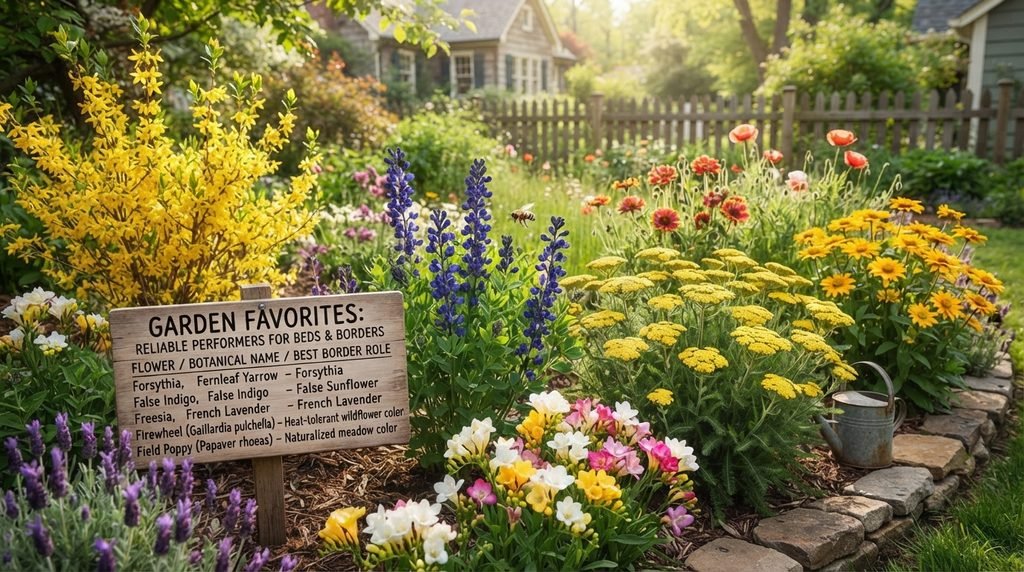
False indigo and false sunflower both bring genuine native-plant reliability to a border, feeding pollinators for months while asking for very little beyond an initial season of establishment. Freesia and French lavender cover the fragrance side of this group, though freesia performs best as a bulb lifted or replanted seasonally in colder climates, while French lavender tolerates a wider range of conditions than its more famous English relative in warmer, drier gardens specifically.
| Flower | Botanical Name | Best Border Role |
| Forsythia | Forsythia × intermedia | Early-spring flowering hedge |
| Fernleaf Yarrow | Achillea filipendulina | Drought-tolerant mid-border, cut flower |
| False Indigo | Baptisia australis | Native pollinator anchor |
| False Sunflower | Heliopsis helianthoides | Long-blooming summer perennial |
| Freesia | Freesia hybrida | Fragrant spring bulb |
| French Lavender | Lavandula stoechas | Fragrant edging, warm, dry climates |
| Firewheel (Gaillardia) | Gaillardia pulchella | Heat-tolerant wildflower color |
| Field Poppy | Papaver rhoeas | Naturalized meadow color |
Firewheel and field poppy both stand out within this table for their genuine self-seeding ability, meaning a single planting can return year after year in a naturalized area with almost no ongoing effort, unlike most of the other entries here, which need at least occasional dividing or replanting to stay vigorous.
Indoor Plants: F Flowers for Pots and Windowsills
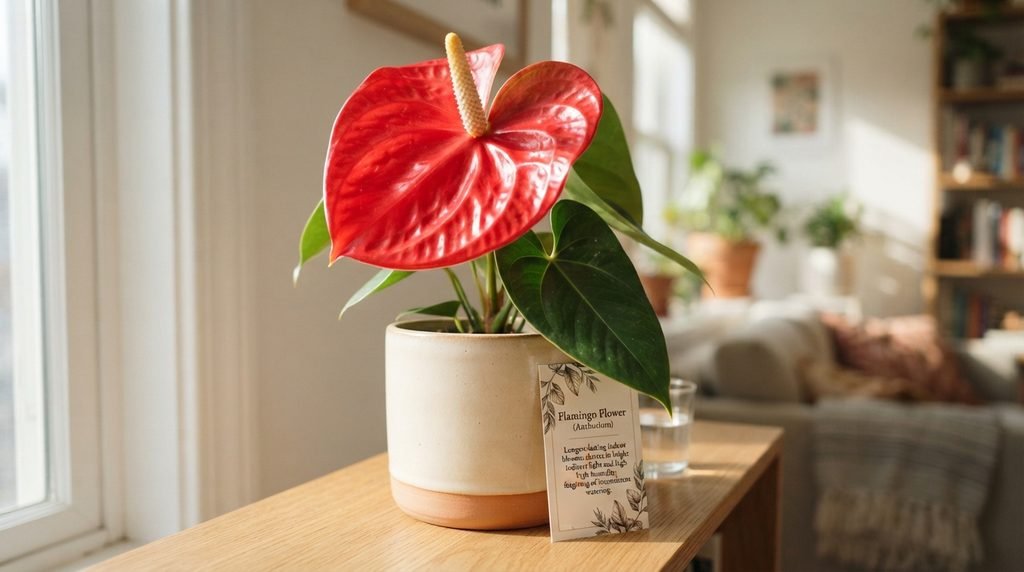
A smaller group of F flowers performs best entirely indoors, where consistent warmth and humidity make up for conditions that would be difficult to sustain outdoors in most temperate climates. Flamingo flower, commonly sold under its botanical name Anthurium, produces a glossy, heart-shaped red or pink spathe that can last for weeks at a time, making it one of the longest-lasting blooming houseplants available at any price point.
Firecracker flower, botanically Crossandra, rounds out this indoor group with clusters of small orange or salmon blooms that appear nearly continuously under bright indoor light, making it a reliable, long-blooming choice for anyone without the outdoor space or climate to grow it as a permanent garden shrub.
- Flamingo Flower (Anthurium) — bright indirect light, high humidity
- Fuchsia — bright indirect light, consistently moist soil, cool nights
- Firecracker Flower (Crossandra) — bright light, warm temperatures year-round
Flamingo flower is worth singling out here as the most forgiving of the three for an inconsistent watering schedule, while fuchsia is the most demanding, since it tends to drop both buds and leaves quickly if its soil dries out even briefly during active growth.
Florist Favorites: F Flowers Built for Cutting and Arranging
Cut-flower value depends heavily on vase life, stem strength, and fragrance, and this letter offers several genuinely strong performers across all three categories. Freesia remains one of the most requested fragrant cut flowers in the floral trade, prized for a scent that many growers consider more distinctive than that of most other bulb flowers sold commercially.
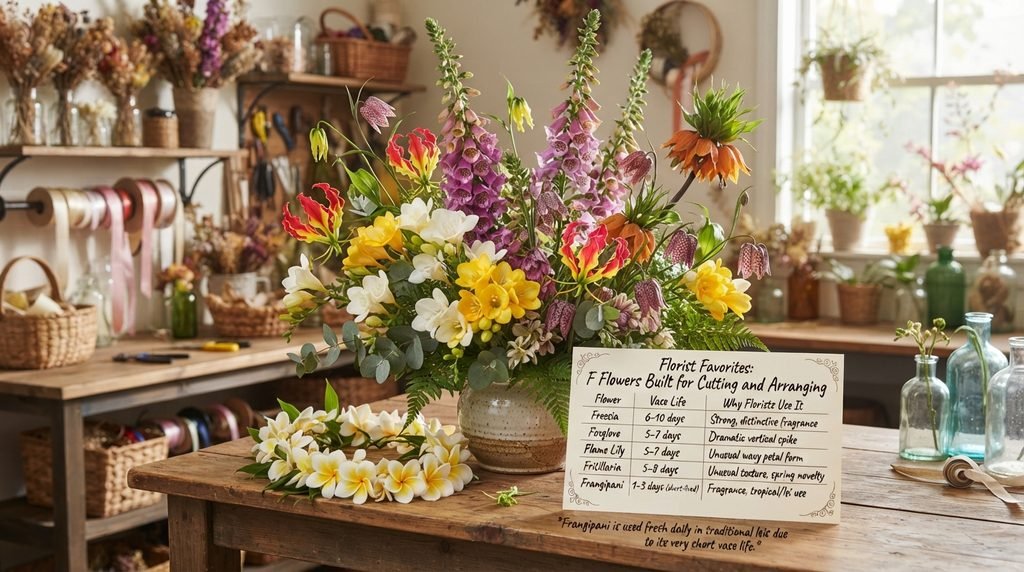
Flame lily brings an entirely different visual energy to arrangements, with its wavy, backward-curling red and yellow petals making it one of the more unusual cut flowers a florist might source for a high-end or exotic-themed arrangement. Fritillaria, particularly the crown imperial and snake’s head varieties, offers unusual texture and form that stand out in mixed spring bouquets, while frangipani, though more delicate and shorter-lived once cut, remains a staple of lei-making and tropical floral work specifically because of its fragrance.
| Flower | Vase Life | Why Florists Use It |
| Freesia | 6–10 days | Strong, distinctive fragrance |
| Foxglove | 5–7 days | Dramatic vertical spike |
| Flame Lily | 5–7 days | Unusual wavy petal form |
| Fritillaria | 5–8 days | Unusual texture, spring novelty |
| Frangipani | 1–3 days (short-lived once cut) | Fragrance, tropical/lei use |
Frangipani stands out from the rest of this table for having by far the shortest vase life once cut, which is exactly why it’s used fresh the same day in traditional lei-making rather than shipped or stored the way the other flowers in this table typically are.
Rare Flowers: The Harder-to-Find Entries on This List
Several F flowers are genuinely uncommon, either because of a narrow native range, a notoriously difficult set of growing requirements, or simply limited presence in mainstream horticultural trade. Fringed gentian is often cited by wildflower enthusiasts as one of the most difficult native plants to cultivate deliberately, since it’s a true biennial with very specific soil and moisture requirements that rarely translate well from its native wet meadows into a typical home garden. Fairy wand, botanically Dierama, comes from South Africa and remains uncommon outside specialist nurseries, prized by collectors for its graceful, arching stems of pendant bell-shaped flowers that sway visibly in even a light breeze.
Fried egg flower, the common nickname for Matilija poppy, is notorious among native-plant gardeners for being nearly impossible to transplant successfully from a container, since its extensive root system resents disturbance so strongly that most successful plantings come from seed or root cuttings instead. Flannel flower, native to Australia, rarely thrives outside a narrow range of climates with excellent drainage and low humidity, which limits its cultivation mostly to specialist native-plant gardens even within its own country of origin. Formosa lily, while less commonly grown than its Easter lily relative, offers a similar dramatic trumpet bloom and remains a niche choice mostly sought out by lily collectors specifically.
Caution: F Flowers That Need Careful Placement
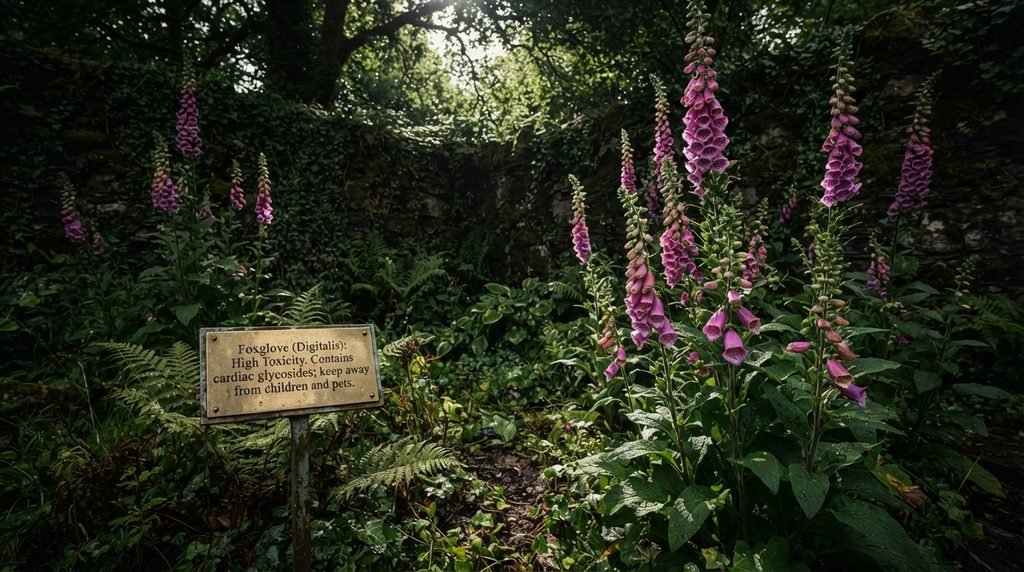
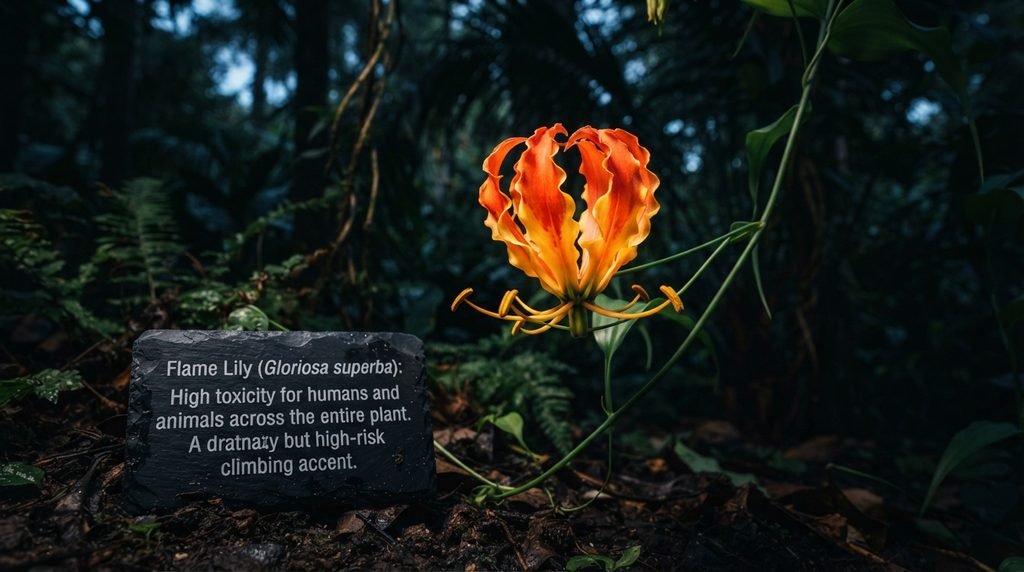
Toxicity risk varies enormously across this letter, and a handful of entries deserve serious, specific attention rather than a passing mention alongside the many low-risk options on this list. Foxglove is the most seriously toxic entry here, containing cardiac glycosides throughout the plant that can cause dangerous heart arrhythmias in humans and animals alike if any part is ingested, and it should never be planted where young children might be tempted to sample its tubular flowers. Flame lily carries an equally serious risk from a different source, since its tubers contain colchicine, a compound toxic enough that ingestion has caused documented human fatalities in regions where the plant grows wild, and its roots have been mistaken for an edible tuber.
Formosa lily, like other true lilies, poses a severe and specific risk to cats, capable of causing fatal kidney failure from even minimal pollen or petal exposure, a risk that doesn’t extend nearly as seriously to dogs or humans.
| Flower | Toxicity Level | Risk Details |
| Foxglove | High | Cardiac glycosides; can cause fatal heart arrhythmias |
| Flame Lily | High | Tubers contain colchicine; documented human fatalities from misidentification.. |
| Formosa Lily | High (for cats) | Can cause fatal kidney failure in cats from minimal exposure |
| Flowering Tobacco | Moderate to High | Contains nicotine throughout the plant |
| Four O’Clock Flower | Moderate | Seeds and roots cause digestive upset if ingested |
| Flowering Cherry, Almond, Crabapple | Moderate | Seeds and pits contain cyanogenic compounds |
Households with cats should treat any true lily on this list, including Formosa lily, as an outright no rather than something to simply keep out of reach, while foxglove and flame lily both deserve to be planted well away from any area where children play unsupervised.
Choosing by Life Cycle: Annuals, Perennials, Bulbs, and Beyond
Matching a flower’s life cycle to a gardener’s actual planning horizon matters just as much as matching its color or size, since an annual that needs replanting every year serves a very different role in a landscape than a shrub or tree that becomes a permanent fixture for decades. Perennials and shrubs together make up the largest share of this letter, offering repeat performance with comparatively less ongoing replanting effort, which is part of why so many of the garden-favorite entries discussed earlier fall into one of those two categories.
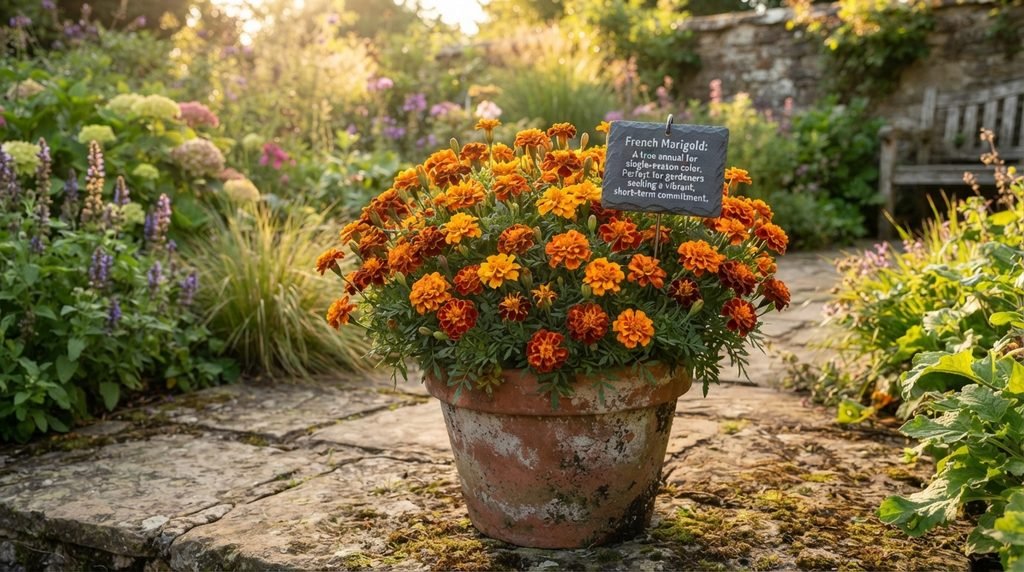
True annuals are somewhat less common among F-named flowers specifically, though several genuinely useful ones exist for gardeners who want a single season of color without a long-term commitment. Trees round out the list with some of its most visually dramatic entries, including flowering specimens that take years to mature but reward that patience with a springtime display few perennials can match.
| Flower | Life Cycle |
| Freesia | Bulb (corm) |
| Fuchsia | Perennial shrub (tender) |
| Forget-Me-Not | Biennial |
| Foxglove | Biennial |
| Frangipani | Tree/shrub |
| French Marigold | Annual |
| French Lavender | Perennial shrub |
| Firecracker Flower | Perennial (tender) |
| Flax Flower | Annual or perennial |
| Flame Lily | Perennial (tuberous climber) |
| Flannel Flower | Perennial (short-lived) |
| Fleabane | Perennial |
| Forsythia | Shrub |
| Four O’Clock Flower | Perennial (grown as annual) |
| Crown Imperial Fritillaria | Bulb |
| Firewheel | Annual/short-lived perennial |
| Feverfew | Perennial (short-lived) |
| Field Poppy | Annual |
| Snake’s Head Fritillary | Bulb |
| Flowering Dogwood | Tree |
| Flowering Cherry | Tree |
| Flowering Quince | Shrub |
| Flowering Tobacco | Annual (perennial in warm climates) |
| Flowering Maple | Perennial shrub |
| False Indigo | Perennial |
| False Sunflower | Perennial |
| Fairy Fan Flower | Perennial (grown as annual) |
| Fairy Duster | Perennial shrub |
| Fennel Flower (Nigella) | Annual |
| Fernleaf Yarrow | Perennial |
| Fig Marigold | Perennial succulent |
| Filipendula | Perennial |
| Firebush | Perennial shrub |
| Firecracker Vine | Annual vine |
| Firespike | Perennial shrub |
| Flag Iris | Perennial (rhizome) |
| Flamingo Flower | Perennial (tropical) |
| Flannel Bush | Shrub |
| Floss Flower | Annual |
| Flowering Almond | Shrub |
| Flowering Crabapple | Tree |
| Formosa Lily | Bulb |
| Fothergilla | Shrub |
| Foxtail Lily | Perennial (tuberous root) |
| French Hollyhock | Perennial (short-lived) |
| Fringed Bleeding Heart | Perennial |
| Fringed Gentian | Biennial |
| Fringed Iris | Perennial (rhizome) |
| Fringed Orchid | Perennial |
| Frostweed | Perennial |
| Fried Egg Flower | Perennial |
| Fumewort | Perennial (tuber) |
| Fumitory | Annual |
| Fairy Lily | Bulb |
| Fan Columbine | Perennial |
| Field Scabious | Perennial |
| Fairy Wand | Perennial (corm) |
| Foxglove Beardtongue | Perennial |
| Flowering Rush | Perennial (aquatic) |
| Feather Celosia | Annual |
This table makes the perennial-and-shrub bias of the letter clear at a glance, while also showing that true annuals — French marigold, firewheel, field poppy, fennel flower, floss flower, firecracker vine, fumitory, and feather celosia — remain a smaller but genuinely useful cluster for anyone planning a bed specifically around single-season color.
The Master List: Every Flower on This Guide, A to Z
A number of the entries below are best known by common English names, particularly the “flowering,” “fairy,” and “fringed” prefixed varieties, while others are almost always sold and searched for under their botanical genus name directly, since no separate common name ever became standard. The list reflects that natural split rather than forcing every plant into an English common name gardeners wouldn’t actually use when ordering from a nursery.
- Crown Imperial — Fritillaria imperialis
- Fairy Duster — Calliandra eriophylla
- Fairy Fan Flower — Scaevola aemula
- Fairy Lily — Zephyranthes candida
- Fairy Wand — Dierama pulcherrimum
- Fan Columbine — Aquilegia flabellata
- False Indigo — Baptisia australis
- False Sunflower — Heliopsis helianthoides
- Feather Celosia (Plumed Cockscomb) — Celosia argentea var. plumosa
- Fennel Flower (Nigella) — Nigella damascena
- Fernleaf Yarrow — Achillea filipendulina
- Feverfew — Tanacetum parthenium
- Field Poppy — Papaver rhoeas
- Field Scabious — Knautia arvensis
- Fig Marigold — Mesembryanthemum crystallinum
- Filipendula (Meadowsweet) — Filipendula ulmaria
- Firebush — Hamelia patens
- Firecracker Flower — Crossandra infundibuliformis
- Firecracker Vine (Spanish Flag) — Ipomoea lobata
- Firespike — Odontonema strictum
- Firewheel — Gaillardia pulchella
- Flag Iris — Iris germanica
- Flame Lily — Gloriosa superba
- Flamingo Flower — Anthurium andraeanum
- Flannel Bush — Fremontodendron californicum
- Flannel Flower — Actinotus helianthi
- Flax Flower — Linum usitatissimum
- Fleabane — Erigeron karvinskianus
- Floss Flower — Ageratum houstonianum
- Flowering Almond — Prunus triloba
- Flowering Cherry — Prunus serrulata
- Flowering Crabapple — Malus floribunda
- Flowering Dogwood — Cornus florida
- Flowering Maple — Abutilon × hybridum
- Flowering Quince — Chaenomeles speciosa
- Flowering Rush — Butomus umbellatus
- Flowering Tobacco — Nicotiana alata
- Formosa Lily — Lilium formosanum
- Forsythia — Forsythia × intermedia
- Fothergilla — Fothergilla gardenii
- Four O’Clock Flower — Mirabilis jalapa
- Foxglove — Digitalis purpurea
- Foxglove Beardtongue — Penstemon digitalis
- Foxtail Lily — Eremurus robustus
- French Hollyhock — Malva sylvestris
- French Lavender — Lavandula stoechas
- French Marigold — Tagetes patula
- Freesia — Freesia hybrida
- Fried Egg Flower (Matilija Poppy) — Romneya coulteri
- Fringed Bleeding Heart — Dicentra eximia
- Fringed Gentian — Gentianopsis crinita
- Fringed Iris — Iris japonica
- Fringed Orchid — Platanthera ciliaris
- Frostweed — Verbesina virginica
- Frangipani — Plumeria rubra
- Fuchsia — Fuchsia × hybrida
- Fumewort — Corydalis solida
- Fumitory — Fumaria officinalis
- Forget-Me-Not — Myosotis sylvatica
- Snake’s Head Fritillary — Fritillaria meleagris
That’s sixty entries in total, spanning garden perennials, spring bulbs, flowering trees, tropical shrubs, and several true rarities, which reflects how much practical range this letter offers once foliage-only plants are set aside.
Why Botanical Names Matter for This Letter
Common-name confusion is a real risk with this letter, since several unrelated flowers share the same descriptive prefix — “flowering,” “fairy,” and “fringed” alone cover more than a dozen genuinely different plants on this list — while a large number of others are rarely sold under any English common name at all. Searching or ordering by botanical name isn’t just a technical formality here; it’s often the only reliable way to confirm that a nursery listing or online search result matches the intended plant, rather than a similarly named but unrelated substitute from a different plant family entirely.
| Common Name | Botanical Name | Plant Family |
| Foxglove | Digitalis purpurea | Plantaginaceae |
| Freesia | Freesia hybrida | Iridaceae |
| Flame Lily | Gloriosa superba | Colchicaceae |
| Forget-Me-Not | Myosotis sylvatica | Boraginaceae |
| Frangipani | Plumeria rubra | Apocynaceae |
| French Lavender | Lavandula stoechas | Lamiaceae |
| Flannel Flower | Actinotus helianthi | Apiaceae |
| Fringed Gentian | Gentianopsis crinita | Gentianaceae |
| Formosa Lily | Lilium formosanum | Liliaceae |
| Firewheel | Gaillardia pulchella | Asteraceae |
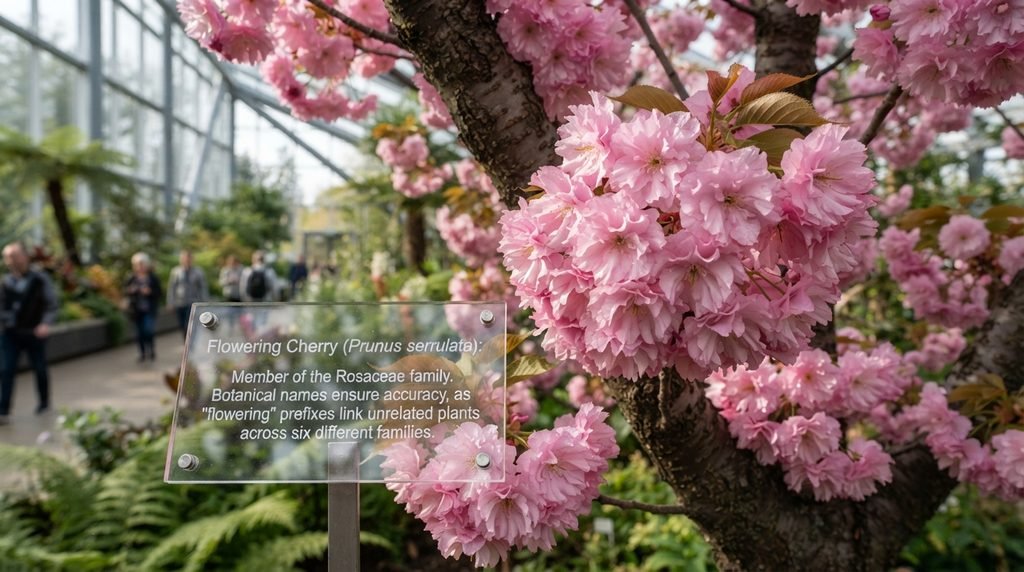
The “flowering” prefix group is the one most worth double-checking before buying, since flowering cherry, flowering dogwood, flowering quince, flowering maple, flowering tobacco, and flowering rush are six entirely unrelated plants from six different families, connected by nothing more than the shared adjective in their common names.
Full Comparison Table: Bloom Time, Sun, and Safety at a Glance
The table below brings together bloom season, sun requirements, toxicity level, and primary use for every flower covered in this guide, making it possible to scan quickly for a specific combination of traits — a spring-blooming, full-sun, pet-safe option, for instance — without flipping back through each section above.
| Flower | Bloom Season | Sun | Toxicity | Primary Use |
| Freesia | Spring | Full sun | Low | Cut flower, fragrance |
| Fuchsia | Summer–fall | Partial shade | Non-toxic | Hanging baskets |
| Forget-Me-Not | Spring | Partial shade | Non-toxic | Woodland, border |
| Foxglove | Summer | Partial shade | High | Cottage garden, back border |
| Frangipani | Summer–fall | Full sun | Mild | Tropical garden, lei-making |
| French Marigold | Summer–fall | Full sun | Low | Bedding, companion planting |
| French Lavender | Spring–summer | Full sun | Low | Fragrance, border |
| Firecracker Flower | Year-round (warm) | Full sun–part shade | Non-toxic | Tropical bedding, houseplant |
| Flax Flower | Summer | Full sun | Mild | Meadow, border |
| Flame Lily | Summer | Full sun–part shade | High | Climbing accent |
| Flannel Flower | Spring–summer | Full sun | Non-toxic | Native/rock garden |
| Fleabane | Spring–fall | Full sun | Non-toxic | Edging, paving gaps |
| Forsythia | Early spring | Full sun | Low | Flowering hedge |
| Four O’Clock Flower | Summer–fall | Full sun | Moderate | Cottage garden, evening fragrance |
| Crown Imperial Fritillaria | Mid-spring | Full sun–part shade | Mild | Border accent, deer-resistant |
| Firewheel | Summer–fall | Full sun | Non-toxic | Wildflower, pollinator garden |
| Feverfew | Summer | Full sun | Mild | Cottage garden |
| Field Poppy | Late spring–summer | Full sun | Mild | Wildflower meadow |
| Snake’s Head Fritillary | Spring | Partial shade | Mild | Woodland, meadow |
| Flowering Dogwood | Spring | Partial shade | Non-toxic | Specimen tree |
| Flowering Cherry | Spring | Full sun | Moderate | Specimen/ornamental tree |
| Flowering Quince | Late winter–spring | Full sun | Low | Hedge, early color |
| Flowering Tobacco | Summer–fall | Full sun–part shade | Moderate–High | Fragrant evening garden |
| Flowering Maple | Spring–fall | Full sun–part shade | Non-toxic | Container, tender shrub |
| False Indigo | Late spring–summer | Full sun | Mild | Native border |
| False Sunflower | Summer–fall | Full sun | Non-toxic | Pollinator border |
| Fairy Fan Flower | Summer–fall | Full sun | Non-toxic | Groundcover, container |
| Fairy Duster | Spring | Full sun | Non-toxic | Xeriscape, desert garden |
| Fennel Flower (Nigella) | Summer | Full sun | Low–moderate | Cottage garden, dried pods |
| Fernleaf Yarrow | Summer | Full sun | Low | Border, cut flower |
| Fig Marigold | Summer | Full sun | Non-toxic | Groundcover, rock garden |
| Filipendula | Summer | Full sun–part shade | Non-toxic | Moist border, pond edge |
| Firebush | Summer–fall | Full sun | Non-toxic | Hedge, hummingbird garden |
| Firecracker Vine | Summer–fall | Full sun | Mild | Trellis, annual vine |
| Firespike | Fall–winter | Full sun–part shade | Non-toxic | Hummingbird garden |
| Flag Iris | Late spring | Full sun–part shade | Mild | Pond edge, border |
| Flamingo Flower | Year-round (indoor) | Bright indirect | Moderate | Houseplant, tropical cut flower |
| Flannel Bush | Late spring–summer | Full sun | Mild (irritant) | Xeriscape, specimen shrub |
| Floss Flower | Summer–fall | Full sun–part shade | Mild | Edging, container |
| Flowering Almond | Spring | Full sun | Moderate | Ornamental shrub |
| Flowering Crabapple | Spring | Full sun | Moderate | Specimen tree |
| Formosa Lily | Summer | Full sun–part shade | High (cats) | Border, cut flower |
| Fothergilla | Spring | Full sun–part shade | Non-toxic | Shrub border, fall color |
| Foxtail Lily | Early summer | Full sun | Low | Dramatic border accent |
| French Hollyhock | Summer | Full sun | Non-toxic | Cottage border |
| Fringed Bleeding Heart | Spring–summer | Partial shade | Moderate | Woodland garden |
| Fringed Gentian | Late summer–fall | Full sun–part shade | Non-toxic | Wildflower meadow (difficult) |
| Fringed Iris | Spring | Partial shade | Mild | Woodland, shade garden |
| Fringed Orchid | Summer | Partial shade | Non-toxic | Native wetland, bog |
| Frostweed | Late summer–fall | Full sun–part shade | Non-toxic | Native, pollinator garden |
| Fried Egg Flower | Late spring–summer | Full sun | Non-toxic | Dry border, specimen |
| Fumewort | Early spring | Partial shade | Moderate | Woodland garden |
| Fumitory | Spring–summer | Full sun–part shade | Moderate | Wildflower, historically medicinal |
| Fairy Lily | Summer (after rain) | Full sun | Moderate | Naturalized bulb display |
| Fan Columbine | Spring–summer | Partial shade | Mild | Rock garden, woodland edge |
| Field Scabious | Summer | Full sun | Non-toxic | Wildflower meadow, pollinator |
| Fairy Wand | Summer | Full sun | Non-toxic | Border accent, cut flower |
| Foxglove Beardtongue | Late spring–summer | Full sun–part shade | Non-toxic | Native border, pollinator |
| Flowering Rush | Summer | Full sun | Non-toxic | Pond margin, water garden |
| Feather Celosia | Summer–fall | Full sun | Non-toxic | Bedding, dried arrangements |
Three rows are worth flagging on a closer read of this table: foxglove and flame lily are the only two entries carrying a high toxicity rating for the whole plant rather than a single part, and formosa lily is the only entry whose high-risk rating applies specifically and severely to one animal group rather than broadly across species.
Decision Guide: Matching a Scenario to the Right F Flower
Sometimes the fastest way to choose a flower isn’t scrolling through a full list but starting from the actual problem that needs solving — a shaded corner, a fragrance-focused bed, a household with a cat. The table below maps common gardening scenarios to the F flowers best suited to each, drawing on the growing information already covered throughout this guide.
| If You Need… | Consider | Why |
| A fragrant cut flower | Freesia, French Lavender, Frangipani | All three are grown as much for scent as for appearance |
| A cat-safe blooming houseplant | Firecracker Flower (Crossandra) | No documented severe toxicity, unlike true lilies |
| Early spring color | Forsythia, Flowering Quince, Crown Imperial Fritillaria | All bloom before most perennials break dormancy |
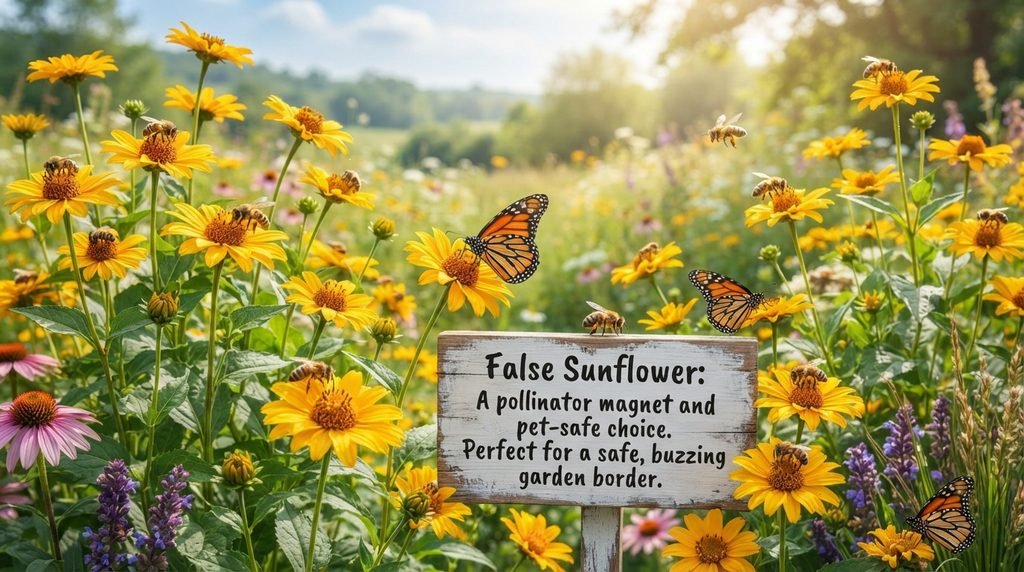
| A pollinator magnet | False Sunflower, Fernleaf Yarrow, Firewheel | Long bloom windows, open flower structure |
| Shade tolerance | Fringed Bleeding Heart, Fringed Iris, Forget-Me-Not | All three perform well in partial shade |
| A genuine rarity to chase | Fringed Gentian, Fairy Wand | Both are difficult to source and grow, appealing to dedicated collectors |
| A plant to avoid around pets | Foxglove, Flame Lily, Formosa Lily | All three carry documented high toxicity risk |
Anyone using this table to plan a bed with both pollinator interest and pet safety in mind should note that false sunflower and fernleaf yarrow satisfy both goals at once, making them a more efficient choice than trying to combine two separate specialty plants from different rows.
Conclusion
Flowers that start with F span an unusually broad range of growing conditions, from fragrant Mediterranean shrubs to shaded woodland perennials to a handful of genuinely dangerous plants worth knowing how to identify. Choosing among them comes down to matching a specific flower to an actual spot, household, or purpose — a fragrant cutting garden, a pet-safe container collection, a native pollinator border — rather than working straight down an alphabetical list. With the category breakdowns, comparison table, and decision guide covered above, narrowing sixty options down to the few that genuinely fit a given garden should take far less trial and error than starting from scratch.
Frequently Asked Questions
1. How many flowers that start with F are there?
This guide covers sixty verified flowers that start with F, ranging from common garden shrubs and bulbs to rare specialty blooms and a few plants that require real caution.
2. What is the easiest F flower to grow?
Forsythia and fernleaf yarrow are both excellent choices for beginners, tolerating poor soil, drought, and general neglect while still performing each year reliably.
3. Which F flowers are toxic to pets?
Foxglove and flame lily are both highly toxic to humans and animals, while formosa lily poses a severe, specific risk of fatal kidney failure in cats.
4. What does forget-me-not symbolize?
Forget-me-not is almost universally associated with remembrance and enduring love, a meaning so consistent across cultures that it’s essentially built into the flower’s name.
5. What F flowers work well indoors?
Flamingo flower (Anthurium), fuchsia, and firecracker flower (Crossandra) are the three most reliable options for indoor growing with bright, indirect light.
6. Is foxglove safe to have in a garden with children?
No, it requires serious caution rather than casual placement; foxglove contains cardiac glycosides throughout the plant that can cause dangerous heart arrhythmias if ingested.
7. What’s the best F flower for a fragrant garden?
Freesia and French lavender are the two strongest fragrance performers on this list, both widely used in perfumery as well as ornamental gardening.
8. Are any flowers that start with F genuinely rare?
Yes, fringed gentian and fairy wand are both considered rare or difficult to source, the former due to demanding growing conditions and the latter due to limited commercial availability outside specialist nurseries.
9. What’s the difference between flowering cherry and flowering almond?
Both are ornamental Prunus relatives grown for spring bloom rather than fruit, but flowering cherry typically grows into a larger tree, while flowering almond stays more compact as a flowering shrub.
10. Can freesia survive outdoors year-round?
Only in mild climates; in colder zones, freesia bulbs are typically lifted and stored over winter or grown as a seasonal container plant instead.
11. What F flower is best for a pond or water garden?
Flowering rush and flag iris are both well-suited to consistently wet, boggy, or pond-edge conditions, unlike most other flowers on this list.