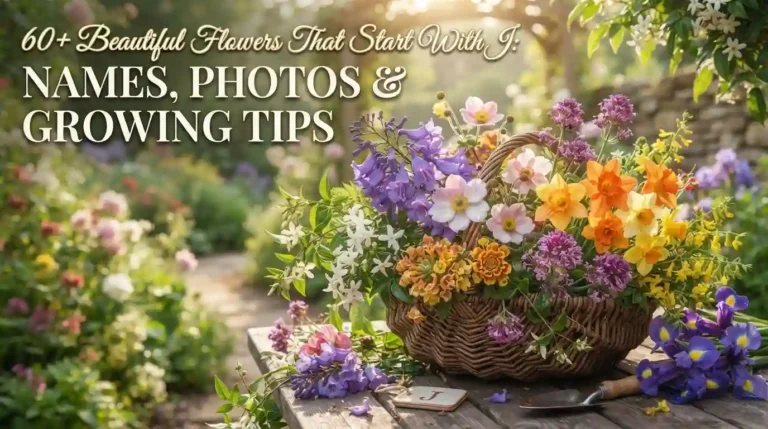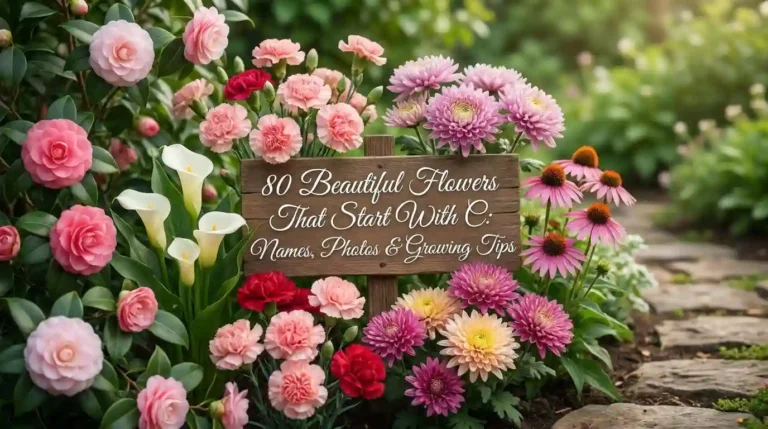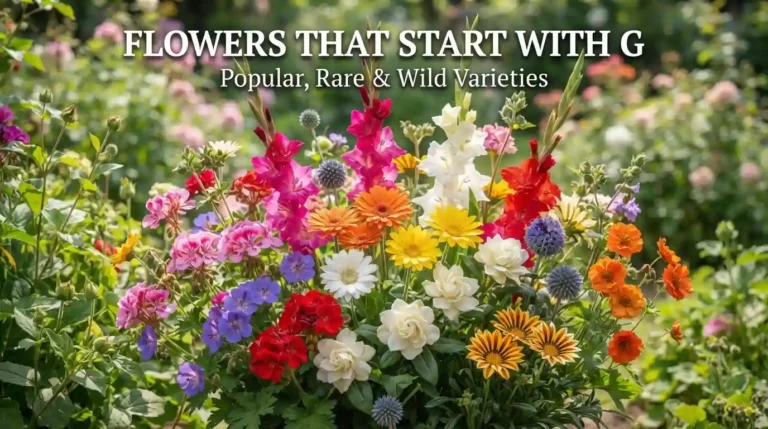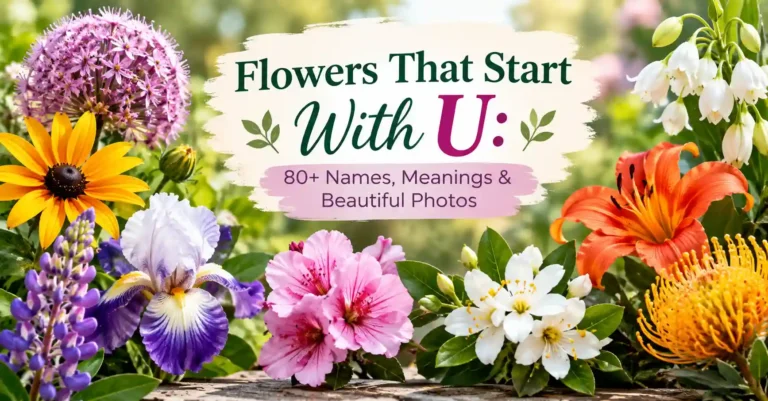
Flowers That Start With L: Names, Meanings & Beautiful Photos
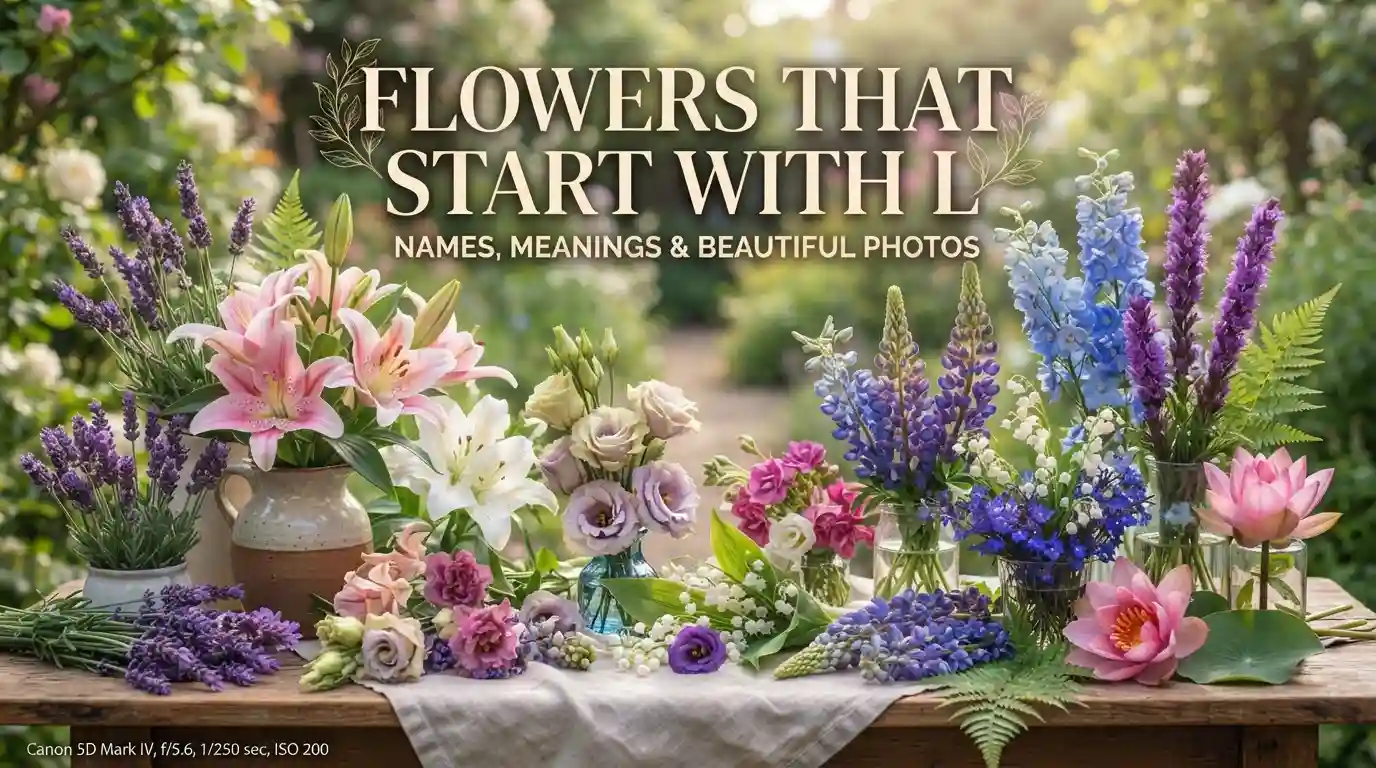
Flowers that start with L are a big group. Lavender and Lilac are old garden picks. Lily of the Valley likes shade. Larkspur is pretty, but it needs care.
This guide helps a few kinds of readers. Some want to name a flower they saw. Some want a new plant for a sunny spot. This guide helps with all four.
The order here follows real use. It does not just follow the A to Z order. Garden picks come first. Indoor picks and florist picks come next. Then come rare finds. Then come flowers that need extra care. After that, you get quick tools. You get a bloom-cycle table. You get a full growing chart. The full A to Z list sits near the end. Use it to check a name fast.
Every flower here is real. We checked each name. We checked each home range. Some plants often placed at this letter got left out. If the bloom is not the main reason to grow the plant, it did not make the cut.
Ten L-Flowers to Know First
Anyone who searches for flowers that start with L usually meets these names first. Lavender leads this list. It smells great. It likes dry soil. You can cook with it too. Lilac comes next. Its spring scent can fill a yard. Lily adds drama to a bed or a vase. But it is risky for cats. Keep that in mind. Lantana beats the heat well. It blooms all summer with little fuss.
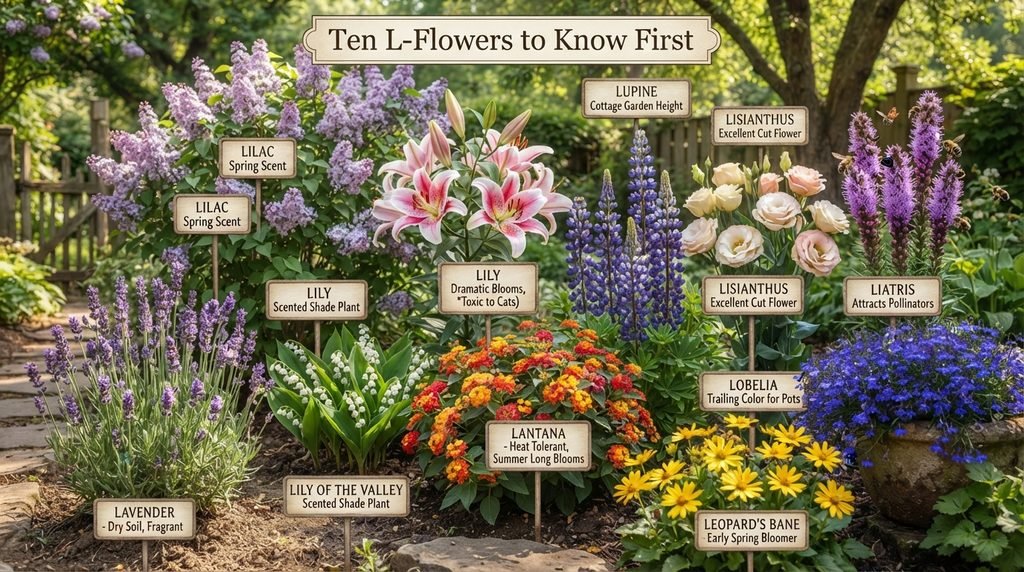
Lupine adds height to a cottage bed. Lisianthus is a florist pick. It stays fresh in a vase for a long time. Liatris draws bees and butterflies fast. Lobelia fills gaps in pots with trailing color. Lily of the Valley brings scent and shade in one small plant. Leopard’s Bane opens its blooms early. It beats most other perennials on this list.
The Stories Behind These Blooms
Flower meanings still matter to people. They pick blooms for weddings. They pick blooms for funerals. Often, they do not know why a bloom feels right. But it does. Lily has long stood for a fresh start. That is why it shows up at both weddings and funerals. The same bloom can mark a start or an end.
Lavender is tied to calm. Its long use in home cures backs this up. People have used it to ease stress for a long time. Today it shows up in candles. It shows up in tea. It shows up in pillow sprays too.
Lilac has a soft old tale. In old flower talk, it stood for first love. That may come from its quick, strong bloom. It shows up fast. It peaks hard. Then it fades in weeks.
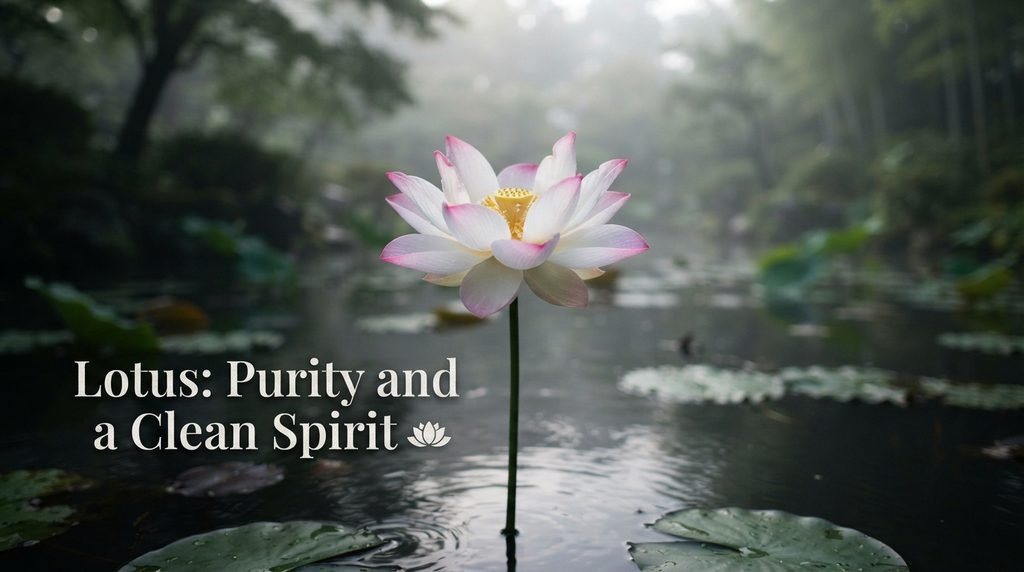
Lotus holds deep weight in parts of Asia. It stands for a clean, pure spirit. The reason is easy to see. The bloom lifts clean out of mud. That sight has held real force for a long time.
Sorting L-Flowers by Color
Color can narrow a search fast. Purple rules this letter more than any other shade. Lavender, Lilac, Larkspur, and Liatris all share this range. It is the shade most folks picture in an old-style garden.
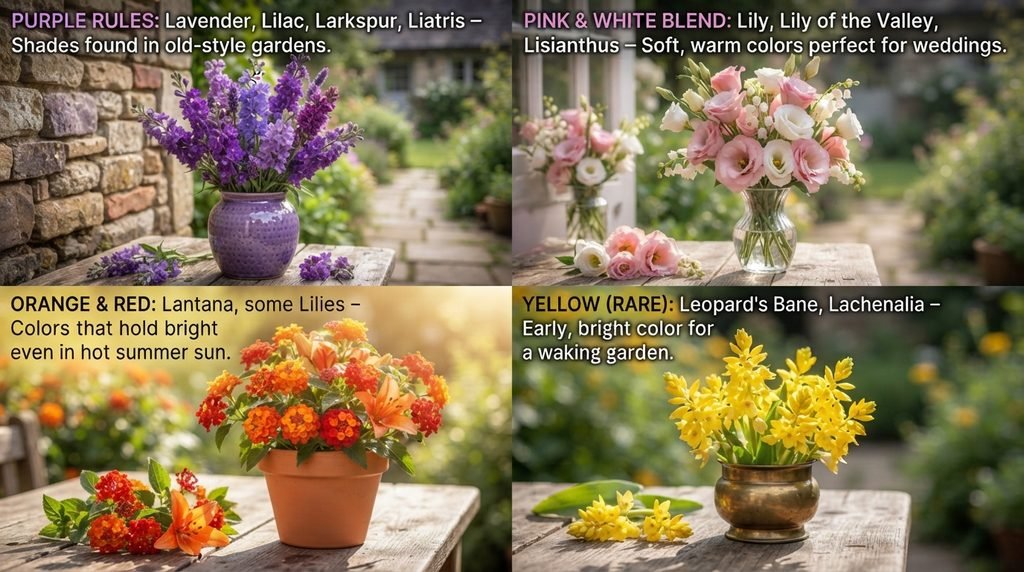
Pink and white show up in Lily. They show up in Lily of the Valley too. They show up in most Lisianthus blooms. This blend feels soft. It feels warm. That is why both are top picks for weddings.
Orange and red show up in Lantana. They show up in some Lily types too. Both hold their shade in hot sun. Pale blooms often fade by mid-summer. These do not fade the same way.
Yellow is rare at this letter. But it still shows up. Leopard’s Bane and Lachenalia carry this shade. Both bring early, bright color to a garden that is just waking up.
Reliable Picks for the Garden
Among all the flowers that start with L, a few earn a real spot in home yards. They just work, plain and simple. Lavender takes heat well. It takes poor soil well. It takes a missed drink of water well too. That grit is why it lines so many dry paths.
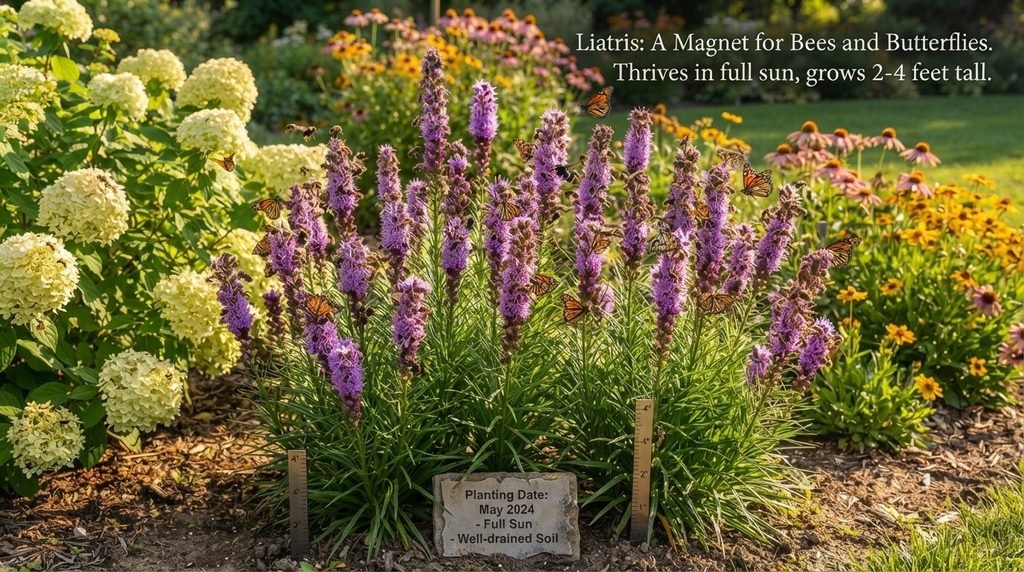
Lantana shares that same toughness. It keeps blooming through long dry spells. Liatris adds height with little fuss. Its tall spikes draw bees and butterflies for weeks on end.
| Flower | Sun Needs | Soil Type | Typical Height |
| Lavender | Full sun | Dry, sandy soil | 12–24 inches |
| Lantana | Full sun | Well-drained soil | 12–36 inches |
| Liatris | Full sun | Well-drained soil | 2–4 feet |
| Larkspur | Full sun | Well-drained soil | 1–3 feet |
| Lupine | Full sun to part sun | Well-drained soil | 2–3 feet |
Liatris stands out here for bee and butterfly traffic. Few blooms on this list draw as many at once. Lupine, though, hates a move once it settles in. Plant it where it can stay for good.
L-Flowers That Work Indoors
Few L-flowers make good houseplants. Still, a few do well. Lily of the Valley can bloom early in winter, if forced. Florists use this trick a lot. The catch is a short show. It lasts just two weeks or so.
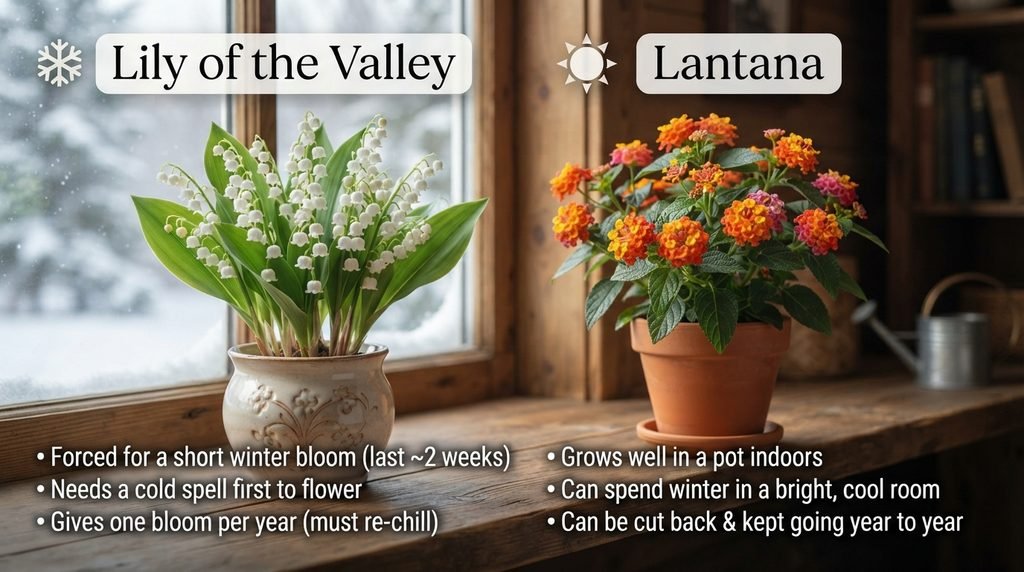
Lantana can grow in a pot. It can come in before frost hits. It will not bloom as much in a house. But it can live through a cold spell this way.
- Lily of the Valley — forced for a short winter bloom; needs a cold spell first
- Lantana — grows well in a pot; can spend winter in a bright, cool room
Lily of the Valley gives one bloom a year this way. It will not bloom twice without a fresh cold spell. Lantana, though, can be cut back. It can be kept going year to year.
Favorites in the Floral Trade
Cut blooms are a common way to meet this letter. Lisianthus tops the list for florists. Its full, ruffled blooms look like a rose. They last far longer in a vase than most blooms do. Lily adds size and scent to big bunches. Florists often pull out its pollen. This stops it from staining cloth or a tabletop
Larkspur adds height to mixed bunches. It gives an old-garden feel too. Its tall spikes sit well behind short, round blooms.
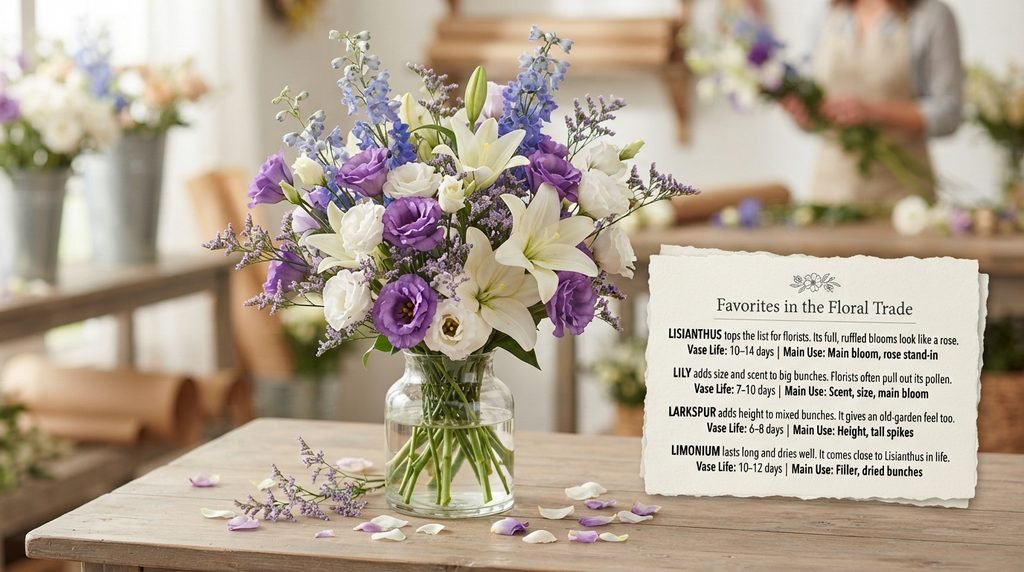
| Flower | Vase Life | Main Use |
| Lisianthus | 10–14 days | Main bloom, rose stand-in |
| Lily | 7–10 days | Scent, size, main bloom |
| Larkspur | 6–8 days | Height, tall spikes |
| Limonium | 10–12 days | Filler, dried bunches |
Lisianthus lasts the longest here by a wide gap. That is a big reason it now stands in for rose in many bunches. Limonium comes close. It dries well too. It lasts long after fresh blooms fade.
Uncommon and Hard-to-Source Picks
A few L-flowers are hard to find. Big stores do not stock them. Small growers do. Lewisia is one. It is a rock-bed plant. It needs sharp drainage. Its bright blooms make the extra care worth it.
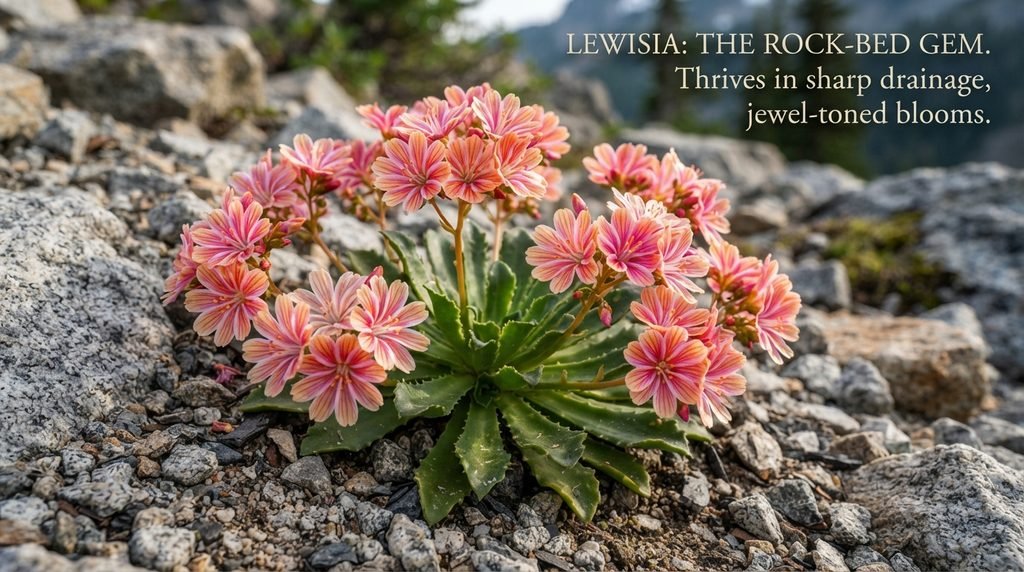
Lithodora is less rare, but still a hidden gem. It gives one of the truest blue shades out there. It grows low and wide. Livingstone Daisy is another hidden gem. Its blooms open in bright sun. They shut tight on cloudy days.
- Lewisia — rock-bed plant; needs sharp drainage; hates a wet base
- Lithodora — true-blue ground cover; hard to find, though easy to grow
- Livingstone Daisy — needs bright sun to open; shuts on cloudy days
These three share one trait. It is not that they are rare in the wild. It is that their needs are quite specific. None of them are hard to grow once you meet those needs. Few yards meet those needs by chance. That is why they stay rare.
Handle These With Care
Not every one of these flowers that start with L is safe around pets. A few carry real risk. This matters most in homes with pets or small kids. Lily tops this list. Even a bit of pollen can harm a cat’s kidneys. This is not a small risk. It has caused real pet deaths. Fast vet care can save a cat’s life.
Lily of the Valley is almost as bad. It holds toxins in each part of the plant. Even the vase water from its cut stems can hold the toxin. Larkspur poses a real risk to farm stock, mostly cows. Its leaves and seeds hold toxic parts. Lantana grows berries that can harm you if you eat them, most of all before they turn ripe.
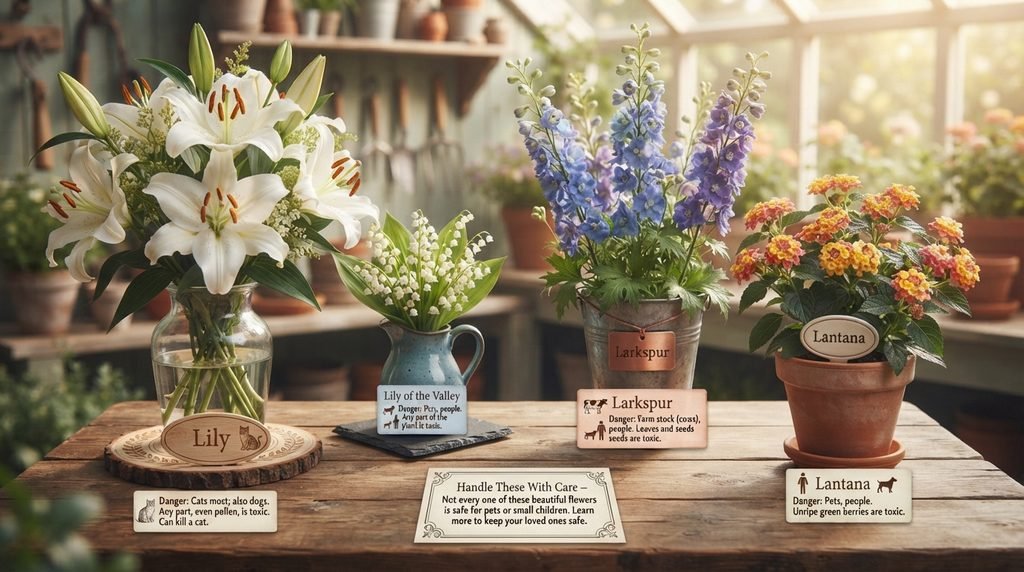
| Flower | Risk To | Main Risk | How Bad |
| Lily | Cats most; also dogs | Any part, even pollen | Bad; can kill a cat |
| Lily of the Valley | Pets, people | Any part of the plant | Bad |
| Larkspur | Farm stock, people | Leaves and seeds | Bad |
| Lantana | Pets, people | Green berries | Mid-range |
Lily needs the most care on this list. A home with cats should skip true lilies. Even a small touch can cause real harm. Lily of the Valley comes next. Keep its cut stems far from pets, even in a vase.
Planning Around Bloom Cycles
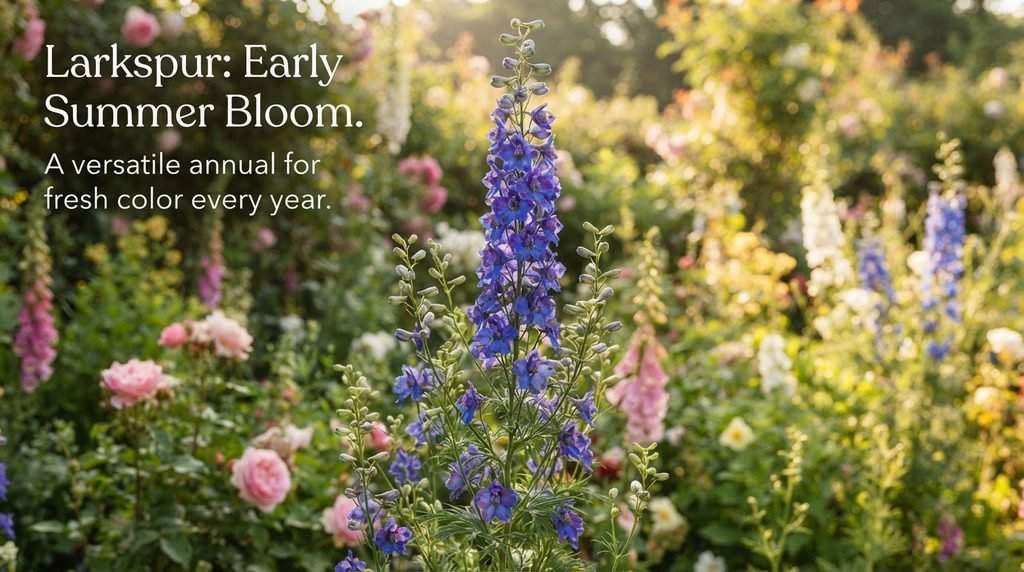
Some blooms live one year. Some come back on their own. This fact shapes how you plan a bed. Larkspur lives just one year. You must plant it fresh each time. This also lets you swap its color each year. Lavender and Liatris come back on their own. You lose some of that swap, but you save real work.
Bulbs run on their own clock. Lily of the Valley grows slowly, under the soil. It comes back each spring on its own.
| Flower | Type | Bloom Time |
| Lavender | Comes back each year | Summer |
| Larkspur | Lives one year | Early summer |
| Liatris | Comes back each year | Mid to late summer |
| Lily of the Valley | Comes back; spreads | Spring |
| Lilac | Comes back; a shrub | Spring |
| Lisianthus | Grown as a one-year plant | Summer |
Lilac and Lily of the Valley open the garden year first. Lisianthus and Liatris hold color through mid-summer. Plant a mix from this whole list. Do not just pick one row. This keeps a bed alive for months, not weeks.
The Complete A-to-Z of L-Flowers
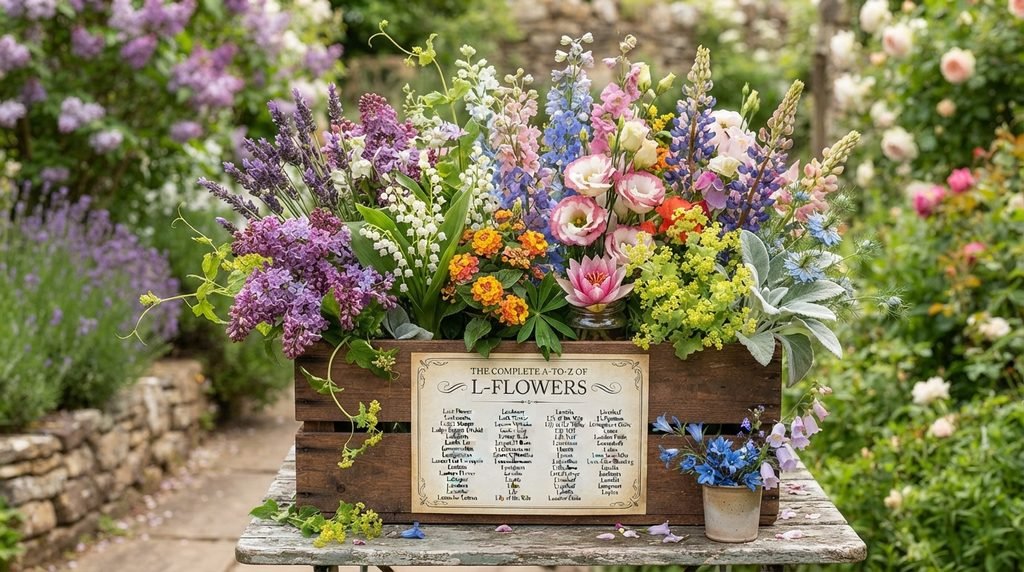
This is the full list of flowers that start with L covered in this guide, plus a few extra names. It holds each flower named above. It adds a few more too. Most names here are the common name first. That is how most folks search for a plant. A few, like Lithodora, go by their plant-science name, even in normal talk. Those show up the same way here.
- Lace Flower
- Lachenalia (Cape Cowslip)
- Lady’s Mantle
- Lady’s Slipper Orchid
- Ladybells (Adenophora)
- Lambs Ear
- Lampranthus
- Lance-Leaf Coreopsis
- Lantana
- Lantern Flower (Chinese Lantern)
- Larkspur
- Lavatera (Tree Mallow)
- Lavender
- Lavender Cotton (Santolina)
- Leadwort (Plumbago)
- Leek Flower
- Lemon Verbena
- Lenten Lily
- Lenten Rose
- Leopard’s Bane
- Leptospermum (Tea Tree Flower)
- Lesser Celandine
- Leucanthemum (Shasta Daisy)
- Leucojum (Snowflake)
- Lewisia
- Liatris
- Lilac
- Lily
- Lily of the Nile
- Lily of the Valley
- Lily Turf (Liriope)
- Limonium (Sea Lavender)
- Linaria (Toadflax)
- Linum (Flax)
- Lisianthus
- Lithodora
- Live-Forever (Sedum)
- Liverleaf
- Livingstone Daisy
- Loasa
- Lobelia
- London Pride
- Loosestrife
- Lotus
- Love-in-a-Mist
- Love-Lies-Bleeding
- Luculia
- Ludwigia (Water Primrose)
- Lunaria (Honesty)
- Lungwort (Pulmonaria)
- Lupine
That list holds 51 names in all. Some, like Lithodora and Ladybells, are hard to find in a big store. Small growers stock them more often. A few, like Live-Forever and Liverleaf, grow wild in many regions and rarely show up for sale at all. Keep this mix in mind on a shopping trip.
Matching Names: Common to Plant-Science
Plant-science names help most when you shop online. They help when you check a plant tag too. This matters more at this letter than at most. A few common names here point to plants with no real link at all.
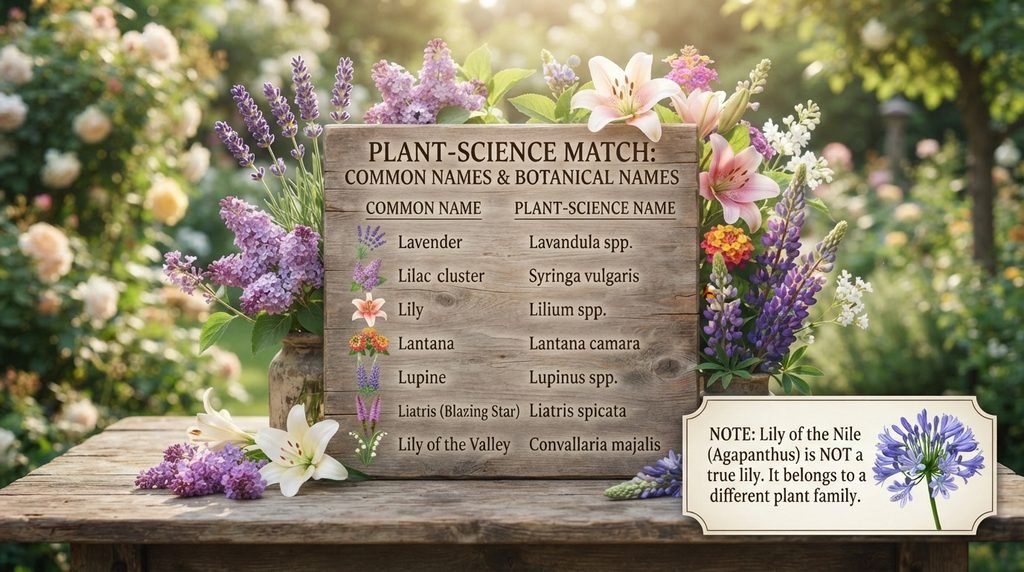
| Common Name | Plant-Science Name |
| Lavender | Lavandula spp. |
| Lilac | Syringa vulgaris |
| Lily | Lilium spp. |
| Lantana | Lantana camara |
| Lupine | Lupinus spp. |
| Liatris | Liatris spicata |
| Lily of the Valley | Convallaria majalis |
Lily of the Nile is the name to check twice; it points to a plant called Agapanthus. That plant is not a true lily at all. It sits in a whole other plant group, though the name hints at a link.
Growing Conditions at a Glance
This chart pulls sun, soil, and bloom time into one place. It makes side-by-side checks easy. The table below holds each flower named in the grow sections above. It uses the same three columns each time. Nothing gets left out.
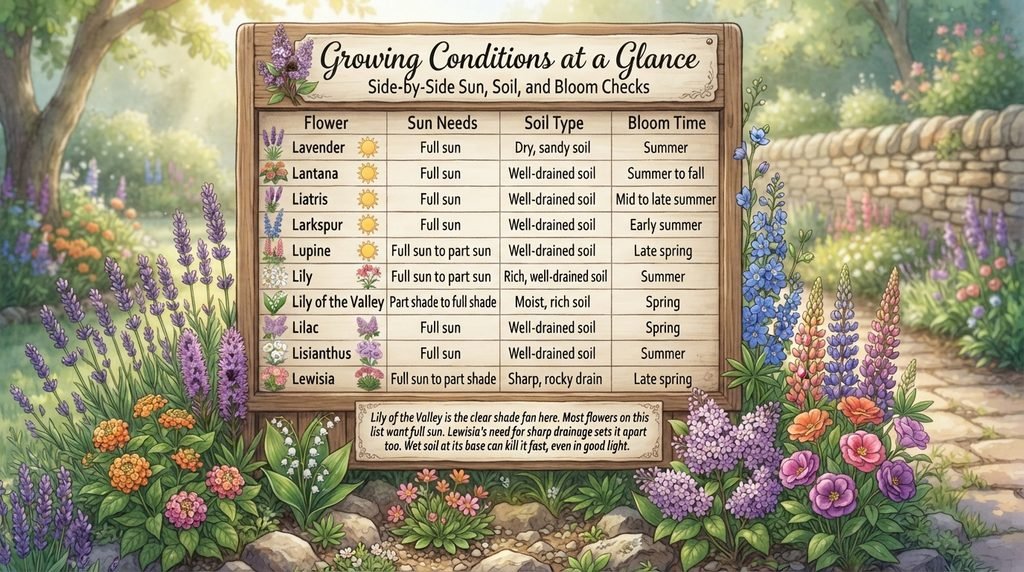
| Flower | Sun Needs | Soil Type | Bloom Time |
| Lavender | Full sun | Dry, sandy soil | Summer |
| Lantana | Full sun | Well-drained soil | Summer to fall |
| Liatris | Full sun | Well-drained soil | Mid to late summer |
| Larkspur | Full sun | Well-drained soil | Early summer |
| Lupine | Full sun to part sun | Well-drained soil | Late spring |
| Lily | Full sun to part sun | Rich, well-drained soil | Summer |
| Lily of the Valley | Part shade to full shade | Moist, rich soil | Spring |
| Lilac | Full sun | Well-drained soil | Spring |
| Lisianthus | Full sun | Well-drained soil | Summer |
| Lewisia | Full sun to part shade | Sharp, rocky drain | Late spring |
Lily of the Valley is the clear shade fan here. Most flowers on this list want full sun. Lewisia’s need for sharp drainage sets it apart too. Wet soil at its base can kill it fast, even in good light.
Find Your L-Flower by Need
Do not scan each row one by one. Start with your goal. The table below sets a need next to a clear pick. It draws from all the facts in this guide.
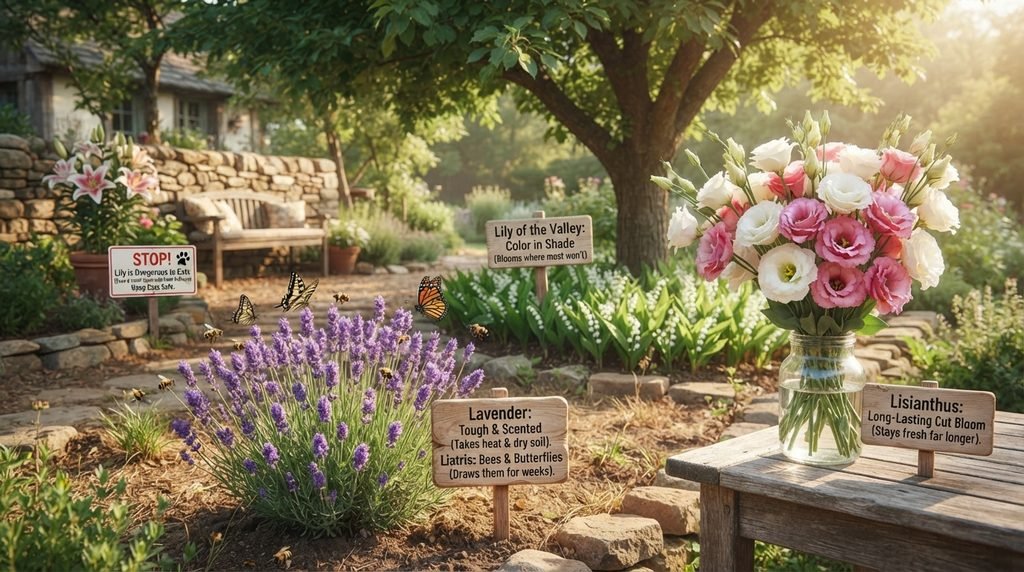
| If You Want… | Pick… | Why |
| A tough, scented plant | Lavender | Takes heat and dry soil; smells great all summer |
| A cut bloom that lasts | Lisianthus | Stays fresh far longer than most cut blooms |
| Color in shade | Lily of the Valley | Blooms well where most flowers will not |
| Bees and butterflies | Liatris | Draws them in for weeks at a time |
| A flower to skip near cats | Not Lily | Even a small touch can harm a cat’s kidneys |
Lavender and Lisianthus fix two needs. One asks for almost no care. The other asks for real care, but its vase life pays it back. The last row counts just as much. It can help you keep a cat safe.
Conclusion
Flowers that start with L run wide. Lavender is tough and easy. Lily is bold, but risky near cats. That range is why this guide uses real groups. It does not just use one flat list. Anyone who wants flowers that start with L should find a clear answer here. It may mean naming a bloom. It may mean a new plant pick. Few letters hold this much range.
Frequently Asked Questions
What are some popular flowers that start with L?
Lavender, Lily, Lilac, and Lantana top this list. Each fits a different need, from a scented bed to a cut bloom.
Which L-flowers are toxic to pets?
Lily is the top risk, most of all for cats. Even a small touch can harm a cat’s kidneys. Lily of the Valley and Lantana carry real risk too, though less severe.
What is the gap between Lily and Lily of the Nile?
True Lily sits in the group called Lilium. Lily of the Nile points to Agapanthus. That plant is not a true lily. It just shares the name.
Which L-flowers work best in a cut bunch?
Lisianthus leads this group. It has a long vase life. Lily and Larkspur hold up well too. Both add scent and height to a bunch.
Does Lilac bloom more than once a year?
No. Most Lilac types bloom once. That bloom lasts a few weeks in spring. A few rebloom types exist, but they stay rare.
What are the rarest flowers that start with L?
Lewisia, Lithodora, and Livingstone Daisy top this list. Each needs a set of conditions that most home yards do not provide by chance.
Is Lily of the Valley safe to plant near pets?
No. It holds toxins in each part of the plant. Even vase water from its cut stems can hold the toxin. Keep it far from pets.
How long does Lavender bloom each year?
Most types bloom for four to six weeks in summer. Cut off old blooms to stretch that time. This can also bring a small second round.
What shades come in Lantana?
Orange, yellow, pink, red, and mixed shades are all common. The shade can shift a bit as each bloom cluster gets old.