Flowers That Start With M: 80+ Names, Meanings & Beautiful Photos
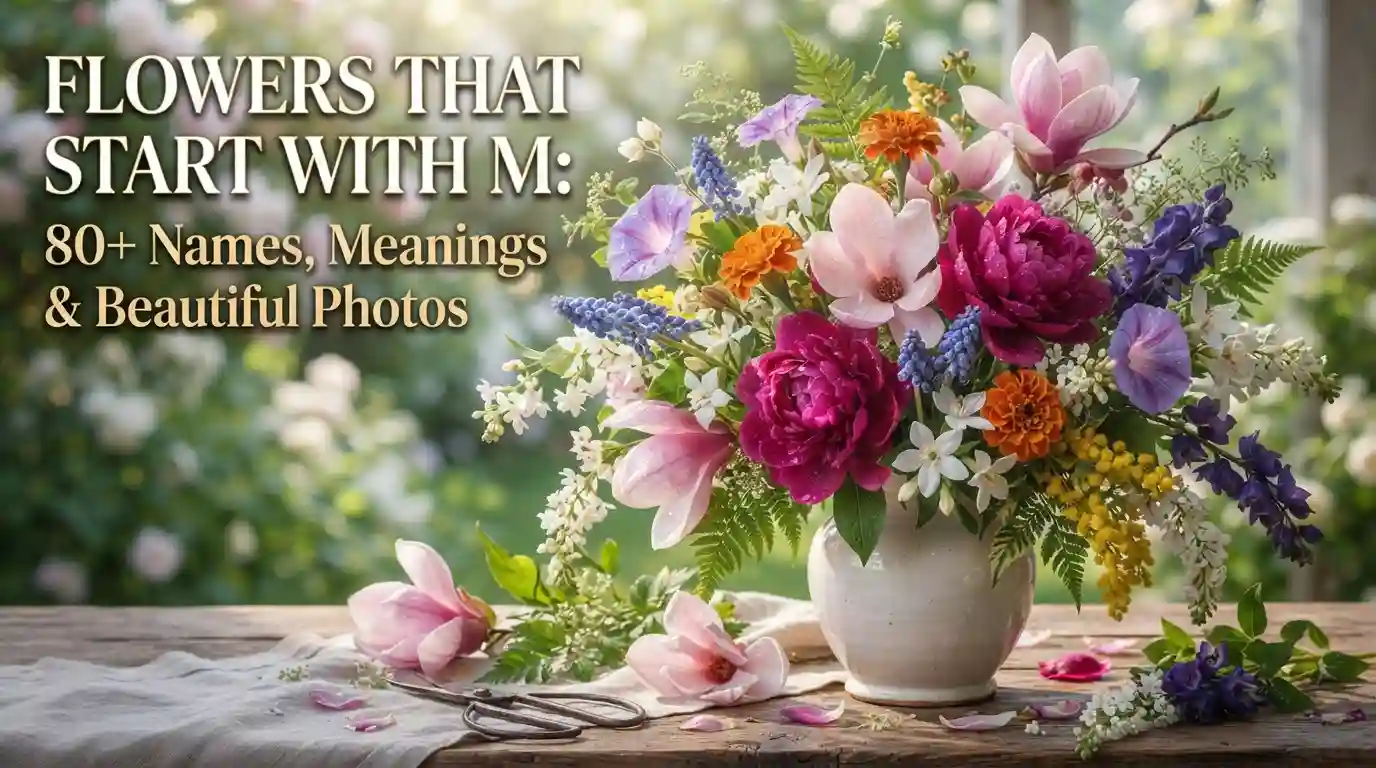
Flowers that start with M form a huge list. Few other letters have this many. Marigold is a common pick. Magnolia is a grand old tree. Monkshood looks great, but it is not safe near pets. This guide covers all of these. It covers many more too, over eighty names in all.
This guide serves a few kinds of readers. Some want to name a bloom they saw. Some want a new plant for a bed. This guide helps with each of these needs.
The order here follows real use. It does not just run A to Z. Garden picks come first. Indoor picks and florist picks come next. Then come rare finds. Then come flowers that need extra care. After that, you get quick tools. You get a bloom-cycle table. You get a full name list. The full A to Z list sits near the end. Use it to check a name fast.
Every flower here is real. We checked each home range. We used more than one source for each check. Some plants often placed at this letter got left out. If the bloom is not the main reason to grow the plant, we left it out.
Top M-Flowers to Know First
Anyone who looks up flowers that start with M meets these names first of all. Marigold leads the group. It blooms fast. It takes the heat well. Magnolia comes next. Its spring bloom can fill a whole yard with scent. Moss Rose thrives in dry, poor soil where most plants would fail. Morning Glory climbs fast and covers a fence in one season.
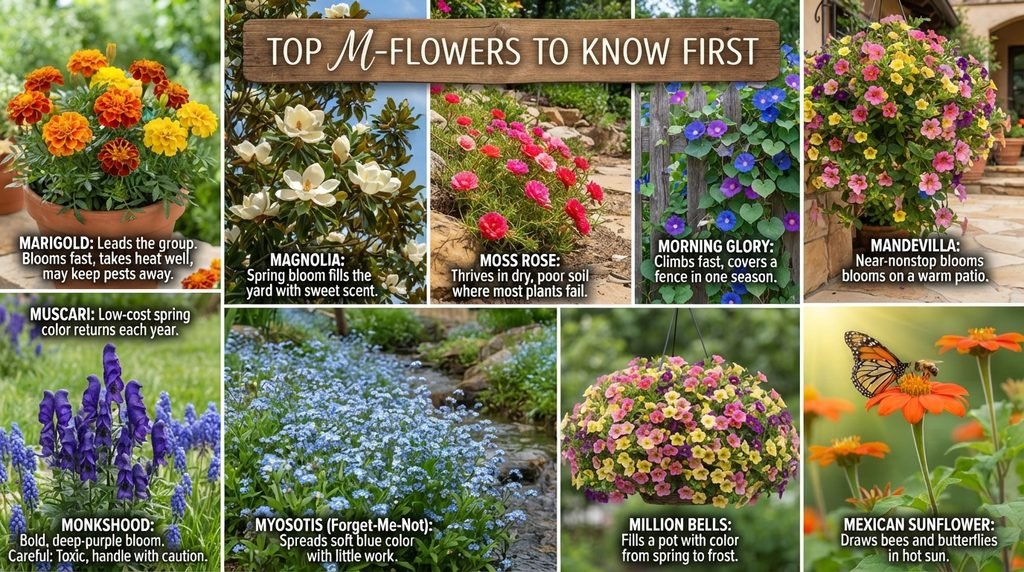
Mandevilla gives near-nonstop blooms on a warm patio. Muscari brings low-cost spring color that returns each year on its own. Monkshood has a bold, deep-purple bloom. But it is best left to careful, grown-up hands. Myosotis, also called Forget-Me-Not, spreads soft blue color with little work. Million Bells fills a pot with color from spring to frost. Mexican Sunflower draws bees and butterflies in a hot, sunny spot.
What These Blooms Have Meant Over Time
Flower meanings still shape real choices. People pick blooms for weddings. They pick blooms for gifts. They often do not know why a bloom feels right, but it does. Magnolia has long stood for a proud, calm strength. Some say this ties to how old the tree truly is. Magnolias grew before bees did. Beetles were their first helpers.
Marigold ties to memory in many places. In Mexico, it plays a lead role in Día de los Muertos. Its bright shade and strong scent are said to guide spirits home. Forget-Me-Not, drawn from Myosotis, has long stood for true love that lasts. This idea comes from an old tale. In the tale, a small bloom never gets forgotten.
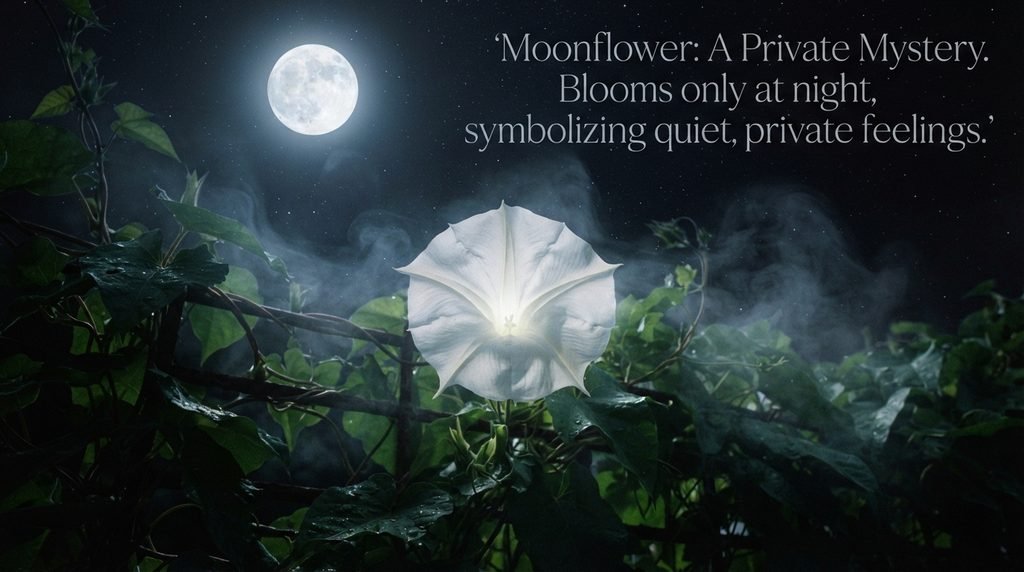
Moonflower leans toward mystery. It opens only at night. Most folks never see its bloom in full daylight. That hidden nature has long tied it to quiet, private feeling.
Grouping M-Flowers by Color
Color often narrows a search faster than a name does. Purple and blue rule a large share of this list. Monkshood, Muscari, and Myosotis all fall in this range. This shade feels cool and calm in a bed.
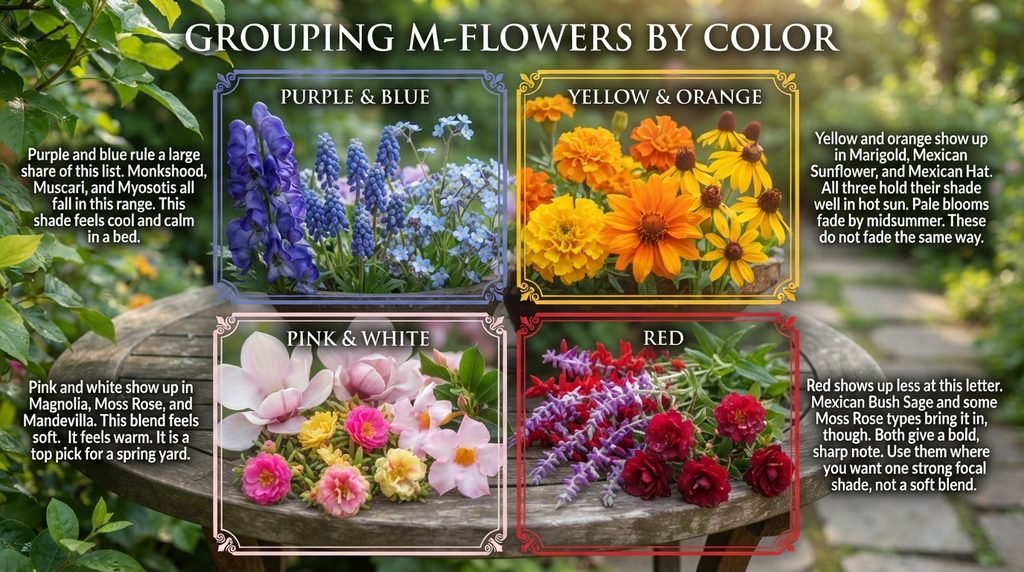
Yellow and orange show up in Marigold, Mexican Sunflower, and Mexican Hat. All three hold their shade well in hot sun. Pale blooms fade by midsummer. These do not fade the same way.
Pink and white show up in Magnolia, Moss Rose, and Mandevilla. This blend feels soft. It feels warm. It is a top pick for a spring yard.
Red shows up less at this letter. Mexican Bush Sage and some Moss Rose types bring it in, though. Both give a bold, sharp note. Use them where you want one strong focal shade, not a soft blend.
Solid Picks for the Garden
A few M-flowers earn a real spot in home yards, plain and simple. Marigold takes poor soil well. It blooms fast from seed. Moss Rose beats it on toughness. It grows well in dry, sandy ground where most plants fail. Mexican Sunflower grows tall and draws bees all through a hot summer.
Million Bells fills a pot fast with little fuss. Magnolia takes more patience. A young tree may need a few years for its first big bloom. But the payoff lasts for decades.
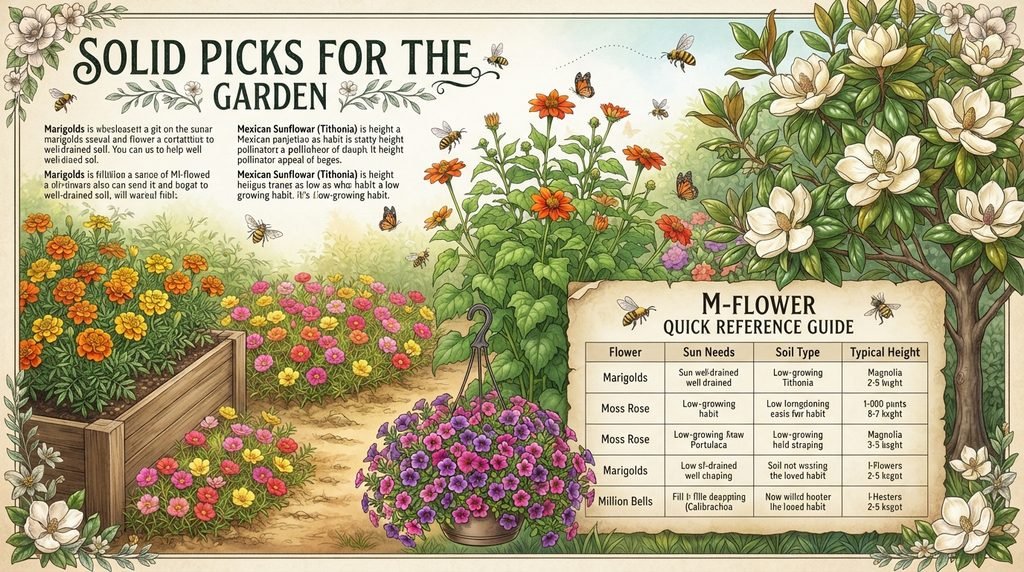
| Flower | Sun Needs | Soil Type | Typical Height |
| Marigold | Full sun | Well-drained soil | 6–36 inches |
| Moss Rose | Full sun | Dry, sandy soil | 4–8 inches |
| Mexican Sunflower | Full sun | Well-drained soil | 4–6 feet |
| Million Bells | Full sun | Well-drained soil | 6–12 inches |
| Magnolia | Full sun to part shade | Rich, well-drained soil | 10–80 feet |
Moss Rose stands out here for its low, ground-hugging form. It fits a hot, dry spot where taller blooms would wilt. Magnolia sits at the far end of this table. It is not a small bed plant. It is a long-term tree pick that shapes a whole yard.
M-Flowers for Indoor Growing
Some M-flowers do well as houseplants, but a few houseplants are not. Moth Orchid tops the list for houseplant fans. Still, it needs steady light. It needs a careful watering plan too. Mandevilla can grow in a large pot. It can come indoors before frost hits in a cold place. Marigold can grow on a sunny sill too, though it prefers the outdoors.
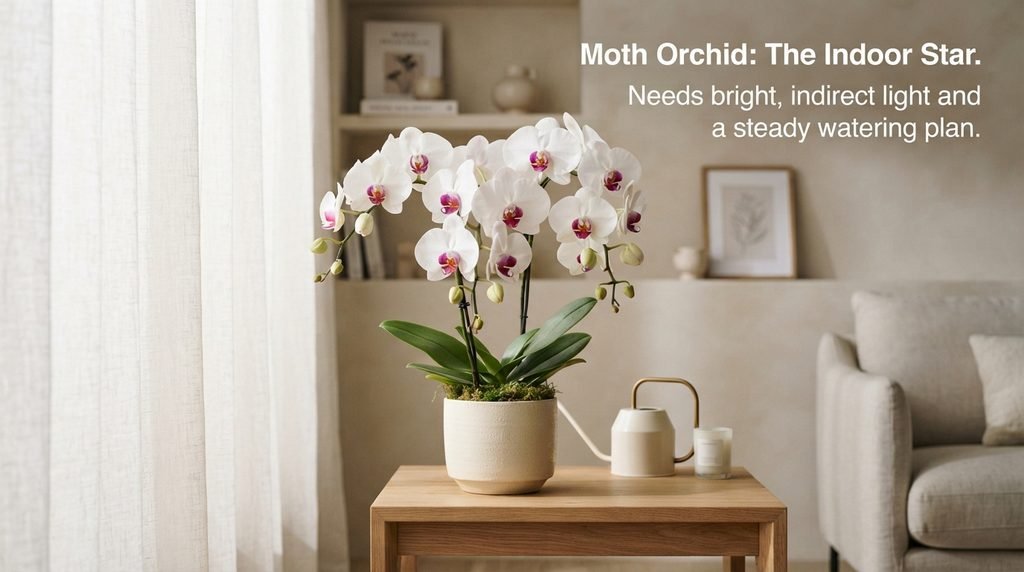
- Moth Orchid — needs bright, indirect light and a careful watering plan
- Mandevilla — grows well in a pot; can spend winter indoors in a bright, cool room
- Marigold — can grow on a sunny sill, but does best outdoors in real sun
Moth Orchid asks for the most care of these three. A cold draft or too much direct sun can stall its bloom fast. Mandevilla is more forgiving. You can cut it back. You can move it in and out each year for a long time.
What Florists Reach For
Cut flowers are a common way people meet this letter. Marigold shows up in many casual bunches for its bold, warm shade. Moss Rose rarely gets cut. Its bloom closes fast once picked. Still, it looks bright in a live centerpiece pot. Magnolia branches get cut with buds still closed. They bring scent and size to a large bunch.
Mokara Orchid is a tropical cousin in the orchid family. It holds up well in transit. It lasts over a week in a vase.
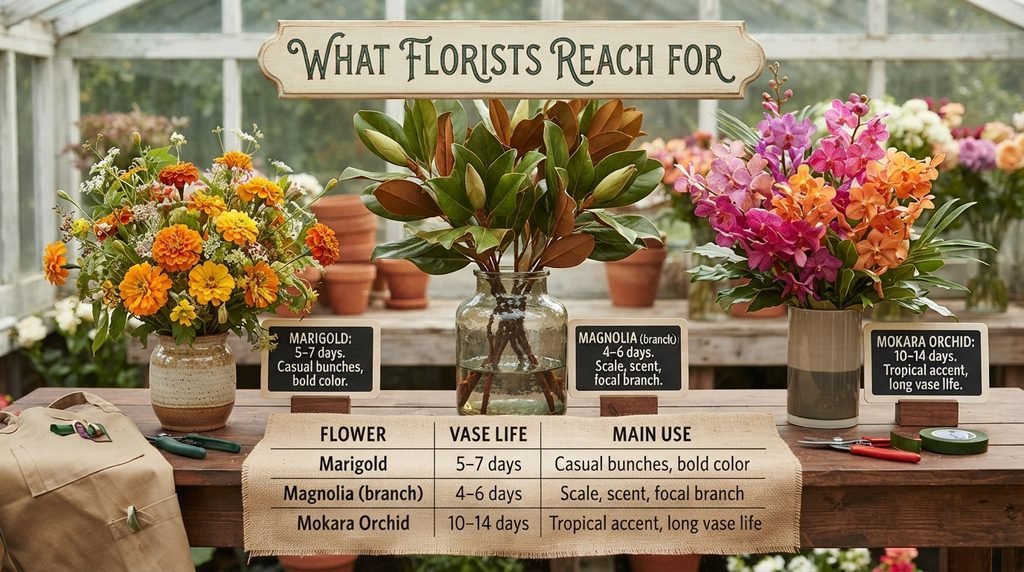
| Flower | Vase Life | Main Use |
| Marigold | 5–7 days | Casual bunches, bold color |
| Magnolia (branch) | 4–6 days | Scale, scent, focal branch |
| Mokara Orchid | 10–14 days | Tropical accent, long vase life |
Mokara Orchid lasts far longer than the other two in this table. That is why florists lean on it. It works well in pieces that must travel. It works well in pieces that sit out for a week or more. Magnolia branches fade the fastest. But their scent and size make up for the short life.
Harder-to-Find M-Flowers
A few M-flowers are hard to find outside small growers. Meconopsis is the true Himalayan Blue Poppy. It needs cool summers. It needs damp, rich soil. Few home yards can give it that. Mescal Bean has another name too: Texas Mountain Laurel. It grows slowly. It can take years to slowly bloom for the first time. That keeps it off most big-store shelves. Mahonia is a green all-year shrub. It has all-year leaves. It has bright yellow bloom spikes. Still, it stays a niche pick outside native-plant circles.
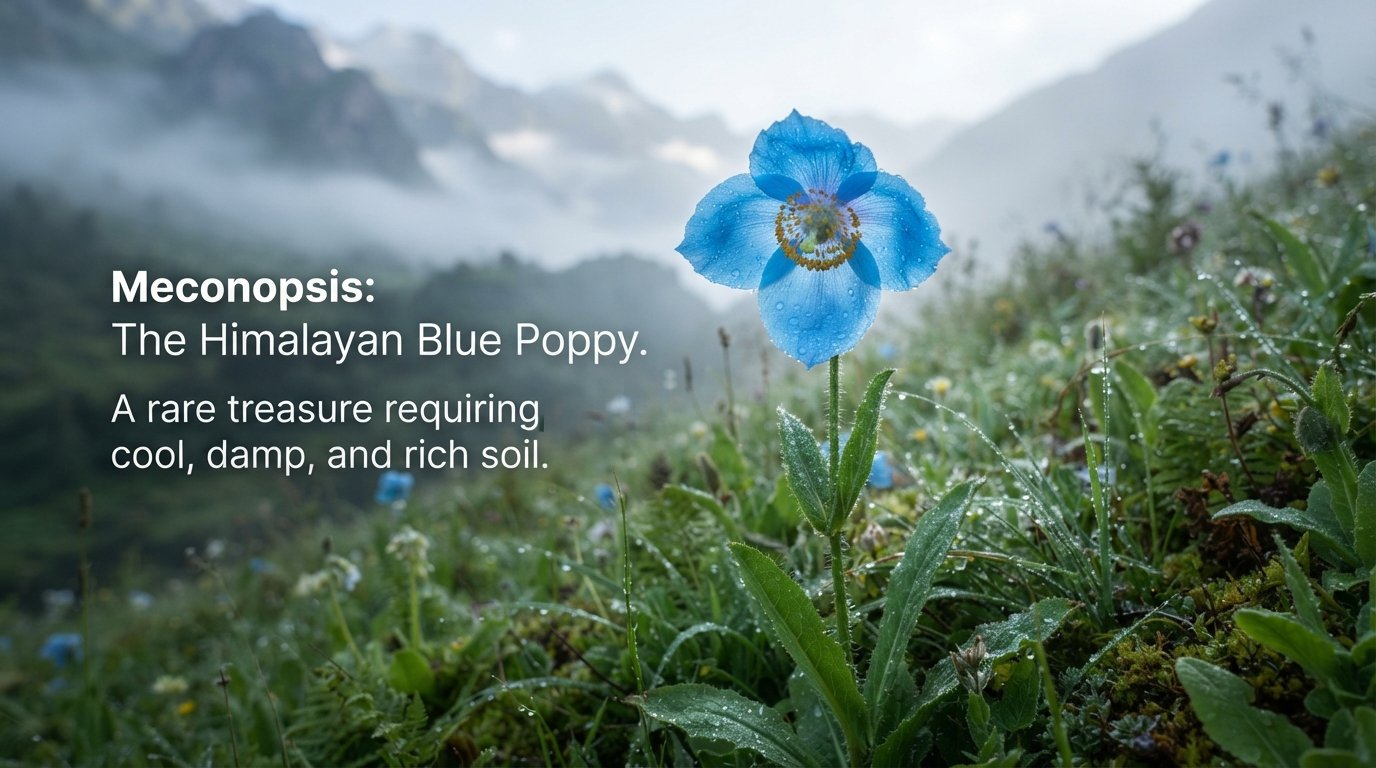
- Meconopsis (Himalayan Blue Poppy) — needs cool, damp, rich soil; rare outside cool climates
- Mescal Bean (Texas Mountain Laurel) — slow-growing; takes years to bloom
- Mahonia — shade-loving shrub; more common in native gardens than big stores
What links these three is not rarity in the wild. It is how specific their needs are. None of them are truly hard to grow once you meet those needs. Few yards meet those needs by chance, which is why they stay uncommon.
Where to Use Care M Flower
A few M-flowers carry real risk. This matters most in homes with pets or small kids. Monkshood tops this list by far. Every part of the plant holds a poison called aconitine. Even a bare-hand touch while pulling weeds has caused harm in real cases. Mountain Laurel holds poison. It can harm the heart. It is true if a pet or farm animal eats it.
Milkweed holds poison too. Still, it plays a key role for monarch butterflies. Many folks grow it anyway, with care. Marvel of Peru grows seeds. A large amount can upset the stomach if eaten.
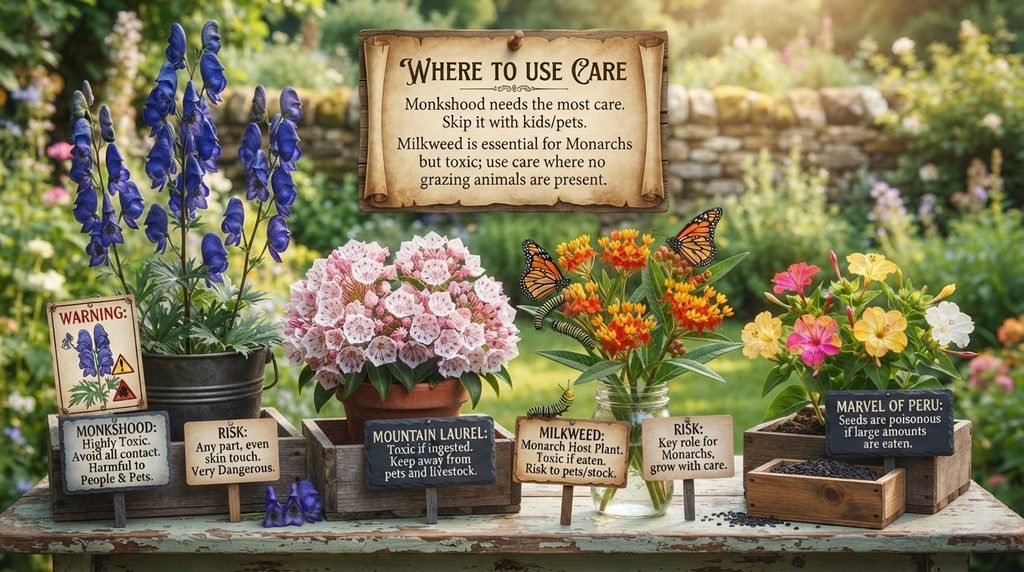
| Flower | Risk To | Main Risk | How Bad |
| Monkshood | People, pets | Any part, even skin touch | Very bad; baby can be contacted |
| Mountain Laurel | Pets, farm stock | Any part, if eaten | Bad |
| Milkweed | Pets, farm stock | Any part, if eaten | Mid to bad |
| Marvel of Mildu | Pets, people | Seeds, if eaten | Mild |
Monkshood needs the most care on this whole list. Skip it in any yard with young kids or curious pets. Milkweed is a harder call. Its value to monarchs often outweighs the risk. This is true for yards with no grazing animals nearby.
Planning by Bloom Cycle M Flower
Some blooms live one year. Some come back on their own. This fact shapes how you plan a bed. Marigold and Moss Rose live just one year in most climates. You plant them fresh each spring. Magnolia and Mountain Laurel come back on their own for decades. Both are woody plants.
Bulbs run on their own clock. Muscari grows slowly under the soil and slowly turns each spring with little care.
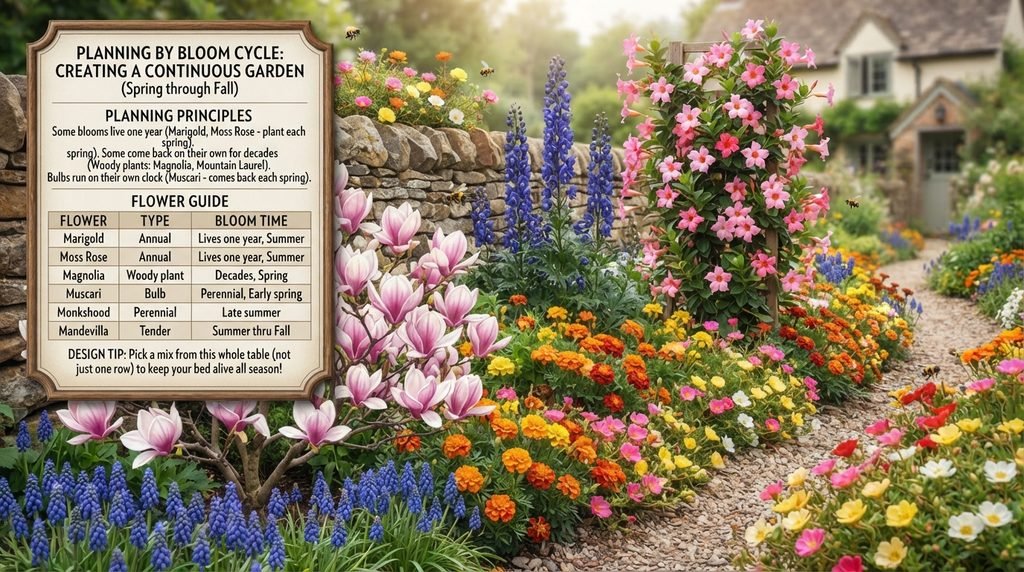
| Flower | Type | Bloom Time |
| Marigold | Lives one year | Summer |
| Moss Rose | Lives one year | Summer |
| Magnolia | Woody plant, comes back for years | Spring |
| Muscari | Bulb, comes back each year | Early spring |
| Monkshood | Comes back each year | Late summer |
| Mandevilla | Tender; often grown as a one-year plant in cold climates | Summer through fall |
Muscari and Magnolia both open the garden early in the year. Mandevilla is early in the year and carries color through the hot middle of summer. Pick a mix from this whole table. Do not just pick one row. This keeps a bed alive from spring through fall.
Every M-Flower Name, A to Z
This is the full list of flowers that start with M. It is the whole set from this guide. It adds many more names worth knowing. Most names here use the common name first. That is how most folks search for a plant. A few, like Meconopsis, go by their plant-science name even in normal talk. Those show up the same way here.
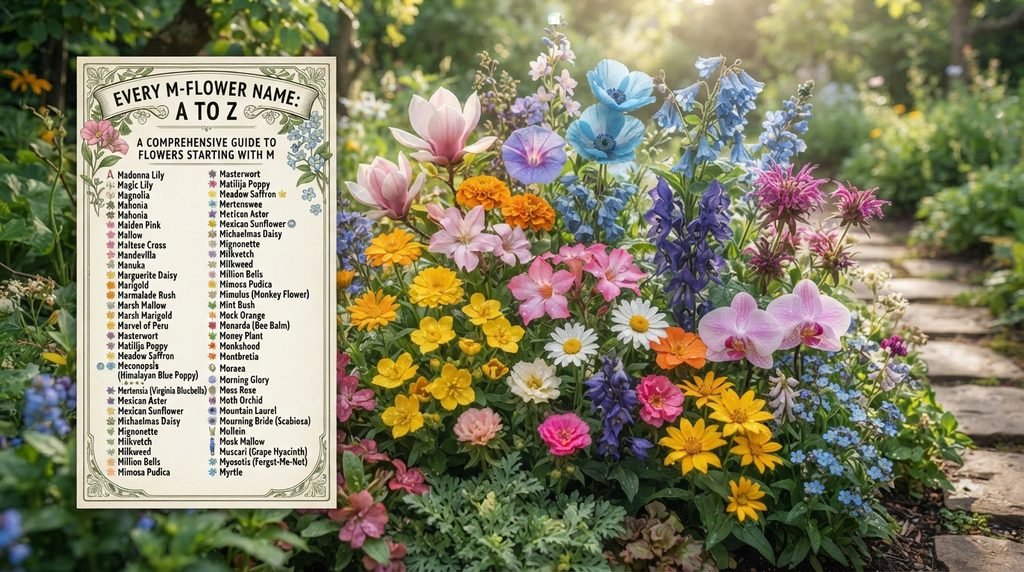
- Madonna Lily
- Magic Lily
- Magnolia
- Mahonia
- Maiden Pink
- Mallow
- Maltese Cross
- Malope
- Mandarin’s Hat
- Mandevilla
- Manuka
- Manzanita Blossom
- Maple Blossom
- Marguerite Daisy
- Marigold
- Marmalade Bush
- Marsh Mallow
- Marsh Marigold
- Marvel of Peru
- Masterwort
- Matilija Poppy
- Mazus
- Meadow Cranesbill
- Meadow Rue
- Meadow Saffron
- Meadowsweet
- Meconopsis (Himalayan Blue Poppy)
- Melampodium
- Mertensia (Virginia Bluebells)
- Mescal Bean (Texas Mountain Laurel)
- Mexican Aster
- Mexican Bush Sage
- Mexican Fire Plant
- Mexican Hat
- Mexican Marigold
- Mexican Mint Marigold
- Mexican Petunia
- Mexican Poppy
- Mexican Sunflower
- Michaelmas Daisy
- Mignonette
- Milkvetch
- Milkweed
- Million Bells (Calibrachoa)
- Miniature Daffodil
- Miniature Iris
- Miniature Rose
- Mimosa
- Mimosa Pudica (Sensitive Plant)
- Mimulus (Monkey Flower)
- Missouri Primrose
- Mint Bush
- Mock Azalea
- Mock Orange
- Mock Strawberry
- Monarda
- Monardella
- Money Plant (Lunaria)
- Monk’s Pepper
- Monkshood
- Montbretia (Crocosmia)
- Moneywort
- Mongolian Aster
- Moon Daisy
- Moonflower
- Moonwort
- Moraea
- Morning Glory
- Moss Campion
- Moss Phlox
- Moss Rose (Portulaca)
- Moss Verbena
- Moth Orchid
- Mountain Avens
- Mountain Bluet
- Mountain Garland
- Mountain Laurel
- Mountain Mint
- Mourning Bride (Scabiosa)
- Mourning Widow
- Mullein
- Mullein Pink
- Musk Mallow
- Musk Rose
- Musk Thistle
- Muscari (Grape Hyacinth)
- Mustard Flower
- Myosotis (Forget-Me-Not)
- Myrtle
- Myrtle Spurge
That list holds over ninety names in all. Some, like Meconopsis and Mescal Bean, are hard to find. Small growers stock them; big stores do not. A few, like Marsh Mallow and Mourning Widow, grow wild in many places. They rarely show up for sale at all.
Common Name to Plant-Science Name
Plant-science names matter most when you shop online or check a plant tag. This matters more here than at most letters. A few common names point to plants that share little else. They just share a first letter.
| Common Name | Plant-Science Name |
| Marigold | Tagetes spp. |
| Magnolia | Magnolia spp. |
| Morning Glory | Ipomoea spp. |
| Monkshood | Aconitum napellus |
| Muscari | Muscari armeniacum |
| Mandevilla | Mandevilla spp. |
| Myosotis | Myosotis scorpioides |
| Meconopsis | Meconopsis betonicifolia |
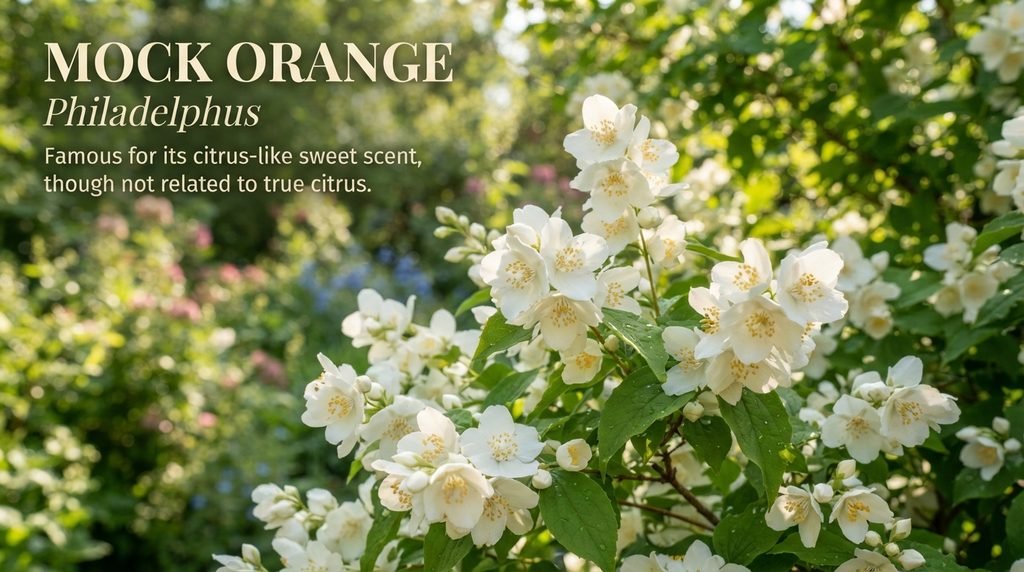
Mock Orange is the name to check twice. Its plant-science name, Philadelphus, gives no hint of the common name at all. The plant is not close kin to true citrus. Still, its bloom carries a similar sweet scent.
Growing Conditions at a Glance
This chart pulls sun, soil, and bloom time into one place. It makes side-by-side checks easy. The table below holds each flower named in the growing sections above. It uses the same three columns each time. Nothing gets left out.
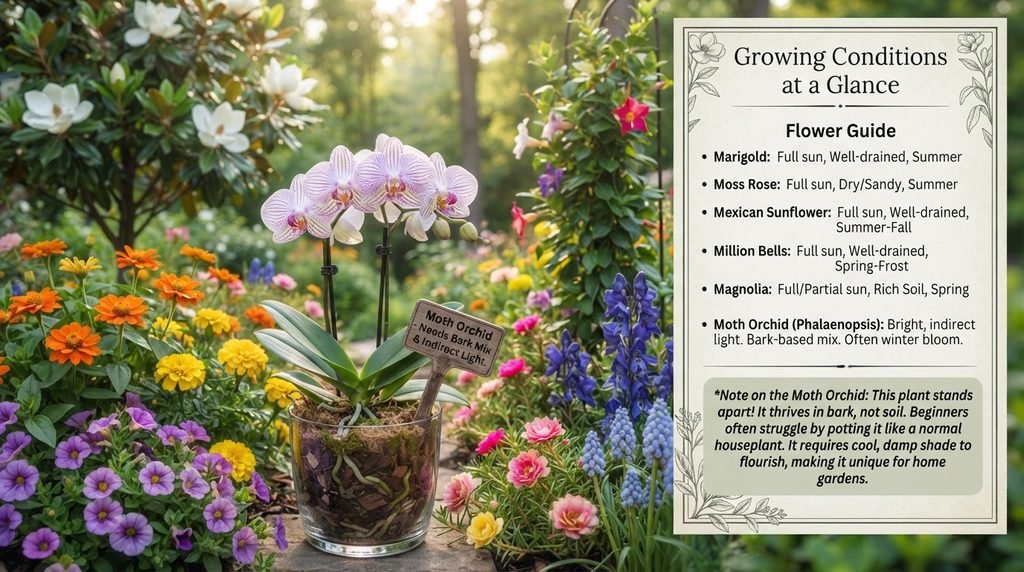
| Flower | Sun Needs | Soil Type | Bloom Time |
| Marigold | Full sun | Well-drained soil | Summer |
| Moss Rose | Full sun | Dry, sandy soil | Summer |
| Mexican Sunflower | Full sun | Well-drained soil | Summer to fall |
| Million Bells | Full sun | Well-drained soil | Spring to frost |
| Magnolia | Full sun to part shade | Rich, well-drained soil | Spring |
| Moth Orchid | Bright, indirect light | Bark-based potting mix | Varies; often winter |
| Mandevilla | Full sun | Well-drained soil | Summer to fall |
| Monkshood | Part shade | Moist, rich soil | Late summer |
| Muscari | Full sun to part sun | Well-drained soil | Early spring |
| Meconopsis | Part shade | Moist, acidic soil | Late spring to summer |
Moth Orchid stands apart here. It grows in bark, not soil. This trips up new growers a lot. They try to pot it like a normal houseplant, and it fails because it needs cool, damp shade. Few climates give it that mix. This is a big reason it stays rare in most home gardens.
Pick Your M-Flower by Need
Do not scan every row one by one. Start with your goal. The table below sets a need next to a clear pick. It draws on all the facts in this guide.
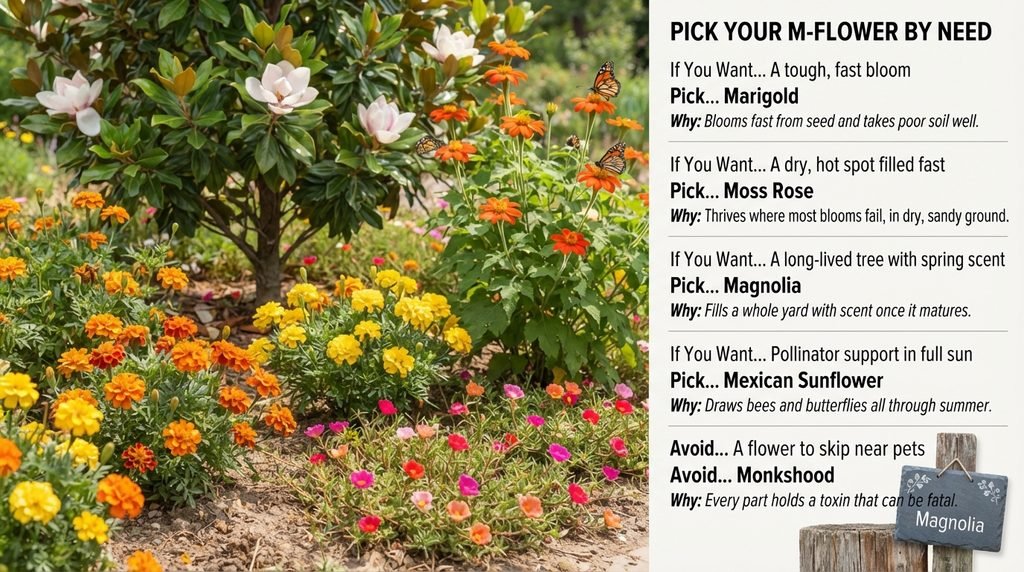
| If You Want… | Pick… | Why |
| A tough, fast bloom | Marigold | Blooms fast from seed and takes poor soil well |
| A dry, hot spot filled fast | Moss Rose | Thrives where most blooms fail, in dry, sandy ground |
| A long-lived tree with spring scent | Magnolia | Fills a whole yard with scent once it matures |
| Pollinator support in full sun | Mexican Sunflower | Draws bees and butterflies all through summer |
| A flower to skip near pets | Not Monkshood | Every part holds a toxin that can be fatal |
Marigold and Moss Rose both solve a need for fast, tough color. Magnolia asks for patience but pays off for decades once grown. The last row matters just as much as the rest. Knowing which M-flower to skip can keep a pet safe.
Conclusion
Flowers that start with M cover more ground than almost any other letter. Marigold is tough and easy. Monkshood is bold but risky. This range is why this guide uses real groups. It does not use one flat list. Anyone who looks up flowers that start with M should find a clear answer here. That may mean naming a bloom. That may mean picking a new plant. Few letters hold this much range in one place.
Frequently Asked Questions
What are some popular flowers that start with M?
Marigold, Magnolia, Morning Glory, and Muscari top the list. All four are well-known flowers that start with M. Each suits a different need, from fast garden color to long-lived spring trees.
Which M-flowers are toxic to pets?
Monkshood is the top risk by far. Every part of the plant can cause harm. Even skin contact can cause harm. Contact with Laurel and Milkweed carries a real risk too, though less severe.
How fast does Marigold bloom from seed?
Most types bloom within six to eight weeks from seed. This makes it one of the fastest picks on this whole list. It is also one of the most steady.
Is Monkshood safe to grow with kids or pets nearby?
No. Every part of the plant holds a strong poison. It can cause real harm. Even a bare-hand touch can cause harm. It is best skipped in most home yards.
What is the gap between Morning Glory and Moonflower?
Morning Glory opens by day and shuts by afternoon. Moonflower is a related vine. It opens at night. It shuts again by morning.
Does Marigold really keep pests away?
Many gardeners plant it near food crops. Some think it helps keep pests off nearby plants. The effect is mild, not a full fix on its own.
Which M-flowers do well in shade?
Mertensia, Meadow Rue, and Mazus all take shade well.
What are houseplants partners for Marigold?
Tomatoes are a classic partner. Both share the same sun needs.