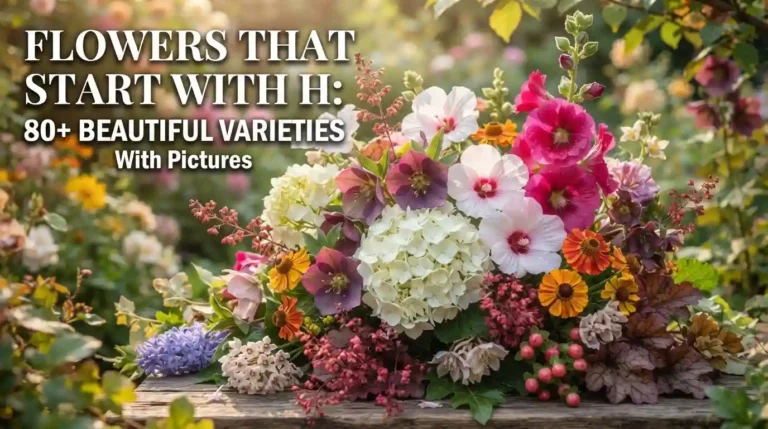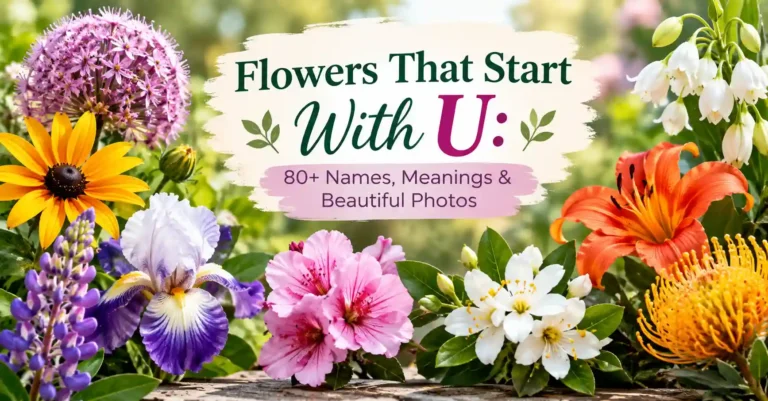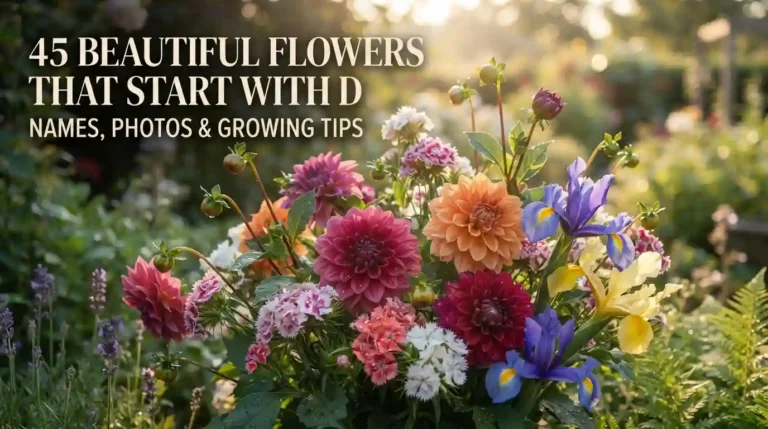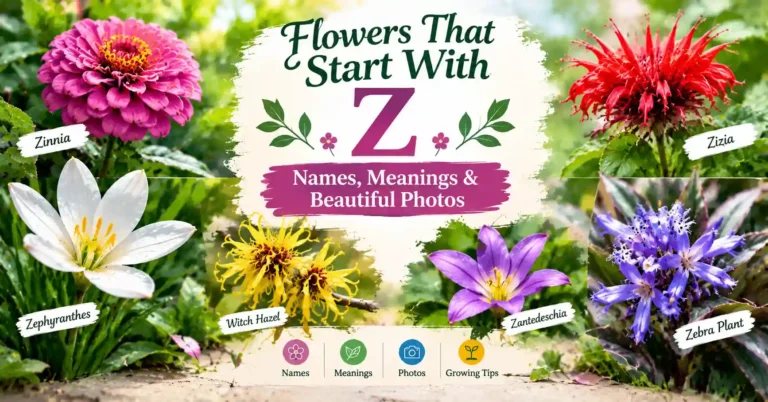
Flowers That Start With O: 50 Names, Meanings & Beautiful Photos
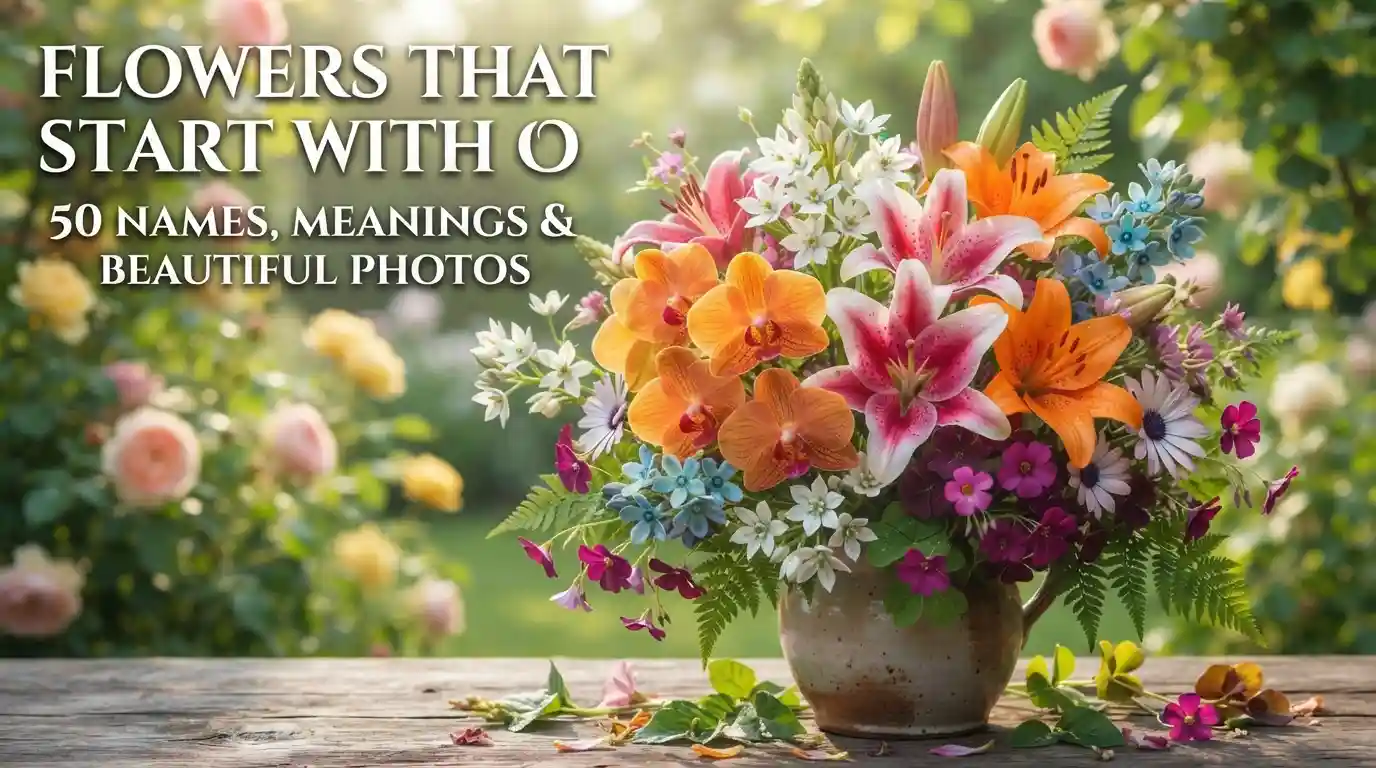
Flowers that start with O hold real range. Orchid is the name most folks know first. Oleander looks great, but it is not safe. Osteospermum blooms fast in a sunny bed. This guide covers fifty real names in all.
This guide helps a few kinds of readers. Some want to name a bloom they saw. Some want a new plant for a bed. This guide helps with each need.
The order here follows real use. It does not just run A to Z. Garden picks come first. Indoor picks and florist picks come next. Then come rare finds. Then come flowers that need care. After that, you get quick tools. You get a bloom-cycle table. You get a full name list. The full A to Z list sits near the end.
Every flower here is real. We checked each name. We checked each home range. Some plants often placed at this letter got left out. If the bloom is not the main reason to grow the plant, it did not make the list.
Top O-Flowers to Know First
Anyone who looks up flowers that start with O meets these names first. Orchid tops the list. It comes in more shapes and shades than most plants on Earth. Oleander comes next. It blooms bright pink. But it is one of the most toxic plants you can grow. Osteospermum, often called African Daisy, blooms fast in full sun with little fuss.
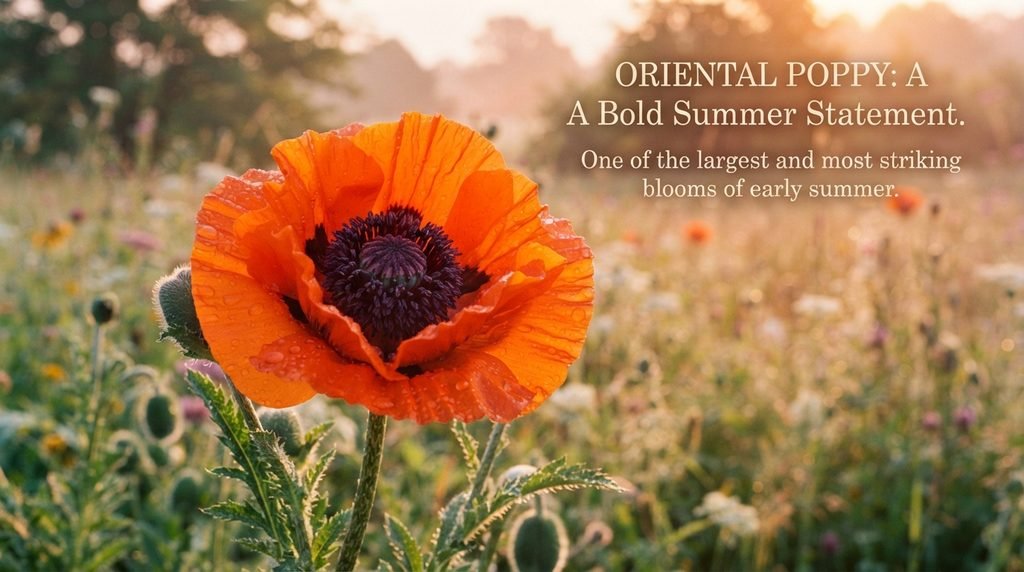
Oenothera opens its blooms at dusk and draws moths all night. Ornithogalum, known as Star of Bethlehem, brings crisp white stars to a spring bed. Oriental Poppy gives one of the boldest, largest blooms of early summer. Old Man’s Beard climbs fast and covers a fence with soft, fluffy seed heads. Oxeye Daisy grows wild in many fields, cheerful and tough. Orange Blossom fills a warm yard with scent strong enough to notice from far off.
What These Blooms Have Meant Over Time
Flower meanings still shape real choices. People pick blooms for weddings. They pick blooms for gifts. They often do not know why a bloom feels right. But it does. Orchid has long stood for rare beauty and love. In old Greek belief, it was also tied to strength and fine health. That link came from the shape of its root.
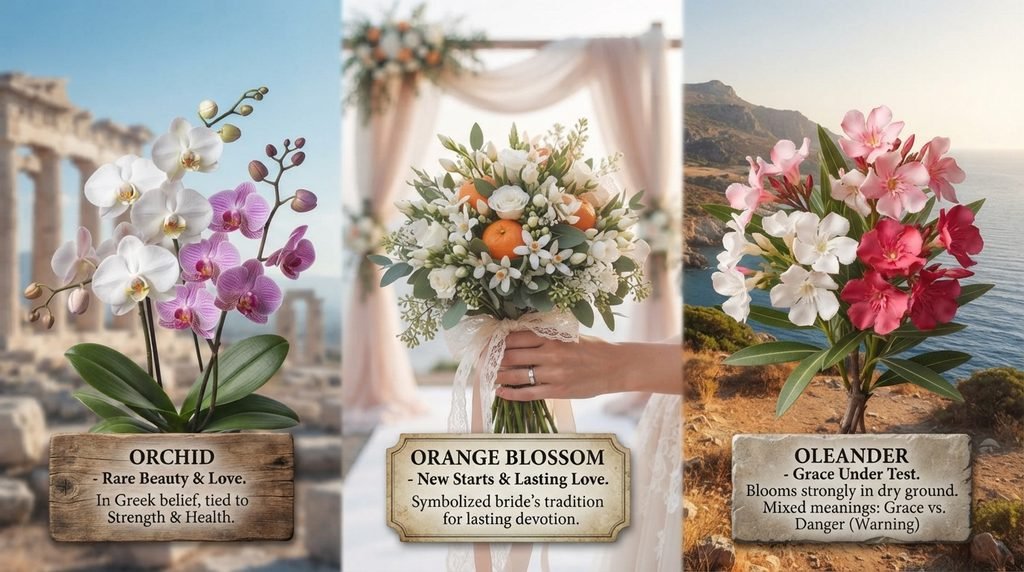
Orange Blossom holds a deep tie to new starts and lasting love. Brides in many cultures once wore it in their hair or veil for this reason. That old custom still shapes many wedding bunches today, even where the real flower is rare or costly.
Oleander carries a more mixed old story. In some places, it stood for warning or danger, tied to its real toxic risk. In other places, most of all parts of the Mediterranean, it stood for grace under a hard test. It can bloom well even in dry, hard ground.
Grouping O-Flowers by Color
Color often narrows a search faster than a name does. White rules a large share of this list. Orchid, Ornithogalum, and Old Man’s Beard all bring crisp white tones. This shade feels clean and calm, a strong pick for a bright, formal bed.
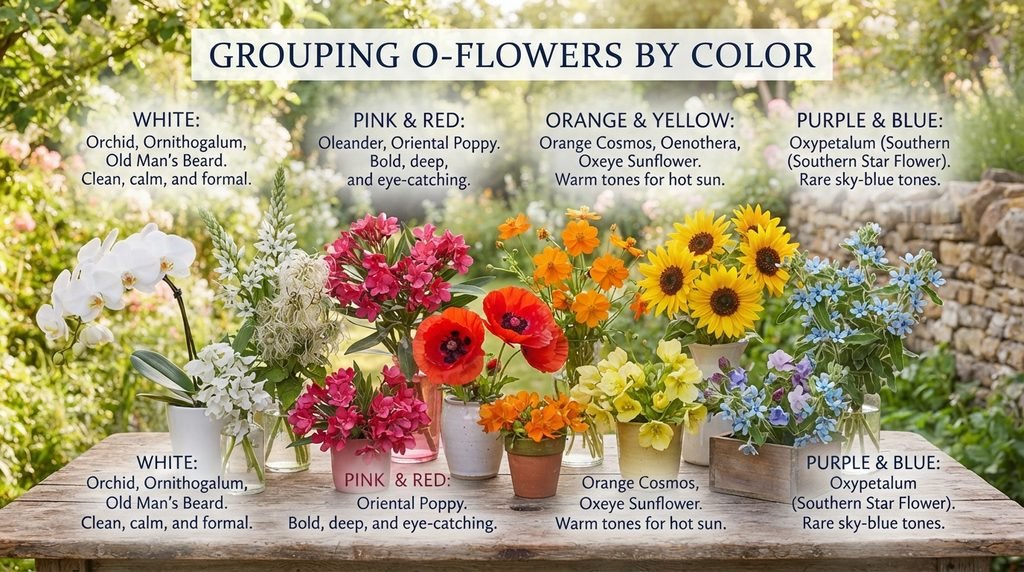
Pink and red show up in Oleander and Oriental Poppy. Both hold bold, deep tones that draw the eye from afar. Use them where you want one strong focal shade, not a soft blend.
Orange and yellow show up in Orange Cosmos, Oenothera, and Oxeye Sunflower. All three hold up well in hot sun. This shade brings warmth to a bed that might feel flat with only cool tones.
Purple and blue are rarer at this letter, but they still show up. Oxypetalum, also called Southern Star Flower, carries a true sky-blue tone that few other O-flowers can match.
Solid Picks for the Garden
A few O-flowers earn a real spot in home yards, plain and simple. Osteospermum blooms fast. It takes the heat well too. It asks for little care once set in the ground. Oxeye Daisy shares that same toughness, growing wild in poor soil where fussier plants would fail.
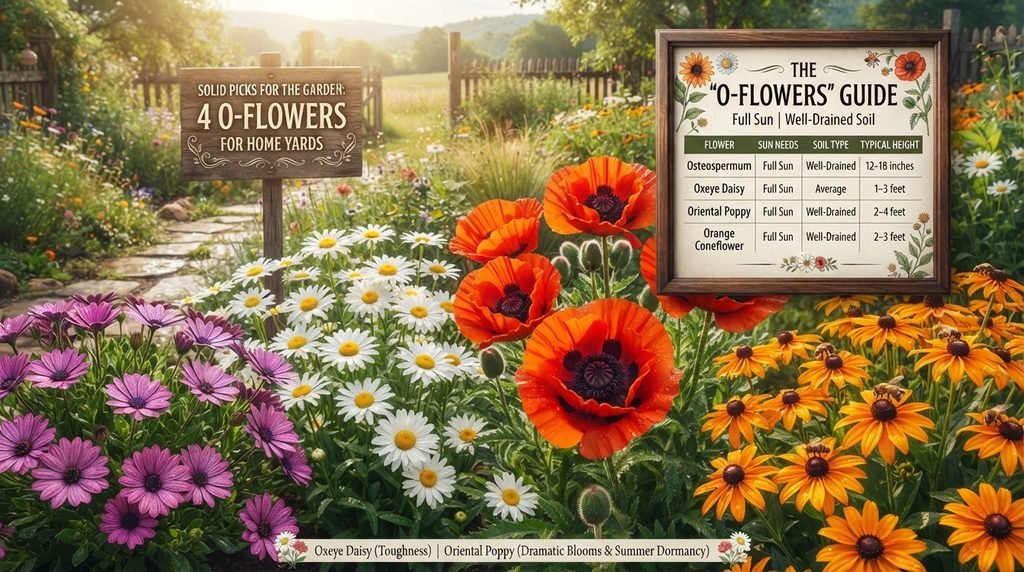
Oriental Poppy adds real drama with its huge, tissue-paper blooms. Its show is short, though, and the plant goes dormant by midsummer. Orange Coneflower rounds out this group. It gives a long, steady bloom that draws bees for weeks on end.
| Flower | Sun Needs | Soil Type | Typical Height |
| Osteospermum | Full sun | Well-drained soil | 12–18 inches |
| Oxeye Daisy | Full sun | Average, well-drained soil | 1–3 feet |
| Oriental Poppy | Full sun | Well-drained soil | 2–4 feet |
| Orange Coneflower | Full sun | Well-drained soil | 2–3 feet |
Oxeye Daisy stands out here for its sheer toughness. It grows wild along roads and fields with no help at all. Oriental Poppy sits at the other end. It needs a bit more planning, since its foliage fades away fast once the bloom is done.
O-Flowers for Indoor Growing
Some O-flowers make fine houseplants, though a few need real care. Orchid tops the list for indoor fans. Still, it needs steady light. It needs a careful watering plan too, one that differs from most houseplants. Old Man Cactus is a fuzzy, white-haired cactus. It can bloom indoors once it reaches full size. That can take many years, though.
- Orchid — needs bright, indirect light and a careful watering plan
- Old Man Cactus — grows slowly; can take years to reach bloom size indoors
Orchid asks for the most care of these two. Too much direct sun or too much water can stall its bloom fast. Old Man Cactus asks for patience more than skill. Its odd, fuzzy look is often the main draw, long before it ever blooms.
What Florists Reach For O Flowers
Cut flowers are a common way people meet this letter. Orchid tops the list for florists by a wide gap. Its bloom holds its shape and color for weeks after a cut. That is far longer than most flowers can manage. Oriental Lily brings real scale and scent to a big bunch. Florists often remove its pollen, though, to stop it from staining cloth.
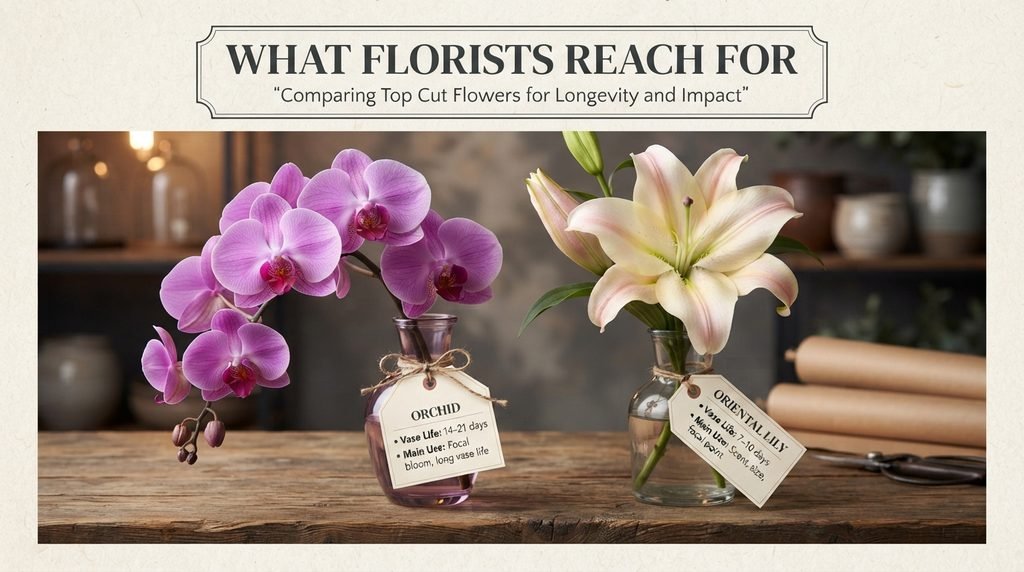
| Flower | Vase Life | Main Use |
| Orchid | 14–21 days | Focal bloom, long vase life |
| Oriental Lily | 7–10 days | Scent, size, focal point |
Orchid lasts far longer than almost any other cut flower on the market. That is a big reason it shows up so often in high-end bunches. Oriental Lily trades some of that vase life for a bold scent that Orchid does not offer.
Harder-to-Find O-Flowers
A few O-flowers are hard to find outside small growers. Oconee Bells is a small woodland bloom. It grows natively in just a few spots in the southeast United States. Its range is so narrow that it stays rare. Ourisia is a cool-climate ground cover. It has small white or pink blooms. It needs damp, cool air that few home yards can offer. Odontoglossum is a cool-growing orchid. It needs a narrow band of steady, cool heat. That makes it a poor fit for most windowsills.
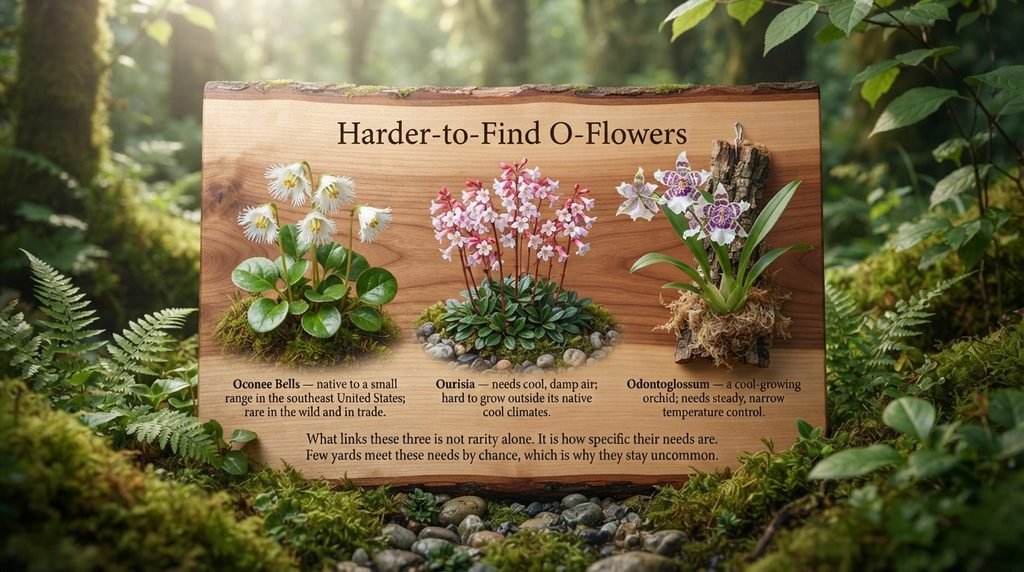
- Oconee Bells — native to a small range in the southeast United States; rare in the wild and in trade
- Ourisia — needs cool, damp air; hard to grow outside its native cool climates
- Odontoglossum — a cool-growing orchid; needs steady, narrow temperature control
What links these three is not rarity alone. It is how specific their needs are. None of them are truly hard to grow once you meet those needs. Few yards meet those needs by chance, which is why they stay uncommon.
Where to Use Care O Flowers
A few O-flowers carry real risk. This matters most in homes with pets or small kids. Oleander tops this list by a wide margin. Every part of the plant holds toxins. These toxins are strong enough to harm the heart. Even smoke from burning it has caused harm in real cases. Opium Poppy holds strong alkaloids too. It is a controlled plant in many places, since it gets used to make strong drugs.
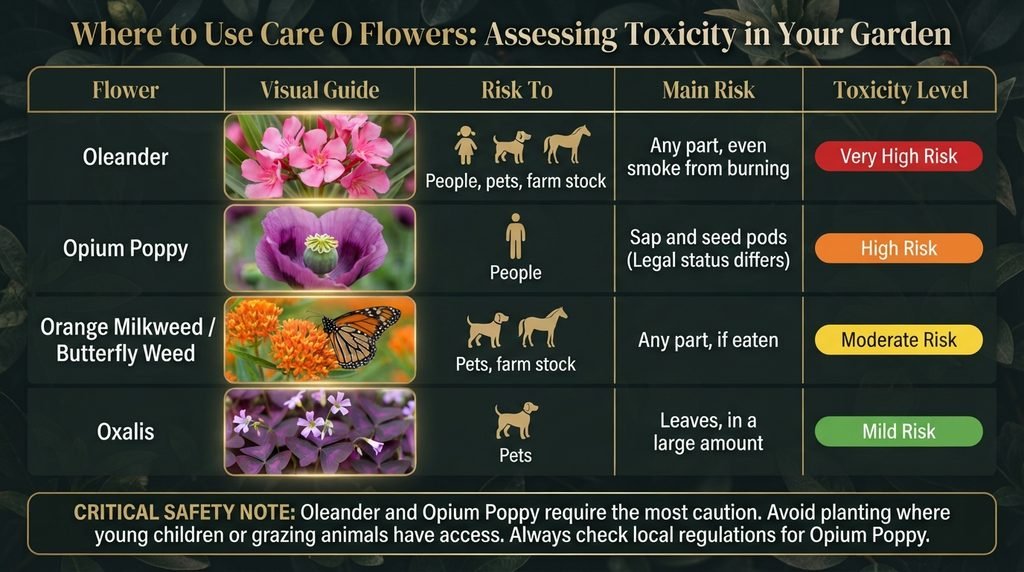
Orange Milkweed has another name too: Butterfly Weed. It holds toxins common to the whole milkweed family. Still, it plays a real role for monarch butterflies. Oxalis is far milder, though. It contains oxalic acid. A large amount can cause mild stomach upset if eaten.
| Flower | Risk To | Main Risk | How Bad |
| Oleander | People, pets, farm stock | Any part; even smoke from burning it | Very bad; can be fatal |
| Opium Poppy | People | Sap and seed pods | Bad; controlled in many places |
| Orange Milkweed | Pets, farm stock | Any part, if eaten | Mid-range |
| Oxalis | Pets | Leaves, in a large amount | Mild |
Oleander needs the most care on this whole list. Skip it in any yard with young kids or grazing farm stock. Opium Poppy comes next. Its legal status is worth a check before you plant it, since rules differ by place.
Planning by Bloom Cycle
Some blooms live one year. Some come back on their own. This fact shapes how you plan a bed. Oxeye Daisy and Orange Coneflower come back on their own for years. Oriental Poppy does too, though it goes fully dormant by midsummer each year.
Bulbs run on their own clock. Ornithogalum grows slowly under the soil and returns each spring with little care.
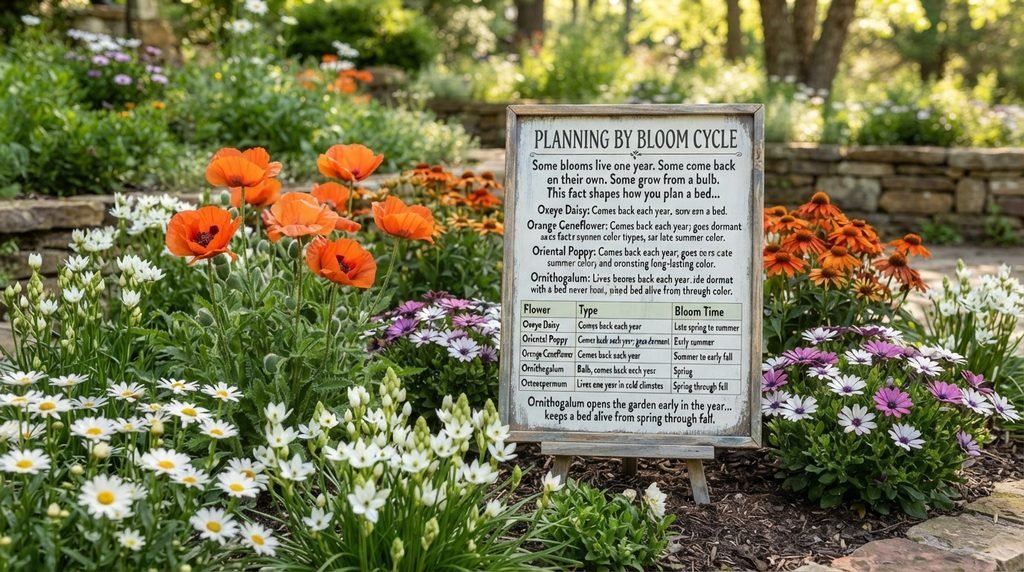
| Flower | Type | Bloom Time |
| Oxeye Daisy | Comes back each year | Late spring to summer |
| Oriental Poppy | Comes back each year; goes dormant | Early summer |
| Orange Coneflower | Comes back each year | Summer to early fall |
| Ornithogalum | Bulb, comes back each year | Spring |
| Osteospermum | Lives one year in cold climates | Spring through fall |
Ornithogalum opens the garden early in the year on this table. Orange Coneflower carries color through the back half of summer. A mix from this whole table, not just one row, keeps a bed alive from spring through fall.
Every O-Flower Name, A to Z
This is the full list of flowers that start with O in this guide. It counts fifty real names in all. Most entries use the common name first, since that is how most folks search for a plant. A few, like Oxypetalum, go by a name close to their plant-science name, even in normal talk.
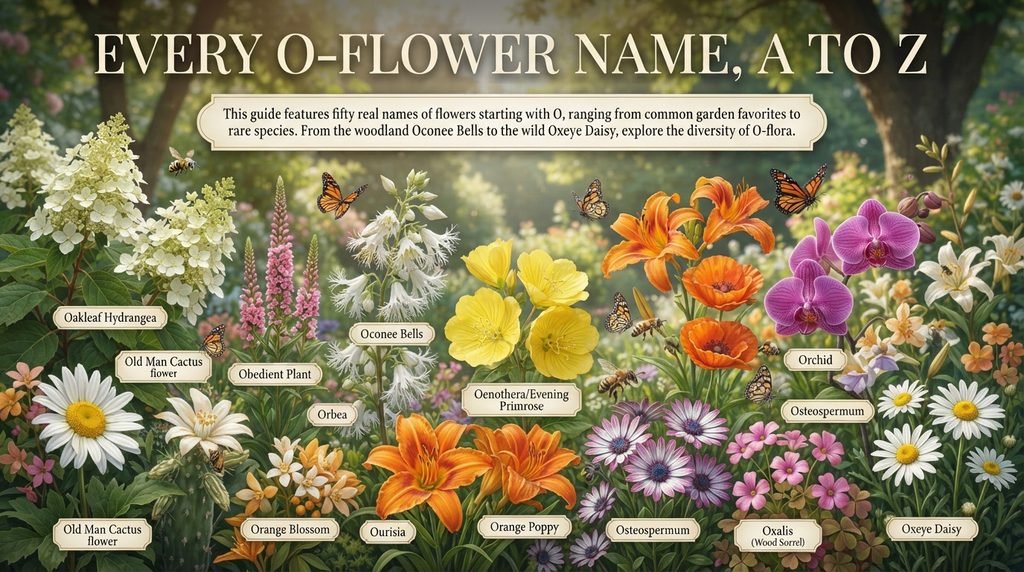
- Oakleaf Hydrangea
- Obedient Plant
- Ochna
- Oconee Azalea
- Oconee Bells
- October Daphne
- Odontoglossum
- Oenothera (Evening Primrose)
- Ohio Spiderwort
- Old Maid (Vinca)
- Old Man Cactus
- Old Man’s Beard (Traveler’s Joy)
- Olearia (Daisy Bush)
- Onosma (Golden Drop)
- Opium Poppy
- Opuntia (Prickly Pear Flower)
- Orange Blossom
- Orange Coneflower
- Orange Coreopsis
- Orange Cosmos
- Orange Daylily
- Orange Hawkweed
- Orange Jubilee
- Orange Milkweed
- Orange Trumpet Vine
- Orbea (Starfish Flower)
- Orchid
- Orchid Cactus
- Orchid Tree
- Orchid Vine
- Oregon Grape
- Oriental Hellebore
- Oriental Lily
- Oriental Poppy
- Orinoco Lily
- Ornamental Onion
- Ornithogalum (Star of Bethlehem)
- Orpine
- Osteospermum (African Daisy)
- Ourisia
- Owl’s Clover
- Oxalis (Wood Sorrel)
- Oxblood Lily
- Oxeye Daisy
- Oxeye Sunflower
- Oxlip
- Oxypetalum (Southern Star Flower)
- Oxytropis (Locoweed)
- Ozark Sundrops
- Ozothamnus (Rice Flower)
That list holds fifty names in all. That is the full, honest count this guide set out to reach. Some, like Oconee Bells and Ourisia, are hard to find outside a small grower. A few, like Oxeye Daisy, grow wild in many places and cost little to nothing to start.
Common Name to Plant-Science Name
Plant-science names matter most when you shop online or check a plant tag. This matters even more at this letter. A few common names, like Old Man’s Beard, give no hint of the plant’s real family at all.
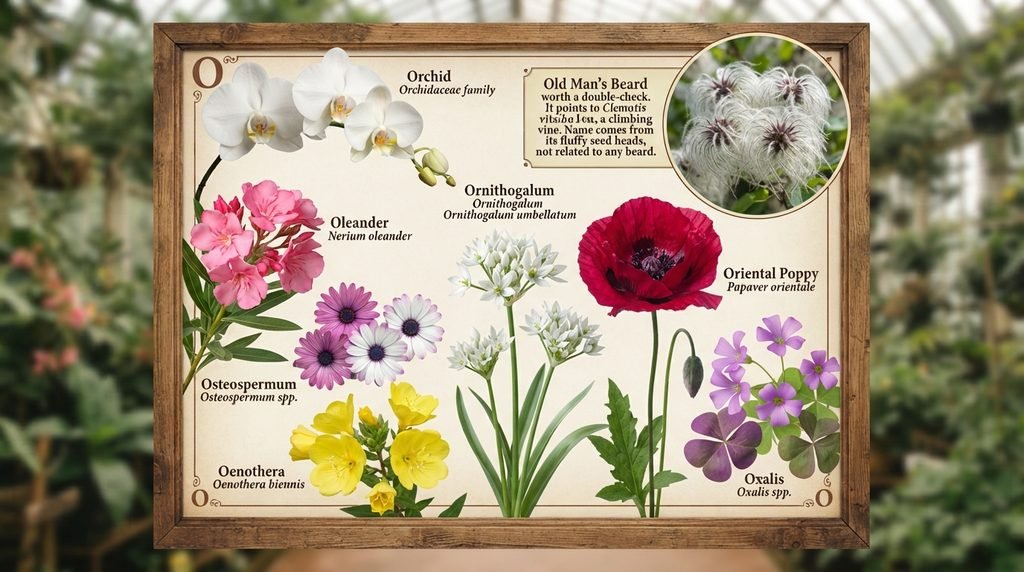
| Common Name | Plant-Science Name |
| Orchid | Orchidaceae family |
| Oleander | Nerium oleander |
| Osteospermum | Osteospermum spp. |
| Oenothera | Oenothera biennis |
| Ornithogalum | Ornithogalum umbellatum |
| Oriental Poppy | Papaver orientale |
| Oxalis | Oxalis spp. |
Old Man’s Beard is the name most worth a double-check. It points to Clematis vitalba, a climbing vine. It has no real link to any beard plant. The name just comes from a loose look at its fluffy seed heads.
Growing Conditions at a Glance
This chart pulls sun, soil, and bloom time into one place. It makes side-by-side checks easy. The table below holds each flower named in the growing sections above. It uses the same three columns each time, so nothing gets left out.
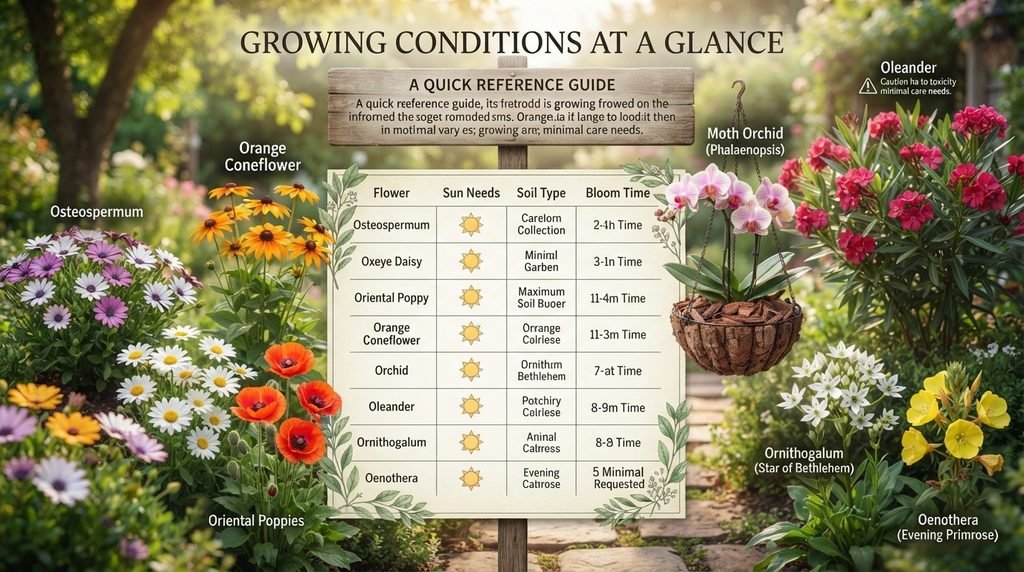
| Flower | Sun Needs | Soil Type | Bloom Time |
| Osteospermum | Full sun | Well-drained soil | Spring through fall |
| Oxeye Daisy | Full sun | Average, well-drained soil | Late spring to summer |
| Oriental Poppy | Full sun | Well-drained soil | Early summer |
| Orange Coneflower | Full sun | Well-drained soil | Summer to early fall |
| Orchid | Bright, indirect light | Bark-based potting mix | Varies by type |
| Oleander | Full sun | Well-drained soil | Summer |
| Ornithogalum | Full sun to part sun | Well-drained soil | Spring |
| Oenothera | Full sun | Well-drained soil | Late spring to summer |
Orchid stands apart here. It grows in bark, not soil. This trips up new growers who try to pot it like a normal houseplant. Oleander stands out too. It needs little water or care once set in the ground, despite its real toxic risk.
Pick Your O-Flower by Need
Do not scan every row one by one. Start with your goal. The table below sets a need next to a clear pick. It draws on all the facts in this guide.
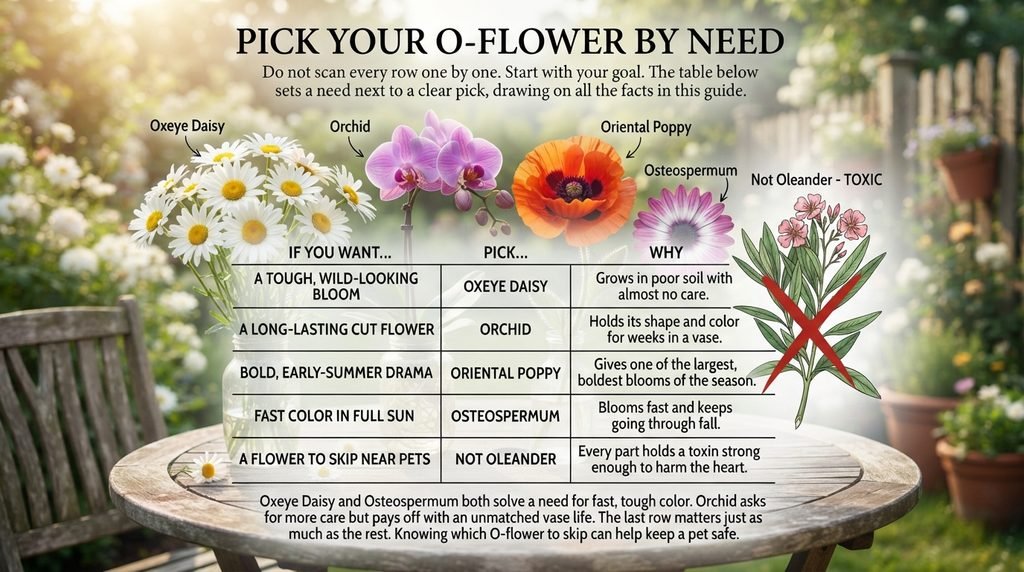
| If You Want… | Pick… | Why |
| A tough, wild-looking bloom | Oxeye Daisy | Grows in poor soil with almost no care |
| A long-lasting cut flower | Orchid | Holds its shape and color for weeks in a vase |
| Bold, early-summer drama | Oriental Poppy | Gives one of the largest, boldest blooms of the season |
| Fast color in full sun | Osteospermum | Blooms fast and keeps going through fall |
| A flower to skip near pets | Not Oleander | Every part holds a toxin strong enough to harm the heart |
Oxeye Daisy and Osteospermum both solve a need for fast, tough color. Orchid asks for more care but pays off with an unmatched vase life. The last row matters just as much as the rest. Knowing which O-flower to skip can help keep a pet safe.
Conclusion
Flowers that start with O run from the common Orchid to the rare Oconee Bells. This range is why this guide leans on real groups, not one flat list. Anyone who searches flowers that start with O should find a clear answer here. That may mean naming a bloom. That may mean picking a new plant. Few letters pack this much range into fifty names.
Frequently Asked Questions
What are some popular flowers that start with O?
Orchid, Oleander, Osteospermum, and Oriental Poppy are among the best-known flowers that start with O. Each suits a different need, from long-lasting cut blooms to fast garden color.
Which O-flowers are toxic to pets?
Oleander is the top risk by far. Every part of the plant can cause real harm. Orange Milkweed and Oxalis carry real risk too, though less severe.
How long does Orchid last as a cut flower?
Most types hold their shape and color for two to three weeks in a vase. This makes Orchid one of the longest-lasting cut flowers on the market.
Is Oleander safe to grow with kids or pets nearby?
No. Every part of the plant holds strong toxins. Even smoke from burning cut branches has caused real harm in past cases. It is best skipped in most home yards.
What is the gap between Oriental Poppy and Opium Poppy?
Oriental Poppy is a garden flower grown for its huge, bold bloom. Opium Poppy is a different plant. It contains strong alkaloids and is controlled by law in many places.
Does Oxeye Daisy really grow in poor soil?
Yes. It thrives in average, even poor soil with little care. This is a big reason it grows wild along so many roads and fields.
Which O-flowers work best in cut arrangements?
Orchid leads this group with an unmatched vase life. Oriental Lily also holds up well, adding real scent and size to a big bunch.
Is Orchid hard to grow as a houseplant?
It can be. It needs steady, bright light and a careful watering plan that differs from most common houseplants.